
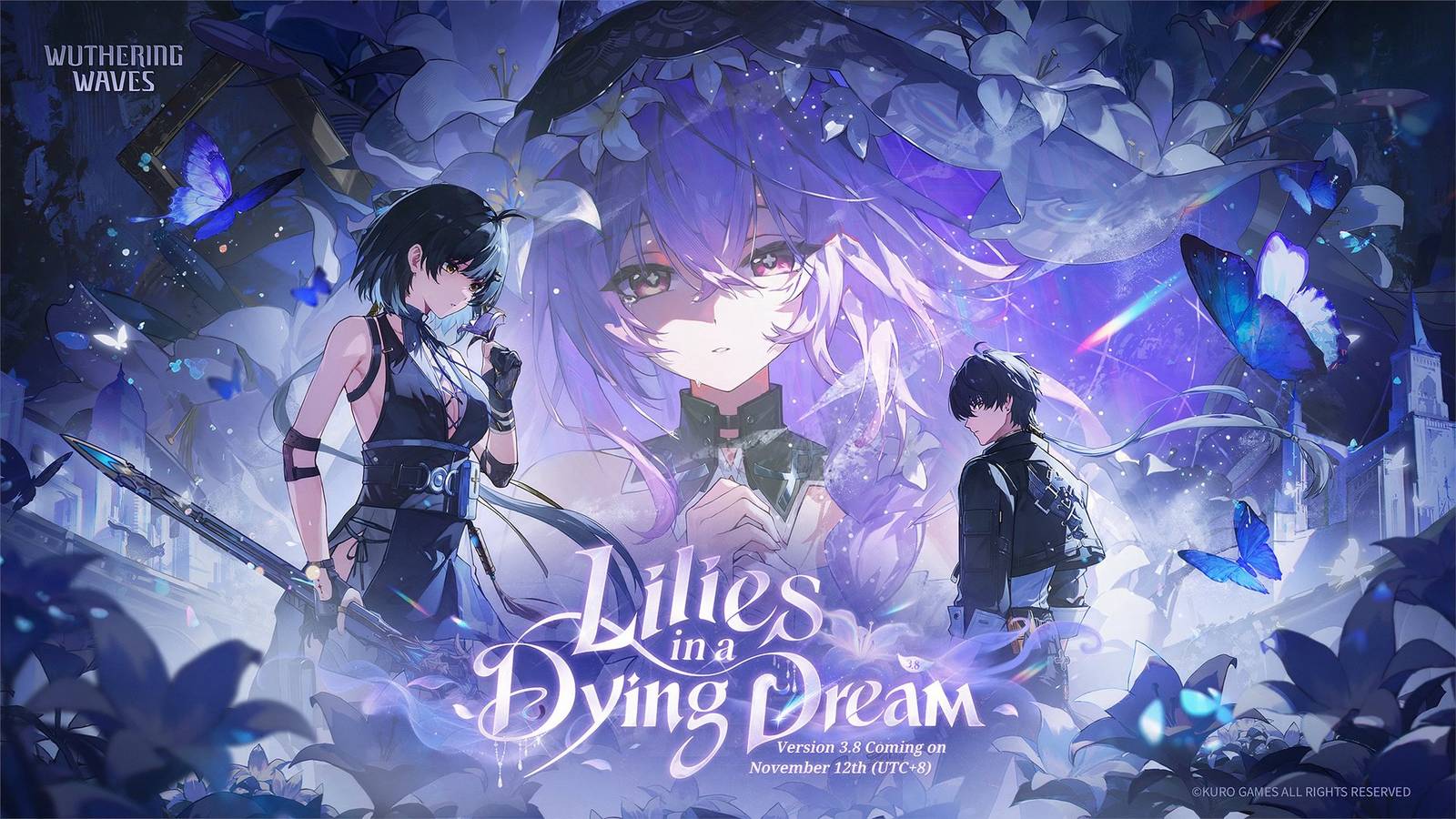
This article was produced in collaboration with our sponsor, Kuro Games. A World That Refuses to Stand Still Solaris-3 is a world still recovering from the Lament, a cataclysm that reshaped its land and left Tacet Discords roaming the ruins. Players enter it as the Rover, a wanderer with no memory, and rebuild their understanding of the world one region at a time. Since launch, that world has grown far beyond its starting point in Huanglong. Rinascita, Lahai-Roi and now the Simulacrum Nexus of Mengzhou in Version 3.7 have each added new cultures, new Resonators and new mysteries to uncover. Version 3.8 sets the stage for the next major chapter, paving the way for Version 4.0 and the arrival of the New Federation. But Wuthering Waves does more than add new places and faces. It gives every addition meaning through three connected creative pillars: character design, music and storytelling. Together, they turn new content into something players feel, not just something they unlock. Dressed for Their World: Character Design as Storytelling In Wuthering Waves, a Resonator's outfit is a passport. Costume, color, silhouette and animation tell you where a character comes from and what role they play, often before they say a word. Every region has its own wardrobe The clearest example is Rinascita, whose cast looks like it belongs to a single, coherent culture while each member stays distinct: Roccia and Brant wear carnival costumes that mark them as members of the Fool's Troupe. Their combat animations carry the same theater, with circus flips, flourishes and a performer's bow. Phoebe dresses in the robes of an acolyte of Order of the Deep, a look that speaks to her faith before her story explains it. Augusta and Iuno wear gladiator-style armor that ties them to Septimont and its arena. The same idea carries across Solaris-3: Aemeath, from Lahai-Roi, wears a sleek bodysuit built for piloting a giant mech, matching a kit that switches into mech form. Sigrika, from Roya, wears traditional dress that reflects her people's native culture. Yangyang, Suisui and Hsin wear distinctive outfits that connect them to Huanglong's heritage and the wider Mengzhou setting. Personality in motion If the costume introduces a character, animation brings them to life. Jinhsi, the Magistrate of Jinzhou, moves with poised, ceremonial grace that suits a leader. The Shorekeeper's calm, drifting motions reflect her role as a quiet guardian of the Black Shores. Even an Intro Skill becomes a small character beat. A design language that keeps growing Each new region gives Kuro Games a new artistic direction to explore, from Huanglong's flowing robes to Rinascita's carnival and gladiator styles, and on to the tribal and futuristic looks of Lahai-Roi. The cast grows more varied with every update, yet still reads as one world. The Sound of Solaris-3: How Music Gives Every Region a Heartbeat If character design tells you who belongs where, music tells you how it feels to be there. The soundtrack's strength comes down to three ideas: genre fusion, musical world building and lyrics that tell stories. Many genres, one identity Wuthering Waves rarely sticks to a single genre. A track might set its mood with synthesizers and programmed drums, then hand the melody to strings, piano or electric guitar. Cartethyia's "With Glory I Shall Fall" blends orchestral instruments with synth bass and electric guitar: the orchestra brings grandeur, while the guitar and bass add urgency and a modern edge. The mix is deliberate, matching a world where ancient tradition and advanced technology sit side by side. Every region has its own voice The soundtrack changes its musical vocabulary as you travel. The music of Huanglong is anchored by sweeping melodies and traditional instrumental timbres, creating a tranquil yet deeply narrative atmosphere. Rinascita’s soundtrack is brighter and more vibrant, blending romanticism with dramatic tension—echoing the seaport city-state’s rich artistic heritage. Meanwhile, Lahai-Roi leans toward a modern pop aesthetic, complementing its science-fiction, academic setting. You can sense a region's identity through its music before you know its history. Songs that carry a character's story Vocal tracks are part of the storytelling, not decoration. Phrolova's theme, "Reveries in the Crimson Beyond", speaks to a dream as if asking it for comfort and company, reflecting her longing to stay inside an imagined world and hold on to moments she has lost. Players who know her story hear the lyrics differently, and the song in turn deepens their understanding of her. A concert tour that brings music to life The emotional power of Wuthering Waves’ music does not end when players leave the game. Through To the New World, the game’s first global concert tour, its music travelled from the virtual world into reality, visiting six cities—Shanghai, Tokyo, Seoul, Taipei, Singapore and Los Angeles—and attracting nearly 50,000 attendees worldwide. Blending orchestral performances, live vocals, band arrangements and immersive stage productions, the concert brought familiar melodies and character themes to life in new ways. It also rekindled memories of pivotal story moments and beloved characters, giving players the chance to relive those emotions together and experience a second emotional resonance with the game. Recognition beyond the game That commitment has also earned industry recognition. After “Against the Tide” won the 2025 HMMA for Song – Video Game (Console & PC), Wuthering Waves received three more nominations in 2026—across original song, mobile-game music and live concert performance. These honors reflect how the game treats music not merely as accompaniment, but as the emotional heartbeat of its characters and world. Stories That Grow With the World The world of Wuthering Waves feels alive because its story never stops moving. Characters change, conflicts shift, and places carry the marks of what happened there. The Rover's journey ties it together The Rover's search for lost memories is the thread that runs through every region. Each Main Quest chapter pulls the Rover deeper into the mysteries of the Lament and the forces shaping Solaris-3, giving players a reason to keep moving forward. Personal stories give the plot weight The larger plot matters because the people in it do. Character-related quests explore what drives each Resonator: their loyalties, their losses and the choices they struggle with. When a Resonator you know steps into a Main Quest, the stakes feel personal. Every region brings a new perspective Each region introduces its own culture, politics and conflicts. Huanglong wrestles with duty and protection, Rinascita with faith and tradition, and Lahai-Roi with knowledge and the future. Version 3.7 brought the Xuanfang arc to its finale in the Simulacrum Nexus of Mengzhou. The environment tells its own story Not every story is told in dialogue. Ruined cities, overgrown battlefields and quiet landmarks hint at the history behind them, rewarding players who explore and look closely. A story built across updates Every major update adds a new chapter of history, a new set of characters and a new storyline. Instead of a fixed world, Solaris-3 is one that keeps changing alongside the people who live in it. Where It All Comes Together: When Every Element Sings Together Wuthering Waves is at its best when design, music and story work as one, and nearly every Resonator in the cast is built this way. Here are three examples of how it works. Cartethyia Design. Cartethyia’s dual-form design brings her past and present together. Her Cartethyia form reflects the free wandering knight she has become, while Fleurdelys recalls the Blessed Maiden, vessel of Divinity and Queen of Gale and Tide she once was. Fate bestowed upon her the title of the Blessed Maiden, but it was her own choices that gave the title its true meaning. Music. Her theme, "With Glory I Shall Fall", mirrors that duality. Orchestral grandeur speaks to the legend of the Blessed Maiden, while electric guitar and synth bass bring the force of the warrior who fights for Rinascita. Story. Her story gives both of them meaning. Once you learn how the title of Blessed Maiden came to rest on her shoulders, her two forms and her theme stop being separate details and become one character. None of the three would land as hard alone. Together, they make Cartethyia unforgettable. Aemeath Design. One of Aemeath's most distinctive design features is the transformation between her human and mech forms. The mech is a transformation form born from her past as an Exostrider Synchronist, as well as an extension of her own abilities. Elements of Fleet Snowfluff's design are also incorporated into the mech, making it both a reflection of her childhood admiration for heroes and an essential means through which she fights and protects others. The seamless transitions between her two forms, along with their cooperative combat, further reinforce the connection between them. Music. As the digital songstress known as Fleet Snowfluff, music plays an integral role in Aemeath's characterization. In her character teaser, Memories of Fleet Snowfluff, we see her wholeheartedly practicing her songs. Her voice fits perfectly with Lahai-Roi's contemporary pop-inspired musical style. More notably, the development team uses forward and reversed versions of the same melody to represent different timelines, connecting Aemeath's childhood and adult selves through a shared musical motif. As the truth behind her story gradually unfolds, players come to realize that these melodies had been quietly foreshadowing the emotional revelations all along. Story. If her design and music bring Aemeath's character to life, then the Version 3.1 Main Quest reveals the reasons behind these creative choices. She was once an Exostrider Synchronist at Startorch Academy, and an ordinary girl with dreams of her own. However, after resonating with the Exostrider and pushing herself into Overclock, she lost her physical body and became a digital ghost. Her encounters with Rover also form a causal loop centered on connection, memory, and protection. Hsin Design. Hsin is the Sentinel of Mengzhou and the first playable Sentinel. In combat she splits into fox forms, a striking image for a guardian who is more than she first appears. Music. Her theme, "Ode to Hsin and Moon", is a vocal song composed by Jin Dazhou and sung by Jaime Arin. It comes in two versions, "Endless Yearning" and "Whither Away?", and the titles alone give her two moods: a longing that never fades, and a question of where her path will lead. Story. Version 3.7 closes the Xuanfang arc around her. Her storyline completes the logical loop of her audiovisual design: it unveils why her character design highlights power while her music reflects an inner uncertainty, bringing both sides into unity through her story. Three regions, three very different Resonators, yet in each one design, music and story point the same way. That harmony is what makes the world of Wuthering Waves feel alive. An Ever-Evolving World Wuthering Waves keeps growing, but size is not what makes Solaris-3 memorable. What sets it apart is how each new region and Resonator arrives fully realized: dressed in a look that belongs to their culture, carried by music that gives them an emotional voice, and woven into a story that connects them to everything around them. Through Version 3.7, that approach has taken players from the halls of Jinzhou to the carnival streets of Rinascita, the frontiers of Lahai-Roi and the heart of Xuanfang. With Version 3.8 now live, Rovers will find their paths crossing more and more with the New Federation. A new story is about to set off from here. Wherever the Rover heads next, one thing seems certain: the next chapter of Solaris-3 will be worth seeing, hearing and feeling.
How Wuthering Waves Brings Its Evolving World to Life Through Character Design, Music and Storytelling
Full Article
Original Source
Read the full article at Thegamer →KhanList aggregates and links to publicly available news content. We do not host full articles from third-party sources. Always verify important information with original sources.