
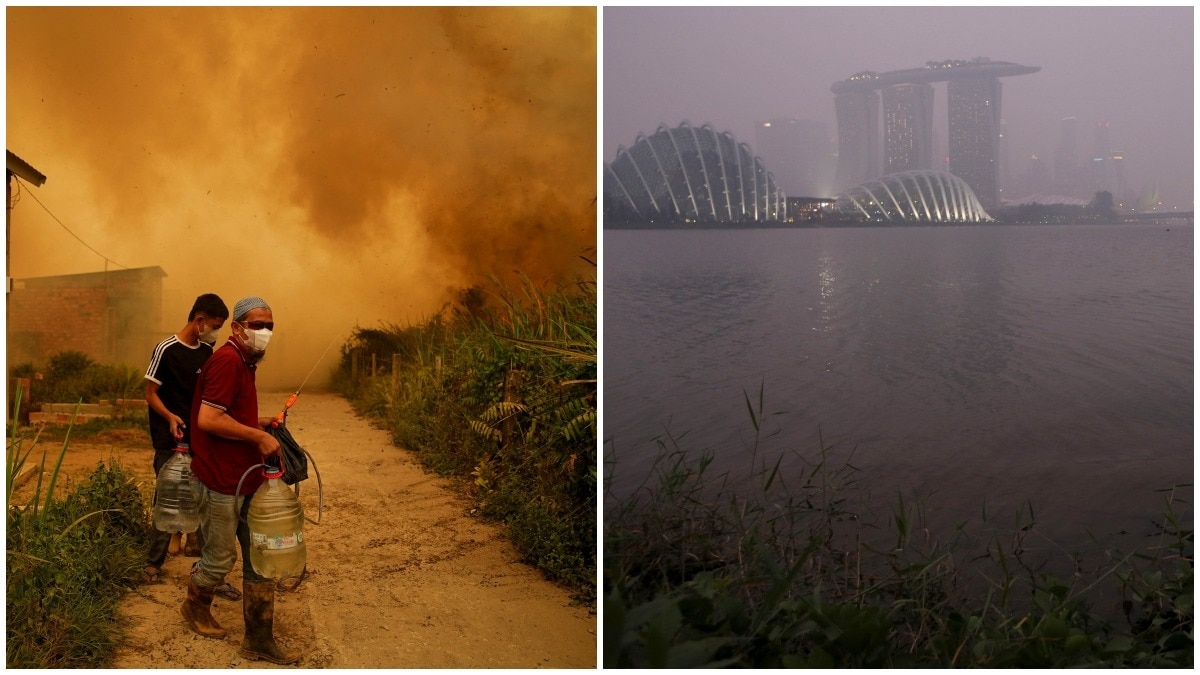
Wildfires in Indonesia have spread across Sumatra and Borneo, destroying homes and sending haze into Singapore. The crisis has highlighted how dry weather, El Nino and peatland fires can quickly become a regional public health threat.The wider wildfire crisis is being intensified by prolonged dry weather and El Niño. (Photo: Reuters)New Delhi,Oct 12, 2026 18:36 ISTIndonesia is battling one of its most intense wildfire seasons in more than a decade, with fires sweeping across Sumatra and Borneo, destroying homes and sending thick smoke across Southeast Asia.The resulting haze has affected Singapore’s air quality, turning attention to the combination of extreme dryness, El Nio and vulnerable forest and peatland ecosystems driving the crisis.The latest destruction came in Serdang village in South Bangka, on the island of Bangka, where a fire that began on Saturday afternoon spread into residential areas and continued until late Sunday.Strong winds helped the flames engulf 305 houses, according to Indonesia’s disaster management agency. Around 1,800 people were affected, and approximately 500 residents were evacuated to a nearby school and mosque. No casualties were reported. The fire burned around 8.3 hectares of land. Firefighters struggled to contain the blaze because of strong winds, limited water supplies, peatland terrain and the widespread use of wood in house construction. Authorities have set up evacuation tents and a public kitchen and distributed food, water and clothing to affected residents. A resident pours water to extinguish a wildfire near a residential area in Banyuasin, South Sumatra province, Indonesia. (Photo: Reuters) WHY ARE INDONESIA’S WILDFIRES SO INTENSE?The wider wildfire crisis is being intensified by prolonged dry weather and El Nio, a climate pattern associated with warmer-than-average sea surface temperatures in the tropical Pacific that can alter rainfall patterns across the region. Indonesia’s dry season has coincided with El Nio conditions, leaving forests and vegetation more vulnerable to ignition and allowing fires to spread. Peatlands are particularly difficult to manage because fires can burn underground through layers of dried organic material, making them difficult to extinguish completely.Human activities, including land clearing and the use of fire to prepare land for agriculture, can also contribute to outbreaks. Once fires take hold in dry landscapes, strong winds can rapidly carry flames into nearby settlements. The haze has covered Singapore. (Photo: X/@wintertaeta2) HOW ARE THE FIRES AFFECTING SINGAPORE?Smoke from Indonesian forest and land fires can travel across national borders, creating haze that reduces visibility and worsens air quality in Singapore and neighbouring countries.Indonesia recorded around 202,000 hectares of burned land between January and July 2026, according to government figures. Environmental groups estimate that hundreds of thousands of additional hectares may have burned in the months that followed, although those estimates are not yet equivalent to a final official tally.The fires threaten not only homes and public health but also forests, wildlife and the climate. Burning vegetation and peat releases carbon dioxide and other pollutants, while persistent haze can aggravate respiratory problems.With dry conditions continuing to fuel the crisis, the scale of the damage will depend on firefighting efforts, prevention of new ignitions and the arrival of sustained rainfall.The unfolding emergency shows how fires that begin in local landscapes can quickly become a regional environmental and public-health problem.- Ends
How wildfire in Indonesia has turned Singapore's skies dark?
Full Article
Original Source
Read the full article at Indiatoday →KhanList aggregates and links to publicly available news content. We do not host full articles from third-party sources. Always verify important information with original sources.