
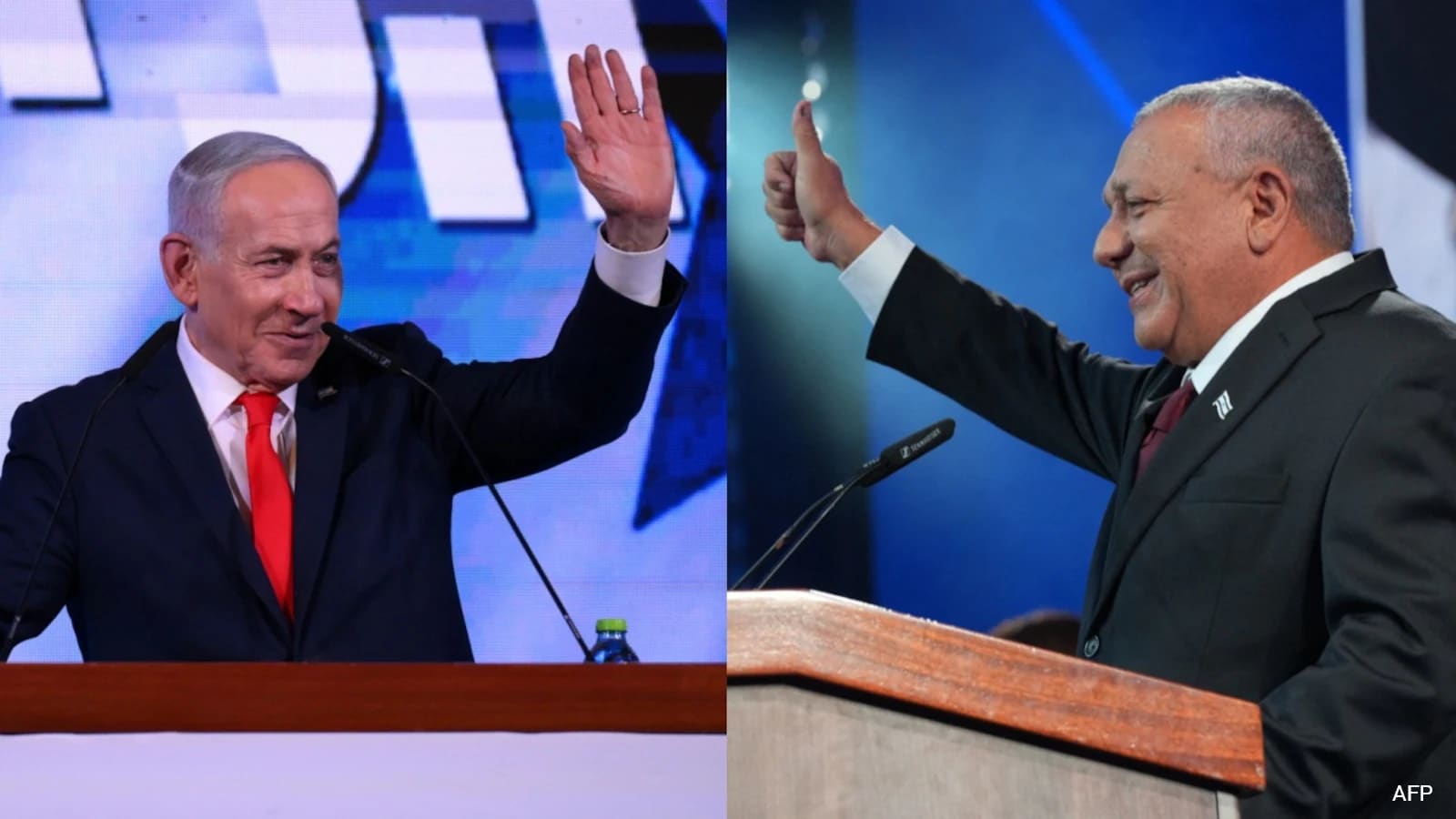
Tel Aviv: Israel Prime Minister Benjamin Netanyahu and his rival Gadi Eisenkot have both offered competing claims to lead Israel after the elections, as exit polls show coalitions of both leaders in a neck-and-neck fight. Both rivals have also offered starkly different solutions on how to end the Iran war, one of the biggest campaign issues. Eisenkot, a decorated general who rose to become chief of staff of Israel's military and lost one of his sons in fighting in Gaza in December 2023, two months after the war began, backs the idea of a contemporary Israel where Jews and Arab settlers co-exist. He has said that he believes that currently, economic pressure is the best way to defeat Iran. He, however, backs military strikes on Tehran's nuclear programme, but not a return to all-out war.On the contrary, Netanyahu remains adamant that regime change in Iran is the only solution for lasting peace in the Jewish state. He has gone as far as to post an AI-generated image of a nuclear bomb destroying Tel Aviv a day before the polling to get his point across.A recent CNN report said that Netanyahu even pushed for joint US-Israel strikes on Iran before the elections, but Washington turned his proposal down as US President Donald Trump weighs his options."Netanyahu really wanted and tried to convince Trump for a joint attack in Iran before the elections, and Trump did not give a green light," one Israeli source told the outlet.The Israeli Prime Minister's office has called the report "fake news", but it was not the only time when Netanyahu was accused of trying to restart the war in hopes of postponing the elections as he faces a tight race against Eisenkot's opposition coalition. FOLLOW LIVE UPDATESThe Difference in MessagingThe former IDF chief has said he believes regime change in Iran is "not an achievable goal". He has long opposed Netanyahu's approach to war as poorly planned, and he has called for diplomacy to end the war.Eisenkot, who favoured war in the past, said he supports Trump's policy of "peace through strength" and that his policy of economic pressure has a better chance of giving the Islamic Republic "a sense of defeat" than a renewed military campaign, according to a New York Times report.His US approach also differs from Netanyahu's. While the Prime Minister maintains that his ties with Trump and the US are the best protection Israel has, Eisenkot has repeatedly said Tel Aviv must focus on a future without any reliance on Washington and act independently.Israel Exit PollsIsraeli voters delivered a rebuke to Prime Minister Benjamin Netanyahu's far-right and religious governing coalition, but exit polls suggested the election had no clear winner and indicated that the long-serving Israeli leader was far from defeated after three years of war ignited on his watch.The exit polls suggested voters gave opponents of the current government a solid majority in the next parliament. But it's not clear if those disparate parties -- which include Arab-led factions who appear to have made a historic showing -- are willing to form a coalition. If they are, it would likely take weeks of haggling.At an appearance after polling, Netanyahu was upbeat and already trying to position himself to remain prime minister, listing off military achievements of the past three years. He called on his opponents to line up behind him and dismissed the idea of a partnership with Arab parties -- whose constituents make up 20 per cent of Israel's population -- as treasonous.
How Victory Of Netanyahu's Rival Eisenkot Could Change Course Of Iran War
Full Article
Original Source
Read the full article at Ndtv →KhanList aggregates and links to publicly available news content. We do not host full articles from third-party sources. Always verify important information with original sources.