
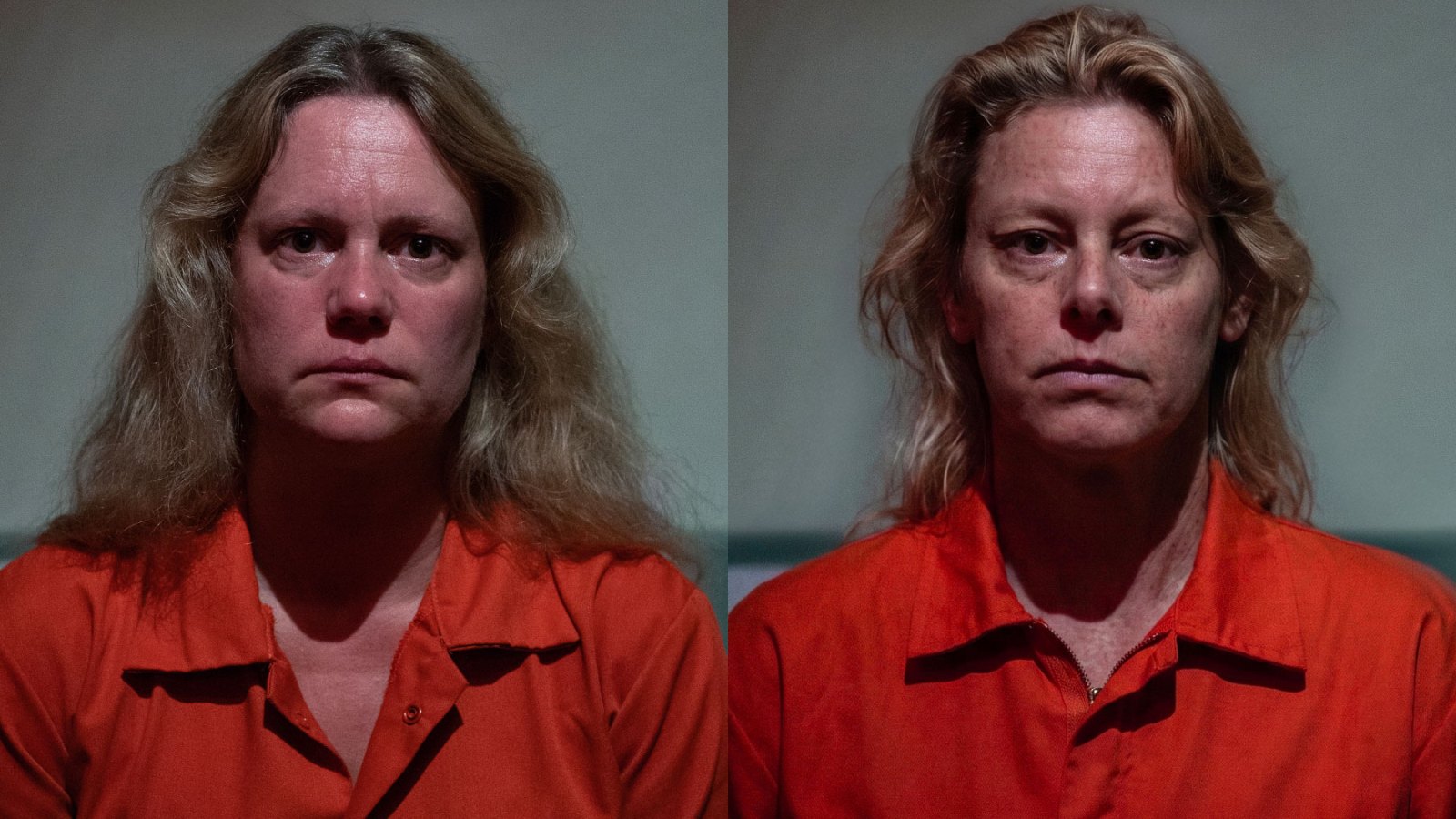
ID's new series, streaming now on HBO Max, uses "advanced generative VFX" to make ultra-realistic reenactments At first, Unmasking a Monster: Aileen Wuornos, ID’s new true-crime documentary, seems like a familiar look into America’s most famous female serial killer. As the first episode starts, there’s an archival voiceover from Wuornos, who was executed in 2001, professing that she has to tell the truth about the seven murders she was accused of committing; there’s a homicide detective who was on the case, recounting how he came in contact with the murderer; there’s a friend of Wuornos’ talking about the disbelief she felt when she found out about her crimes. Over the audio clips, images cut between trial footage, modern-day interviews, and staged reenactments. But those reenactments aren’t being done by actors. Instead, as noted in an early title card disclosing the use of “advanced generative VFX,” they feature AI-enhanced digitizations of recreated scenes from Wuornos’ life. When the series depicts Wuornos pointing a gun into the camera to show what a victim would have seen in his last moments, this is the real Aileen Wuornos. Almost. Unmasking a Monster, which premiered on ID and is now streaming on HBO Max, is the first documentary to use this kind of AI-aided visual effects technology — what Stephen Dost, vice president of Arrow Media, the company that developed the process, calls a “digital mask” — to put a more realistic layer over re-created scenes performed by actors. True-crime media has changed over the last decade, explains Jason Sarlanis, president of Investigation Discovery, which helped produce the series. No longer are viewers content with expert interviews and staged reenactments covering the arc of a story in 44 minutes. “What has changed for us, in terms of how we research and develop these stories, has come down to access to materials and access to people close to the case,” he says. “Hearing their unvarnished perspective and then supplementing that with as many real archival materials as possible.” Editor’s picks But what AI offered was a way for them to give the viewer the sensation of seeing archival material when none existed. According to Sarlanis, ID’s viewers have consistently complained that they’re turned off by reenactments. “They’re just not interested,” he says. “They want something as visually authentic as possible. What these digital prosthetics have allowed us to do is transport the viewer there in the most seamless, authentic way that we could do in reenactments that we weren’t able to do before.” The idea for the series, explains Sarlanis, came over drinks about three years ago. He was talking with Dost, whose Arrow Media is a frequent producer of ID’s true-crime series, about a show he’d recently seen, the U.K. comedy Deep Fake Neighbor Wars, which used rudimentary AI technology to superimpose celebrity faces over impersonators acting out scenes. The tech didn’t quite land, but they could tell that in a few years, it could be nearly seamless. “That lit a light bulb up for us,” Sarlanis says. “We could take similar technology, executed in a far more thoughtful and nuanced way, and lend it to re-creations — which are such a big part of the history of documentary — and unlock a whole new method of telling stories.” Dost agreed the technology was worth exploring, and started thinking about whose story he would want to use it to tell. “Because you have to have a good reason why,” he says. “The tech for the sake of the tech is not interesting.” A true-crime vet — he’d gotten his start in the mid-1990s as an intern at Court TV — he kept coming back to Wuornos. “Everything she had been through — from her mother abandoning her as a child, to being assaulted at the age of 14, [to] giving up a child — all these horrible things that happened to her, you could see it on her face,” he says. “Her face told a story.” Dost and Sarlanis are aware of the stigma AI might bring to the project. Part of why it took three years, they say, is because they wanted to think through the implications of including this type of technology in their show. “This was a human production,” Dost says. “We had 70-plus people. We had the best writers, interviewers. Despite the visual-effects twist, it’s a very traditional documentary. I think knowing what AI can do — and more importantly, what it can’t do — is the way to use it right.” Related Content One guideline they gave themselves was that those whose digital likeness would be used in the re-creations — other than Wuornos, a public figure — had to give their consent. “If we’re going to use the technology on them as a character, [we needed] full, written permission,” Dost says. “We did not use it whenever there was a question mark.” One such question mark was Mike Joyner, an undercover investigator who’d worked on the case, who they’d interviewed several years earlier for a different project, but had since died. “When we filmed that interview, it was before we even thought of using this tech,” says Dost. In 1991, Joyner had posed as a criminal and chatted up Wuornos at the Last Resort bar, a biker hangout in Florida where the serial killer was ultimately apprehended, and their lengthy conversation was something the producers knew they wanted to include. But instead of transposing Joyner’s real face over an actor, they opted to just go with an actor who looked like him, since he wasn’t alive to consent. “Originally, we only intended to do this process with Aileen, and then we realized it would be interesting to see the other characters, [so] we went back to them because they would need to sign an amended release,” explains Dost. “But everyone very readily agreed to it.” Additionally, Dost says, they didn’t use AI in writing any part of the show. The scripts were written based on their own reporting, including court documents, investigation transcripts, and interviews with detectives, witnesses, and even Laurie Valdez, an old friend of Wuornos’ who’d never previously spoken with the press. “Nothing is made up,” Dost says. “Everything here is based on a transcript, based on something that our [interviewee] told us that they remembered happening. So it’s as authentic as you can possibly be.” Morag Peacock, the Scottish actress who is the basis for the Wuornos reenactments, studied hours of tape to try to mimic the serial killer’s emotions — “her quirks, her mannerisms, how she used her eyes quite expressively,” she explains. Yet even after the VFX was laid over her performance, she could see herself shine through. “I could recognize myself in it. “I said, ‘I feel like it’s my eyes.’ And Stephen said, ‘It is. We’ve done nothing to change them,’” she says. “It isn’t a completely fabricated image. It’s me with a mask on top.” (One thing that’s less recognizable is Peacock’s voice; though she spoke in an American accent for the filming, Sarlanis notes that they did “train a model on real archival audio of Aileen’s voice that was then utilized to tweak her vocal performance — but the underlying performance is all Morag.”) Peacock says she had been hesitant to take the job because of its use of the new technology. “AI can be very triggering, isn’t it?” she says. “It’s something that can be used well, or like any tool, can be abused.” But overall, she was pleased with the scenes that she saw, though she hadn’t watched the whole series when we spoke. Sarlanis, for one, isn’t worried that the use of AI will overshadow the story the series is trying to tell. “If anything, it might be a beacon to bring attention to the new reporting and the incredible access,” he says. “In a world where true crime is one of the most in-demand genres, there are so many options for viewers. If you do not have an element that can bring attention to your project, it can fall on deaf ears.” Trending Stories But like Peacock, who saw the technology “as a costume that’s added at the end,” Dost and Sarlanis insist the AI adds are simply high-tech makeup and prosthetics. “AI cannot act,” says Dost. “It can look at Morag and detect even tiny micro-expressions in the way that she’s delivering a line, so that when the digital mask is applied, it’s copying every little emotion.” There’s a reason they didn’t want to simply add prompts to an AI bot and have it spit out a fully reenacted scene. “It has to start with something human,” says Dost. It’s not really different, he says, from the elaborate transformation Charlize Theron went through for the 2003 Wuornos biopic Monster. “Why did she want to look like the real Aileen? Part of it was exactly the same reason: Her face told a story,” he says. “And what we’re doing is the 2026 version of that.”
How ‘Unmasking a Monster: Aileen Wuornos’ Used AI to Bring a Serial Killer Back to Life
Full Article
Original Source
Read the full article at Rollingstone →KhanList aggregates and links to publicly available news content. We do not host full articles from third-party sources. Always verify important information with original sources.