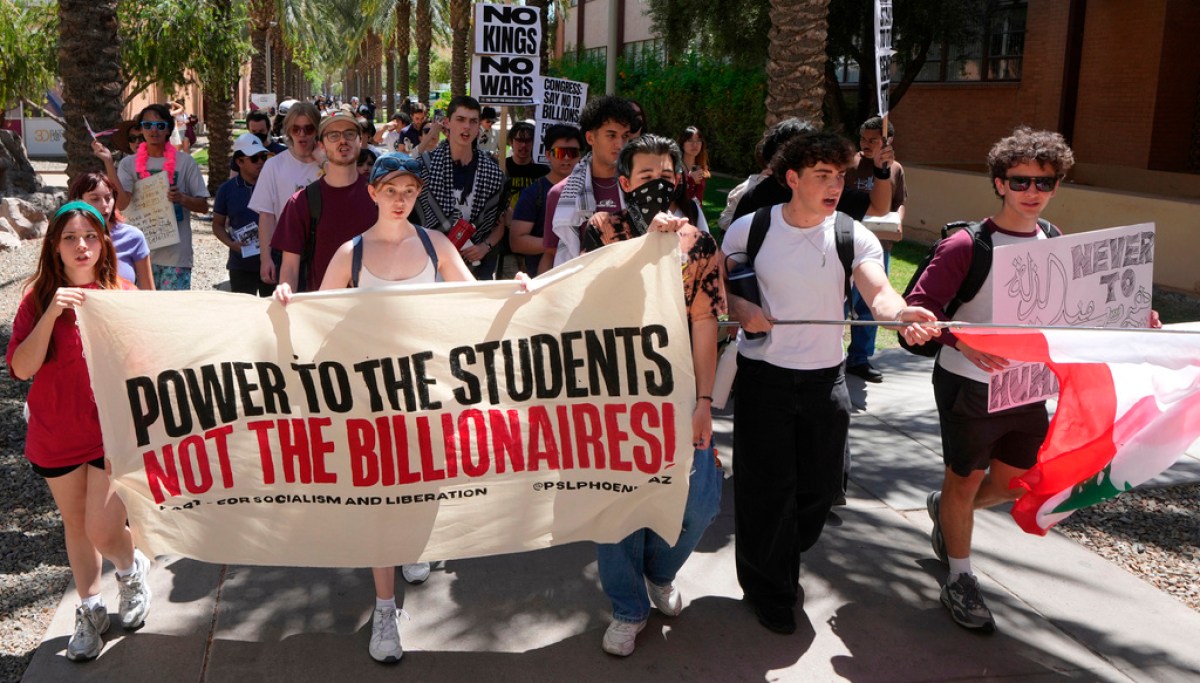
Universities teach plenty of subjects designed to make the West ashamed of itself, but none is pushed more relentlessly than postcolonial theory.Picture this: You’re sitting in a lecture hall, and the professor asks whether you agree that politics can be reduced to a simple framework: colonizer versus colonized. That was the actual question posed in my international relations class. Every hand in the room shot up in agreement. Mine didn’t. The lecturer, visibly caught off guard, asked me to explain. I said it’s absurd to reduce every global injustice to “good guy versus bad guy.” It’s lazy to blame a country’s poverty entirely on colonization when geography, culture, and governance matter just as much, often more.Not a popular answer. But not a new one either — it’s the whole architecture of postcolonial theory, and the room had absorbed it without ever asking where it came from. Postcolonial theory didn’t emerge from nowhere. It grew out of the 1960s, evolving alongside critical race theory and borrowing heavily from Marxism’s core framework. “Colonizer and colonized” is just a repackaging of Marx’s “oppressor and oppressed.”Originally, the theory was meant to examine how formerly colonized societies function after independence. But it does so through a one-sided lens, routinely landing on the same conclusion: blame America, blame Britain. Today it goes further. It argues we must dismantle “colonial barriers” through globalization and multiculturalism to properly understand the Third World, a theory lifted almost directly from Marx’s theory of class struggle.At the forefront of these thinkers sits Mahmood Mamdani, a Herbert Lehman Professor at Columbia University, and, as it just so happens, the father of New York Mayor Zohran Mamdani. This isn’t some obscure academic. This is the man who shaped the worldview of the man now running America’s largest city.Here’s the problem: The Third World academic tradition behind this framework is built almost entirely on hostility toward First World life and values. Spend enough time immersed in scholarship that treats the West as the villain, and you’ll start seeing the West as the villain too.This isn’t confined to seminar rooms. It’s embedded in institutions across Australia, Britain, and the United States, with Frantz Fanon as one of the movement’s foundational voices in America, being taught in undergraduate study at Yale University, Stanford University, Columbia University, and more.And what does Fanon teach? That colonial violence could only be answered with revolutionary violence — that decolonization demanded a psychological and cultural rupture. Because colonialism was violent, so too must be the response to it — aimed, specifically, at white society. That’s not a mild left-leaning critique. That’s a call for radical revolution, and colleges are teaching it.Mamdani teaches a toned-down version, but arguably still a radical one. He doesn’t just critique colonialism. He argues the modern nation-state itself, with its logic of political majorities ruling over minorities, is the very mechanism that produces cycles of colonial and postcolonial violence. He questions the legitimacy of the Founding Fathers and American nationalism, arguing we’re still, in effect, living in a colonized society.Once you understand the theory being taught, it becomes obvious why Gen Z increasingly feels their own country is fundamentally bad: because their history isn’t presented in a balanced way. It’s presented through a lens of grievance.The results are already visible. In Boston, Miami, and Baltimore, statues of Christopher Columbus have been beheaded, defaced with red paint, or dumped into harbors. Statues of Thomas Jefferson in New York City and George Washington in Portland have met the same fate.Build a worldview around treating your own country as the root cause of global poverty, and you shouldn’t be surprised when people grow to hate not just the country, but everything it stands for.What postcolonial theory conveniently leaves out is the two things that actually make a country prosperous: freedom paired with free markets, and a strong cultural foundation — historically, most successfully, a Judeo-Christian one.Oxford economist Dambisa Moyo puts it well in Edge of Chaos: “Creating growth requires that we preserve democratic capitalism’s core strengths — freedom, efficient markets, transparency, and correctly constructed incentives — and reform its weaknesses.” COLLEGE NEEDS A RECKONING: HERE’S WHO PAID FOR COVID AND DEI FAILURECritically examining history is healthy. But postcolonial theory has become a vehicle for Third World grievance to smuggle itself into First World academia — and it’s gone way past honest critique. It’s recast the West, wholesale, as an evil empire. That’s not education. That’s indoctrination.William Nye is a Brisbane-based Australian university student and writer.
How universities taught an entire generation to hate the West
Full Article
Original Source
Read the full article at Washingtonexaminer →KhanList aggregates and links to publicly available news content. We do not host full articles from third-party sources. Always verify important information with original sources.