
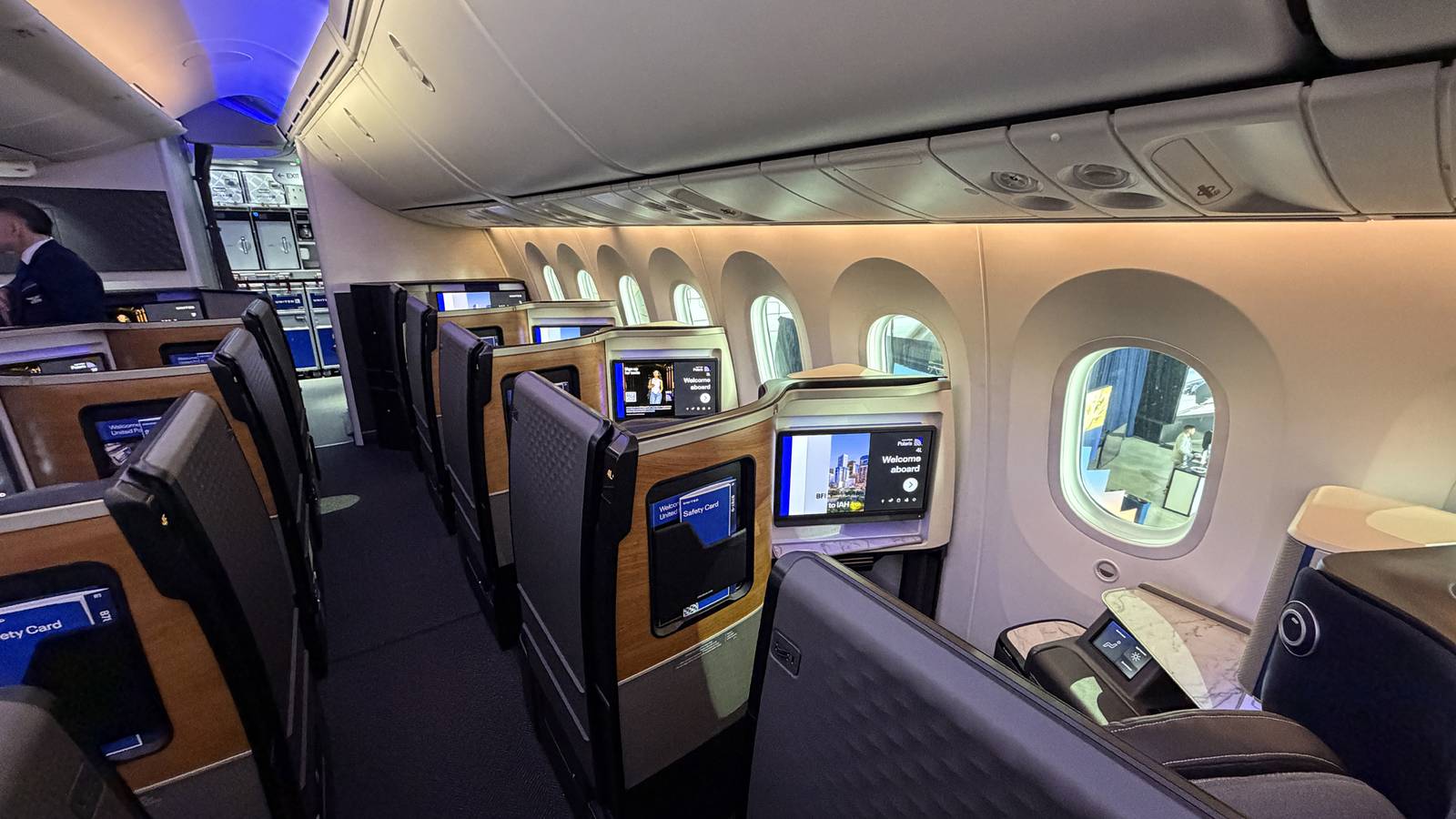
Published Aug 20, 2026, 9:00 AM EDT Journalist - Steven has a varied background in communications, and it was this passion for writing combined with his in-depth knowledge of the aviation industry that led him to Simple Flying. A keen linguist, he also has experience in translation and interpreting. Based in Palma, Spain The battle between United Airlines and Singapore Airlines on the high-profile route between San Francisco International Airport (SFO) and Singapore Changi Airport (SIN) has traditionally been viewed as a contest of prestige. Singapore Airlines has historically held the better reputation advantage through its celebrated service, refined cabins, and long-standing premium positioning. However, in 2026, the competitive landscape is changing in a way that is less about winning passenger awards and more about the economics of operating one of the world’s longest commercial flights. The real story on this ultra-long-haul route is that both airlines have reached premium-heavy economics through completely different aircraft strategies. Singapore Airlines uses the Airbus A350-900ULR to create a high-end, low-density experience, while United is using a heavily upgraded Boeing 787-9 Dreamliner to increase premium capacity. In a surprising shift, United is now able to offer more business class seats each week than Singapore Airlines on its own flagship San Francisco route. San Francisco-Singapore Has Become A Premium Aviation Battlefield Credit: Shutterstock The route between San Francisco International Airport (SFO) and Singapore Changi Airport (SIN), covering approximately 8,448 miles (13,597 km) and requiring more than 16 hours of flying time, has become one of the most important premium markets in the transpacific network. In 2026, the city pair is ranked as the leading transpacific business corridor, reflecting strong corporate demand, high fares, and the unique value of nonstop connectivity between two major technology and financial centers. The route presents a difficult challenge for airlines because its length pushes aircraft performance to the limit. Carriers must carefully balance fuel, passenger numbers, cargo, and operating costs while maintaining a product attractive enough for travelers willing to spend thousands of dollars on a single journey. Singapore Airlines has dominated the route’s premium image for years by operating the Airbus A350-900ULR, an aircraft specifically designed for missions where traditional widebody aircraft may face payload restrictions. United, meanwhile, has taken a different approach by improving the 787-9 and increasing the number of premium seats available. Rather than attempting to copy Singapore Airlines’ all-premium strategy, United has focused on creating more business class inventory. This reflects a broader shift in the airline industry, where carriers are increasingly prioritizing premium cabin growth as business travelers and affluent leisure passengers generate higher revenue than traditional economy customers. The result is a fascinating competition between two Star Alliance carriers, where one airline is maximizing exclusivity while the other is maximizing premium volume. Singapore Airlines’ Airbus A350-900ULR Strategy Credit: Shutterstock Singapore Airlines built its San Francisco-Singapore operation around the Airbus A350-900ULR, a specialized version of the Airbus A350 designed for ultra-long-haul services. The aircraft includes a modified fuel system capable of carrying around 165,000 liters of fuel, allowing it to operate routes that previously required stops or significant compromises. The airline’s approach is straightforward, as by removing economy class completely, it is able to create a cabin environment focused on premium travelers. The Airbus A350-900ULR used on the route has only 161 seats, consisting of 67 business class seats and 94 Premium Economy seats. The Star Alliance carrier operates flights according to the schedule detailed in the table below. Flight Number Departure Airport Arrival Airport Departure Time Arrival Time SQ32 SIN SFO 9:05 AM 9:50 AM SQ31 SFO SIN 11:45 AM 6:55 PM (+1 day) SQ34 SIN SFO 7:55 PM 8:35 PM SQ33 SFO SIN 10:25 PM 5:30 AM (+2 days) This configuration allows Singapore Airlines to avoid the limitations that come with filling a large aircraft with lower-fare passengers on an extremely long flight. Every seat onboard is positioned toward travelers who value comfort, flexibility, and service, which matches the airline’s premium reputation. The business class cabin remains one of the strongest parts of Singapore Airlines’ offering. Its wide seats, extensive dining options, and highly regarded hospitality have helped the carrier maintain a loyal following among frequent international travelers. Singapore Airlines' Book the Cook service, which allows eligible passengers to select meals in advance, is one example of the personalized touches that differentiate it from many competitors. However, the Airbus A350-900ULR strategy also creates a limitation, as by keeping the aircraft highly exclusive, Singapore Airlines gives up the opportunity to sell more business class seats. While every passenger onboard is valuable, the total number of premium seats available is restricted, which is where United has found an opening. United's Elevated Boeing 787-9 Changes The Equation Credit: Channing Reid United's response has been to transform the Boeing 787-9 into a more premium-focused aircraft through its new Elevated interior. The aircraft still carries a larger total passenger count than Singapore Airlines’ Airbus A350-900ULR, but United has increased the importance of its premium cabin by adding more Polaris business class seats. The new configuration includes 64 Polaris seats, eight of which are the new Polaris Studio suites. These larger suites introduce features such as additional personal space, sliding doors, and companion dining options, creating a product designed to compete more directly with international luxury carriers. The full Boeing 787-9 layout contains 222 seats, including 35 United Premium Plus seats and 123 economy seats. While the aircraft still serves a broader range of travelers than Singapore Airlines’ premium-only aircraft, the larger business class cabin gives United a significant advantage in total premium inventory. By the end of August 2026, United plans to operate Polaris 2.0 across all 14 weekly San Francisco-Singapore frequencies. This expansion means the airline will offer approximately 1,792 business class seats per week on the route, compared with Singapore Airlines’ 1,526 weekly business class seats. Flight Number Departure Airport Arrival Airport Departure Time Arrival Time UA28 SIN SFO 8:35 PM 9:20 PM UA29 SFO SIN 11:10 AM 6:35 AM (+1 day) UA2 SIN SFO 8:45 AM 9:30 AM UA1 SFO SIN 10:50 PM 6:15 AM (+2 days) That difference changes the competitive conversation. Singapore Airlines may still offer one of the world’s most admired premium experiences, but United is now providing more opportunities for passengers to purchase a premium seat. The Star Alliance carrier operates the schedule detailed in the table above. For corporate customers managing large travel programs, availability can matter almost as much as product quality. A premium cabin is only useful if companies can actually secure seats for employees traveling between important business markets. United's Hardware Advantage Comes At A Strategic Moment Credit: Shutterstock United's Elevated 'Polaris 2.0' introduction represents a significant investment in competing with international carriers that have traditionally held an advantage in long-haul premium travel. The new product includes features that directly address areas where US carriers have historically faced criticism. The Polaris Studio suites provide more privacy, which has become increasingly important as business travelers seek personal space on flights lasting more than 16 hours. Sliding doors and larger work areas help United's position the cabin closer to the expectations set by leading Asian and Middle Eastern airlines. United is also adding modern technology features, including Starlink Wi-Fi and 4K OLED screens, giving passengers improved connectivity and entertainment options throughout the journey. On a route of this length, digital connectivity is no longer simply an extra feature, and many passengers now expect to remain productive for at least part of the flight. The timing is important because the San Francisco-Singapore market attracts a large number of technology professionals, executives, and international business travelers who place a high value on reliable internet access and comfortable work environments. While these upgrades do not automatically make United's service identical to that of Singapore Airlines, they narrow the gap in areas that passengers can immediately notice. The airline is attempting to compete not only through seat quantity but also through a stronger physical product. The strategy suggests that United believes premium travelers are willing to consider alternatives when the cabin combines privacy, technology, and availability. Singapore Airlines Still Holds Important Advantages Credit: Shutterstock Despite United's increase in premium capacity, Singapore Airlines continues to maintain several advantages that cannot be measured simply by seat numbers. The carrier’s reputation has been built over decades through consistent service standards, attention to detail, and a premium brand identity that remains among the strongest in global aviation. The airline’s premium economy cabin is also a major part of its San Francisco-Singapore strategy. With 94 premium economy seats available, Singapore Airlines offers a product that provides an attractive middle ground for travelers who want more comfort than economy class without paying business class prices. One-way fares around the $929 mark can make the cabin particularly appealing for long-distance leisure travelers and companies with stricter travel budgets. United's larger aircraft includes its own Premium Plus product, but Singapore Airlines’ all-premium configuration creates a different atmosphere onboard. Every passenger is traveling in either business class or premium economy, which reinforces the feeling of a specialized long-range premium service. The airline also benefits from its broader brand reputation. For many travelers, choosing Singapore Airlines is not only about the seat but about the entire journey, including cabin service, meals, airport experience, and the confidence associated with one of the industry’s most respected names. Therefore, while United has gained a numerical advantage in business class capacity, Singapore Airlines continues to compete strongly through experience and consistency. The Future Of Ultra-Long-Haul Competition Credit: Shutterstock The San Francisco-Singapore route highlights a major trend in modern aviation: airlines no longer need to follow the same formula to succeed on difficult long-haul markets. Singapore Airlines and United have reached similar goals through completely different methods. The former created an aircraft configuration where every seat supports premium economics, accepting lower capacity in exchange for exclusivity. Meanwhile, the latter has chosen a higher-capacity approach, adding premium seats while keeping a larger mix of passengers onboard. Neither strategy is without challenges, as Singapore Airlines must maximize revenue from a limited number of seats, while United must ensure that its larger premium cabin can consistently attract enough high-paying passengers. On routes of this distance, profitability depends on more than seat count, requiring careful management of demand, fares, and operating costs. However, United's ability to surpass Singapore Airlines in weekly business class seats marks a notable change in the competitive balance. The US carrier is no longer simply defending a route against a prestigious foreign competitor: rather, it is actively reshaping the premium market. The San Francisco-Singapore route has become an example of how airlines are redefining ultra-long-haul competition in 2026. The winner may not be the carrier with the largest aircraft or the most luxurious reputation, but the one that best combines premium capacity, customer expectations, and the economics of flying thousands of miles nonstop.
How United Airlines Is Out-Seating Its Business Class Competitor On Its Own Flagship SFO Route
Full Article
Original Source
Read the full article at Simpleflying →KhanList aggregates and links to publicly available news content. We do not host full articles from third-party sources. Always verify important information with original sources.