
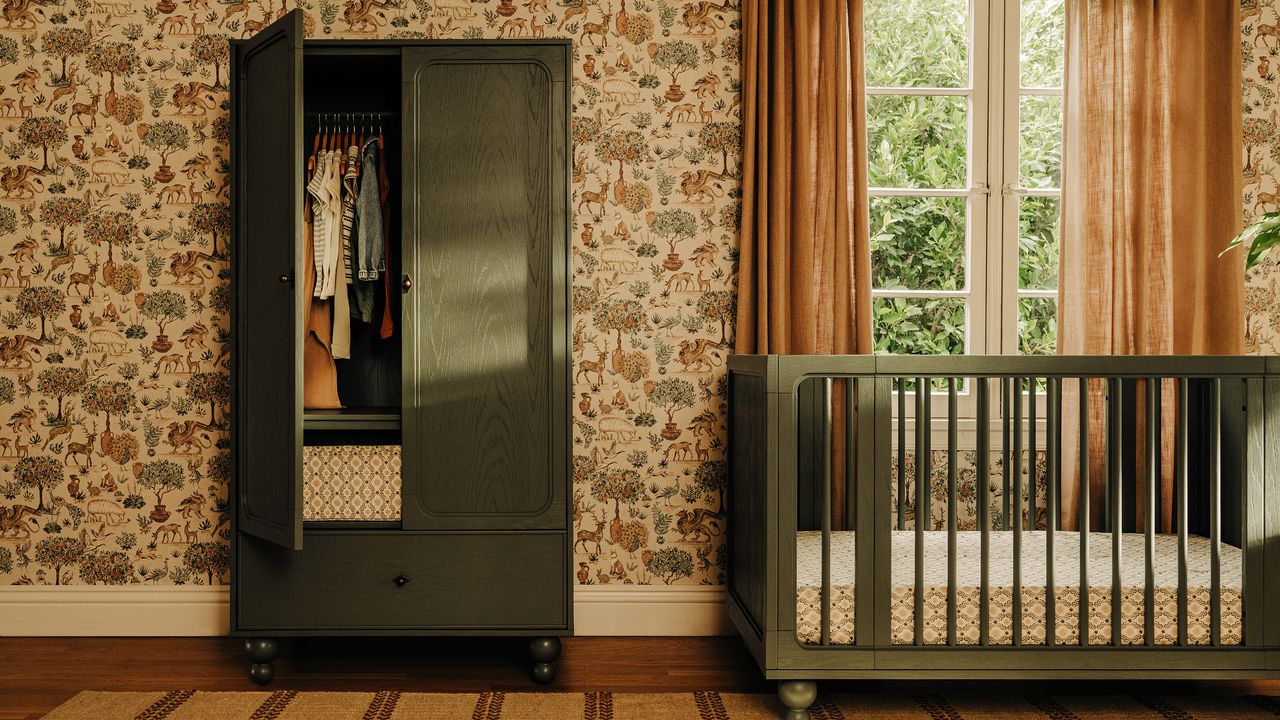
Most nurseries are designed for a short lease. The crib gets a few years, the glider eventually meets its inevitable end with the Salvation Army, and the chintz wallpaper that once felt so apropos quickly feels dated.Nate Berkus has thought about the nursery conundrum from two angles: as a parent, and as a designer. The father of two has spent three decades creating rooms for clients that feel collected and personal, but “having children changes the way you think about design,” he says. “You learn very quickly what actually works—and what doesn’t.” As his children grow up, he’s discovered they have “very clear opinions about how they want to live,” a reality he says is particularly evident in his 11-year-old daughter, Poppy, who designed her own room at their family farmhouse in Portugal. Her iron bed and armoire, which came with the house, anchor her bedroom at the Alentejo farm—the cover story of AD’s June issue.This life experience as a designer and father inspired the aesthetic intention for Berkus’ newly launched 12-piece collection with Babyletto, which is “giving parents a beautiful foundation, but leaving plenty of room for a child—and the room—to become something entirely their own.” The collection showcases the designer’s approach to a long-lasting nursery, featuring dark woods, classic silhouettes, and vintage-inspired patterns. Below, Berkus shares how he approaches a young child’s room, alongside advice from AD PRO Directory designers on everything from wood tones and pattern choices to lighting.Buy with post-nursery function in mindPick a wood tone and commit to itStart with the rest of the houseLet one pattern leadLayer the lightingBuy with post-nursery function in mindA Morris & Co. wallpaper wraps the nursery of AD100 Emily Ward’s Los Angeles home, lined with built-in toy storage.Photo: Trevor Tondro; Styling: Amy ChinWith furniture, remember that you are buying, not renting. Longevity of use is an idea central to Berkus’ Babyletto collection. “A great chair shouldn't suddenly become irrelevant because your child has outgrown the nursery,” he says. If you can buy only one or two pieces for the space, he points to the dresser and bookcase from the new line, which he calls “forever pieces that can live in your home long after the nursery transitions.”Heather Weisz of HW Interiors, who designed a nursery shared with older siblings, shares Berkus’ belief that a baby’s room should have long-lasting design elements. “Avoid overly ‘baby’ finishes and design, with an eye toward how the room will evolve,” she says.Crate & Barrel Namesake Devon Swivel Gliderbabyletto Astre All-Stages 8-in-1 Crib by Nate BerkusPick a wood tone and commit to itThe nursery inside artists Cj Hendry and Lewis Cook’s renovated Brooklyn brownstone is all about maximizing light and space. Photo: Olivia JoanBerkus tends toward moodier woods in his collection, like a warm chocolate elm. “I wanted the finishes to have the character of something you might come across in an antiques shop,” he says. Amy Storm of Amy Storm & Company went the opposite route in an organic nursery she designed, matching light wood tones across the furniture for a nearly monochromatic room. Both arrive at the same place: a room that you notice as being cohesively designed before you even spot a crib.babyletto Astre Assembled Armoire by Nate BerkusCrate & Barrel Emery Kids BookcaseStart with the rest of the houseA 1840s townhouse in Brooklyn reveals distinct yet related rooms, including interiors by Charlap Hyman & Herrero. Photo: Jason Schmidt; Styling: Mieke ten Have“Design isn't about isolated rooms—it’s about creating a home that flows with your life,” says Lindsay Olson of Lulu Designs. You might achieve this continuity by incorporating certain accessories you already own or items that are nostalgic to you into the nursery. Berkus suggests adding a personal layer, whether that’s “books you’ve held onto, art you love, a photograph, or something from your own childhood.” As he puts it, “those are the details that begin to tell the story of a family.” Keep in mind the colors, motifs, and patterns that show up in other areas of your house as you make choices for nursery features, like baskets, play mats, and wall art.House of Noa Organic Cotton Play MatFolklore Wicker Basket by Sharland EnglandLet one pattern leadFrom her Brooklyn apartment, paintbox enthusiast and digital director Julie Vadnal riffs on primary colors, but the result is anything but childlike. Photo: Anna Arnet“If you have a pattern you love, let it be important, and then put something quieter next to it,” says Berkus, whose collection includes textile versions of his hand-painted patterns. Susana Simonpietri of Chango similarly prefers spaces that balance pattern with a plainer palette. “Rooms need those moments of contrast,” she says. “If you're going with a wallpaper, or even a hand-painted mural on the walls, keep the furnishings and floors neutral.”babyletto Astre Ottoman by Nate BerkusSerena & Lily Hayden Swivel GliderLayer the lighting“Lighting is the jewelry of your room,” says Olson, who suggests pairing a statement pendant with a night light, just as you might a bold necklace with understated stud earrings. Weisz does something similar, hanging a sculptural pendant and adding softer task lighting for late-night feedings. “Don't be afraid to choose pieces that feel more artful than utilitarian,” she says.Bates Semi-Flush Ceiling Light by Jake ArnoldWest Elm Celestial Table Lamp
How to Style a Nursery, According to Nate Berkus and AD Pro Designers (2026)
Full Article
Original Source
Read the full article at Architecturaldigest →KhanList aggregates and links to publicly available news content. We do not host full articles from third-party sources. Always verify important information with original sources.