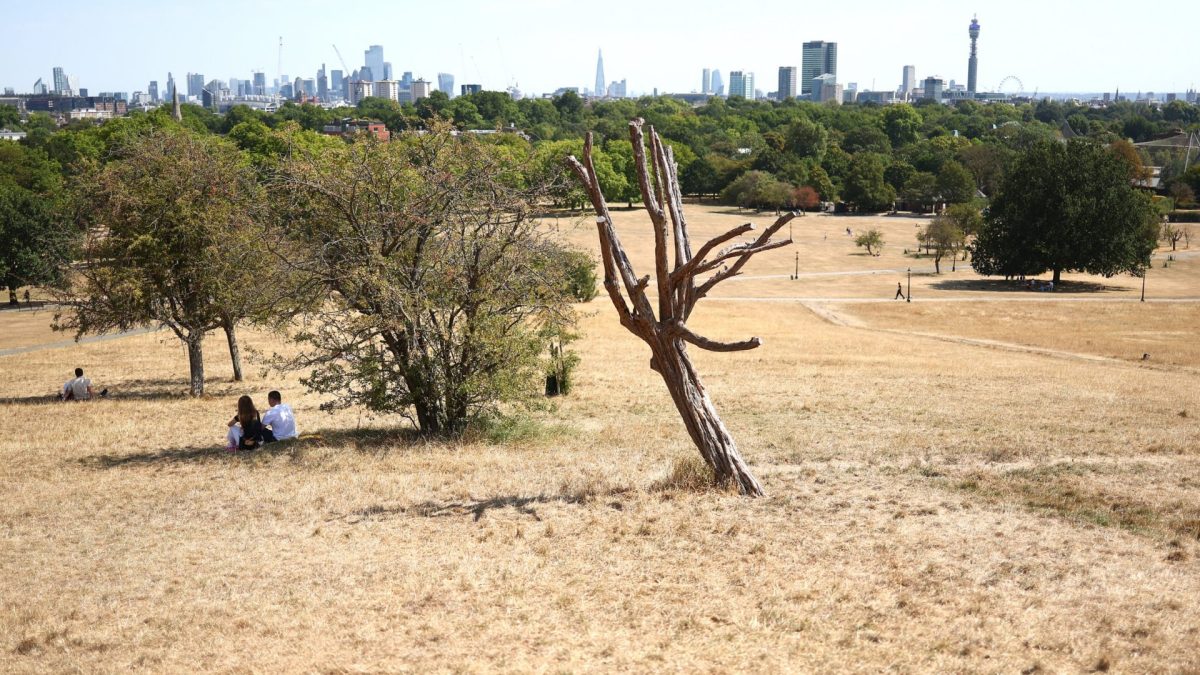
Britain’s searingly hot summer has seen millions of people hit by restrictions on water usage, with hosepipe bans in place across large parts of England. But emergency planning documents warn more drastic curbs could be imposed in the coming years if heatwaves and droughts continue. England and Wales have recorded their driest July on record – with Southern England experiencing the driest month ever recorded, Met Office data shows. Temperatures are expected to hit 35°C again this week. Shorts The UK Health Security Agency (UKHSA) has issued amber heat health alerts for the East Midlands, East of England, South East and London until Wednesday. England received just seven per cent of the long-term average rainfall in July. In Southern England, only 1.9mm rain was measured, narrowly beating the previous regional record low of 2mm in February 1891. The Environment Agency has said that seven regions of central, eastern and southern England – around half the country – are officially in drought. It has also warned that England’s public water supply could face a shortfall of five billion litres a day by 2055 without urgent action to protect resources. What water restrictions are in place now? Nine water companies have issued hosepipe bans affecting more than 24 million people across England and Wales. The areas with temporary use bans in force are: Thames Water (London, Thames Valley, parts of south-East England), Essex & Suffolk Water, South East Water (Kent, Sussex, Surrey, Hampshire and Berkshire), South West Water (mid-Devon), Affinity Water (parts of London, eastern and south-east England), Cambridge Water, Southern Water (Hampshire and Isle of Wight) and Welsh Water. Residents in affected regions must follow restrictions on watering gardens, cleaning cars, filling paddling pools or swimming pools, or cleaning windows. There are fines of up to £1,000 for people who fail to comply with the rules. St James’s Park in central London England and Wales have experienced their driest July on record (Photo: Peter Nicholls/Getty Images) How can you save water? Water firms have urged people to use a bowl in the sink to wash fruit, vegetables and dishes, reduce washing machine usage to twice a week, and keep a jug of water in the fridge instead of running a tap to get colder water. People have also been urged to take shorter showers, with Thames Water advising customers that shaving two minutes off the average 10-minute shower saves £73 on water and energy bills a year and 20 litres of water, per person each day. An average person uses about 140 litres of water daily for washing and showers. Recommendations from the Environment Agency include turning off taps when brushing teeth, collecting rainwater for garden use, and deleting old emails to reduce pressure on data centre servers. What is the worst that could happen? Continued droughts could lead to water rationing, according to the Government’s emergency planning documents. The UK’s National Risk Register, a report outlining the most serious threats facing the country, states that under a reasonable worst-case scenario of three consecutive years of extreme dry weather, large swathes of southern and eastern England would be hit by severe drought. A wildfire rages in Cairngorms National Park in Scotland , one of several that have erupted in the UK in recent weeks (Photo: RSPB Scotland/PA) This could lead to public water supply restrictions, the document says, with rationing water to homes and businesses one of the possible options. Prolonged dry conditions would also increase the risk of fire, with less water for firefighters to battle blazes. Critical national infrastructure such as transport, hospitals, emergency services and telecommunications, would be hit by water restrictions or loss of supply. Data centres, which rely heavily on water to cool heat generated by densely packed servers, would also be affected. The document said there could also be “potential changes in public behaviour including the potential for localised civil disorder”. What have countries done in the past? Two years ago, in Italy, Sicily declared a state of emergency and implemented strict water rationing, affecting hundreds of thousands of residents, due to historically low reservoir levels in the island’s worst drought for more than 20 years. Many residents of the city of Caltanissetta were without running water for two months, with authorities some neighbourhoods only receiving water supplies for a few hours per week or every two weeks. Water rationing in dozens of towns left people relying on supplies from tankers, with an Italian navy ship supplying 12 million litres of water to the most affected residents. The local water authority tightly rationed water for almost a million residents, with as little as two to four hours a week allowed. Lake Pergusa, Sicily’s only natural lake, almost dried up and reduced to a pool of mud, during a drought in 2024 (Photo: Fabrizio Villa/Getty) In 2017, Rome faced eight hours a day without running water in 2017 after a halt was ordered on pumping water from a nearby lake. And in 2022, northern Italy and the Po Valley experienced their worst drought in 70 years, with more than 100 towns asked to ration water and cities such as Milan turning off decorative fountains. In 2018 in Cape Town, South Africa, following three consecutive years of severe drought, authorities implemented extreme restrictions on water usage, warning of a “Day Zero” when the taps would turn off for homes and businesses. Water pressure in pipes was reduced by the government, tariffs were implemented that increased the cost of using water, and homes that did not cut down their use enough were fitted with devices that automatically cut off supply when they exceeded a daily limit. In Spain in 2022, the town of Vacarisses near Barcelona limited running water to only eight hours per day, split into four-hour morning and evening windows. During the current drought, Hungary is facing power cuts, with the country’s only nuclear power plant forced to shut down for the first time due to record low water levels in the River Danube. Astypalaia is one of seven islands of Greece that have declared a drought emergency, and is currently relying on bottled water. Authorities there have also blocked irrigation for farmers and are fast-tracking a temporary desalination plant as water reserves dwindle and the main reservoir fell to a sixth of its capacity. What are farmers warning? The National Farmers’ Union (NFU) has warned of shortages of some food in the UK as a result of the extreme heat raging across Europe. NFU president Tom Bradshaw told the BBC that yields of wheat and oats were “very, very poor” and vegetable producers were running low on water. “Those other countries around the world that we currently rely on to produce our food and vegetables, their climates are changing as well,” Bradshaw told Radio 4’s Broadcasting House. “It does feel like there is going be some shortages of [food] products”. The union has called for practical measures to help the industry, including streamlining planning rules and opening grant schemes to make it easier to build on-farm reservoirs, and flexible licences so farmers can take and store water when it rains. NFU deputy president Paul Tompkins said: “Farmers and growers have always had to contend with the weather, but what they are experiencing now is climate change in action. “Across every sector and every part of the country, farmers and growers are seeing first-hand the impact of dry weather and drought, with more extreme conditions making it harder, riskier and more costly to produce the nation’s food.”
How to stop UK water running out – including time limits on taps and using toilets
Full Article
Original Source
Read the full article at Inews →KhanList aggregates and links to publicly available news content. We do not host full articles from third-party sources. Always verify important information with original sources.