
The world seems to be writing paeans to grandmothers these days: their saris and silverware, their recipes and rituals, their wisdom and words, passed down like heirlooms. People start businesses in their names selling pickles and poppadams. They document them tenderly on social media. Grandmothers are everywhere, except in my childhood, and I am unlikely to become one. What, then, do I have to remember?My maternal grandmother was born in 1915 in southern Tamil Nadu. She was married in 1931 and died in 1938 at the age of 23, when my mother was barely a year old. I know her only through a photograph. I often stare at it with curiosity, trying to read a life in the faint shadows of her face.Did she laugh loudly or quietly?Did she sing?Did she like sweets or savouries?No memory keepsakesI will never find the answers. And yet, she is with me. I carry her name — Annapoorani. It is a ceremonial name written into the horoscope my grandfather had drawn when I was born. On ordinary days, I go by another name, but Annapoorani remains folded into my identity like an old silk sari taken out only for special occasions. My maternal grandmother, Annapoorani. | Photo Credit: Special arrangement I also carry fragments of her body. The rope-like hair, the sulking lips and the blue Jager diamond studs that I wear on festival days. There is also a certain stubbornness in our line, a refusal to soften easily.The real presence in Amma’s imagination is the mother she lost before she could remember her. What she knows comes down from others in the family. That her father loved Annapoorani and was inconsolable when she died. Their marriage had been a quick, practical arrangement after his first wife’s death, and it ended just as suddenly, leaving him twice widowed. On festivals, I wear Annapoorani’s blue Jager diamond studs. | Photo Credit: Special arrangement On my father’s side, there were even fewer details. Appa told me that Meenakshi, his mother, had died when he was barely a teenager. I studied Meenakshi’s photograph. She looked stern. I wonder how my jokes might have landed with her. Would she have approved of a granddaughter who writes about family with a mischievous pen?Grandma arrived lateMy first living grandmother arrived only after I was married.She belonged not to my bloodline but to my husband’s family. She had retired as a teacher, and was in her late 80s when I first met her. My husband and I lived on the ground floor of the house in Kolkata; she stayed upstairs with my mother-in-law.My husband’s grandmother was a small, birdlike woman in flowing white, the widow’s uniform of Bengal. Her name was Haimabati. We called her Didi, short for Dimma or Didima, which is ‘mother’s mother’ in Bengali. Didi with Dadu, my husband’s grandparents. | Photo Credit: Special arrangement Every morning, I saw her floating down the stairs like a quiet cloud of white. She moved through the garden slowly, gathering flowers into a tiny wicker basket: red jaba kusum, Kali’s beloved hibiscus, white pinwheels, and orange and white shiuli blossoms. I wondered what she did with them. The family, after all, didn’t seem particularly religious. There were no shrines, no walls crowded with gods, only shelves after shelves crammed with old books.Shelf life of a secretOnly later did I discover that every morning, she climbed yet another flight of stairs to the terrace landing where, tucked into a dusty corner on the floor beside more books and newspapers, stood a green wooden shelf. Inside, in embarrassed silence, were three postcard photographs: Ramakrishna Paramahamsa, his black beard framing a toothy smile; Sarada Devi, firm and serene beside him; and a fierce Kali, her red tongue startling against the faded print. Around them lay the flowers she had gathered, along with the curled ashes of incense sticks.“Iisssh!” I exclaimed theatrically to my husband, “You truly are a godless family, yaar!” He laughed. I’d noticed the way he teased her was different; and the way she mocked him was different. The tone between them was always tender and playful. He asked her plenty of questions about her “chhotu bela”, and declared that his Bengali language skills were honed by her lively lessons.Latitudes of longingIn her room, beside her bed, stood an old, bleached wooden box, serving as a bedside table. On it, she kept her glass of water, books, and little things such as a tiny tassel to braid her hair at night before going to bed. Didi carried her only material possession, a wooden chest box, into West Bengal during Partition. | Photo Credit: Special arrangement Long after her death, I learnt that it was the only possession she had carried with her, holding the hands of her husband and her little daughter as they fled Sylhet for Kolkata during Partition. The box now sits quietly in my living room, its teak surface warm and glowing. It looks ordinary to anyone else, but I know it once crossed a border in frightened hands.I didn’t grow up beside these two women, but they have quietly assembled themselves around me between the teak box and the blue stones. And somewhere inside them, a young woman named Annapoorani still flickers into life for a brief moment: 23 years old, looking out of a photograph, waiting for someone to remember her.The writer is the author of Temple Tales, Chutney Chronicles, and translator of Hungry Humans.
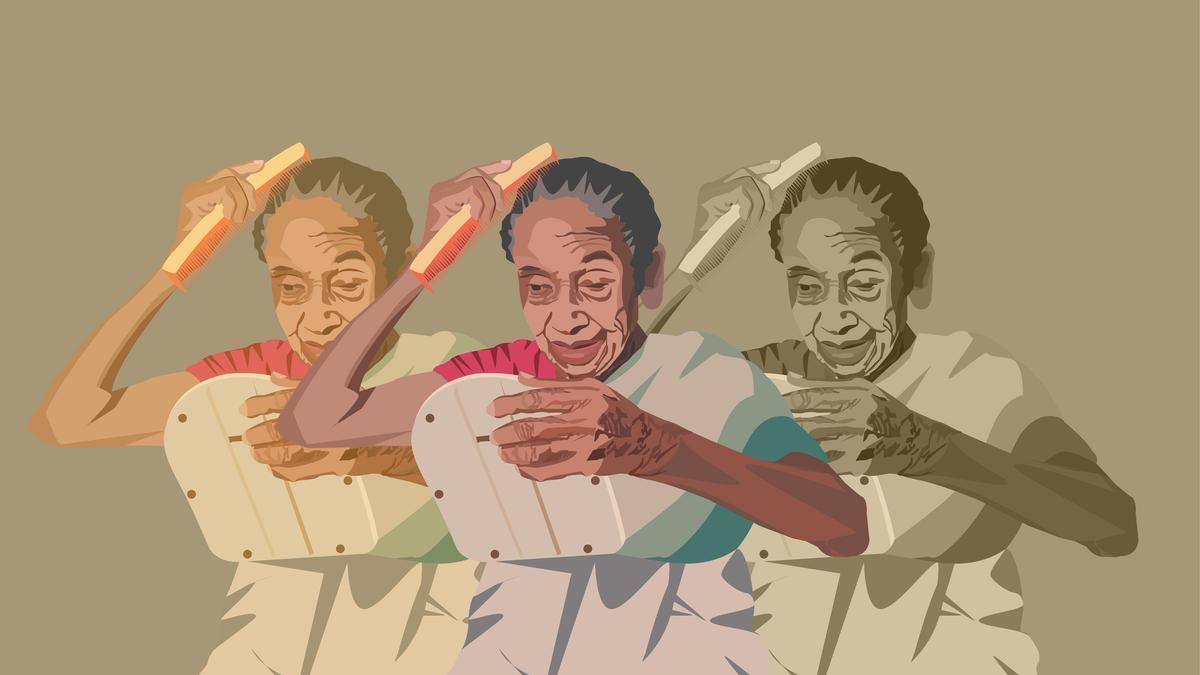
How to remember grandmothers you barely met
Full Article
Original Source
Read the full article at Thehindu →KhanList aggregates and links to publicly available news content. We do not host full articles from third-party sources. Always verify important information with original sources.