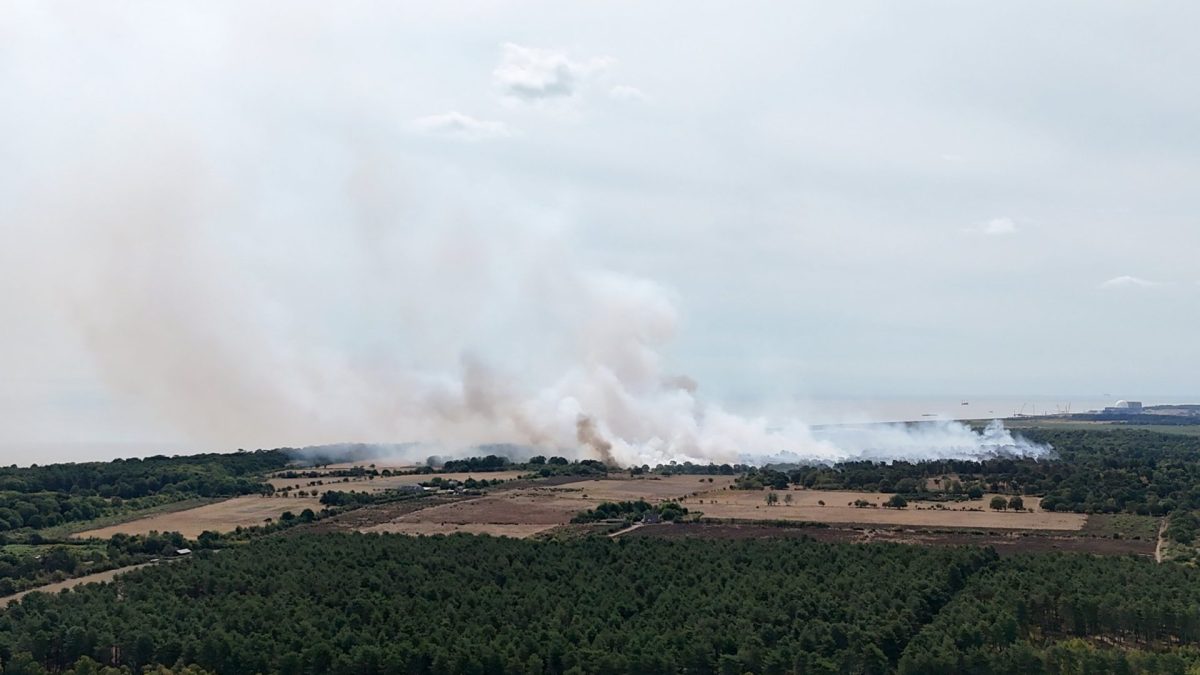
Wildfires rage across Europe every summer. But the ferocity and size of the wildfires currently burning across the continent is new. And worryingly for the UK, as we endure our fourth heatwave of the year, heatwaves are largely to blame. So far this year, blazes in Spain, France and elsewhere have ravaged a similar-sized area as they did in the same period in 2025, which was itself a record. But, according to Imperial College London fire science professor Guillermo Rein, “what is uncommon is the current number of destructive wildfires: fires that spread rapidly, overwhelm fire brigades and force communities to evacuate”. And, he says, “the connection with this summer’s repeated heatwaves is strong”. With heatwaves more and more likely in future, and images of a wildfire taking hold on Dunwich Heath in Suffolk this morning, you might worry about what you’d do if your house was in the path of a wildfire. To know how to keep your home safe from wildfires, it’s important to know how they start. Prolonged periods of hot, dry weather leave grassland, plants and other kinds of vegetation unusually dry, making them extremely flammable. And so when an “ignition” occurs – thanks to a cigarette butt, or maybe a barbecue – a wildfire can escalate rapidly, especially if it’s windy. The risk of severely destructive wildfires in the UK is lower than it is in countries like France and Spain. Even as we endure multiple heatwaves, with very low rainfall in large areas of the country, our climate is generally that bit cooler and wetter. As such, vegetation takes longer to dry out, meaning there is less fuel available to burn on the ground. UK landscapes are also more broken up by agriculture and infrastructure than those in much bigger, less densely populated countries, such as Spain and France, with this fragmentation acting as a firebreak of sorts. But the UK is by no means immune to the risks of wildfires, seeing dozens of them a year in recent years – and, increasingly, some really big ones. In June last year, the UK experienced its first recorded “megafire”, a US term used to describe fires that are extreme in size, behaviour and impacts on land and people. Burning for four days across parts of the Highlands and Moray, the Dava Moor fire torched 45 square miles – almost as much land as used to typically burn across the UK in an entire year. And in July 2022, which was the last time that the UK saw Mediterranean-like summer conditions, fires spread from grasslands into suburban areas of London. Meanwhile, at the time of writing, an enormous wildfire has been tearing through moorland and forest in the Cairngorms National Park for 14 days. So which areas of the UK are most at risk from wildfires? Thomas Smith, a fire expert at the London School of Economics, says that in the coming week or so it is the south and south-east of England that is most at risk. These parts of the country have not had any “meaningful” rain since the last heatwave in early July. The Dunwich Heath fire, where almost 100 firefighters are tackling a blaze the size of 140 football pitches, is the result. London looks to be particularly vulnerable, with mayor Sir Sadiq Khan warning this week that the risk of wildfires in the city “isn’t a faraway issue, it’s on our doorstep right now”. A fire in Walthamstow earlier this month saw one house destroyed and numerous garden studios and sheds burnt to the ground. But, in general, “no part of the UK is immune to wildfire”, Dr Smith warns. Within those regions most at risk, houses close to grassland and other vegetation are most vulnerable to wildfire, especially if they are on the border of cities and the countryside. These have larger amounts of grass and other “shrubby fuels” to make a fire and enough people to provide a source of ignition. There are more than 1.8 million such homes in Britain and 7 per cent of them lie within 100 metres of the edge of town or city, according to Ordnance Survey. The outskirts of London has the largest number of houses or flats in zones known as the “rural-urban interface” – exactly that dangerous town-country borderland – with 48,553 properties. Brighton and Hove, Eastbourne, Maidstone and Ashford are among the other areas in the south and south-east of England that have high numbers of homes on the border between town and country, making them vulnerable at the moment. So what can you do to keep your home safe? If you live in a high-risk area, the most important step is to stay informed and follow advice from local authorities and Fire and Rescue Services. “Most UK wildfires are started by people, either accidentally or deliberately. During periods of high fire danger, avoiding disposable barbecues, campfires, discarded cigarettes and other ignition sources is one of the most effective ways to reduce wildfire risk. If vegetation is exceptionally dry, even a small ignition can develop into a rapidly spreading fire,” Dr Smith says. Apart from avoiding activities that could start a fire, you could remove flammable materials from garden and shed spaces and clear out dead leaves from guttering. Keeping your grass cut short – below 7cm, according to the London Fire Brigade – and sweeping up dried cuttings is sensible. The Red Cross also advises disposing of glass bottles properly, so that they don’t focus intense sunlight to the point of ignition. And if you’re on holiday in high-risk areas such as in France or Spain, Smith’s advice is to make sure you have any fire alert or fire weather apps installed on your phone and familiarise yourself with the evacuation plans for the hotel or residence. This may seem like one more hassle, on top of the lengthy airport checks and searing heat. But given that wildfires are now a fact of life, it could turn out to be crucial.
How to protect your house against wildfires – and avoid starting one
Full Article
Original Source
Read the full article at Inews →KhanList aggregates and links to publicly available news content. We do not host full articles from third-party sources. Always verify important information with original sources.