
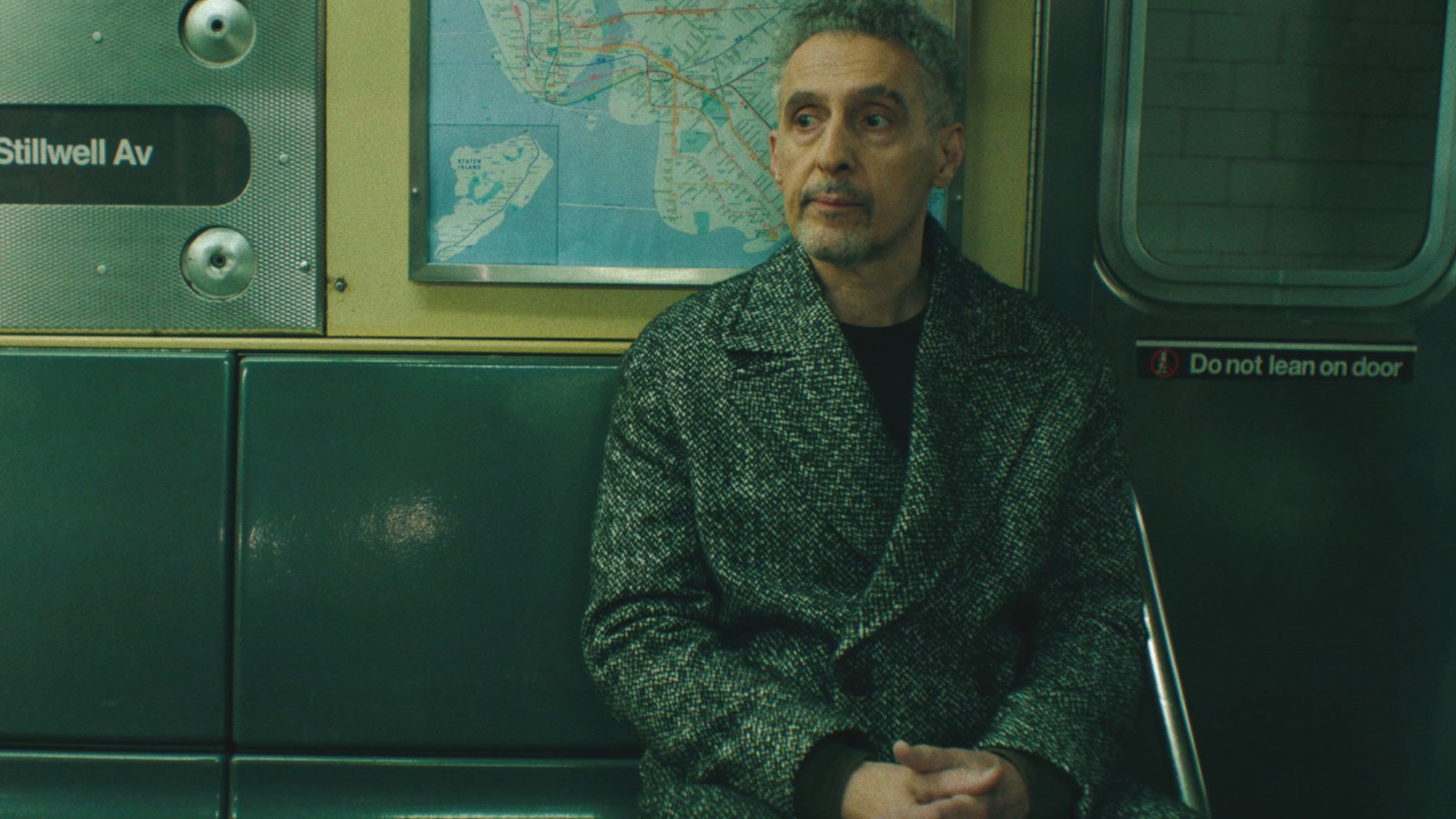
John Turturro is looking me directly in the eyes. He’s not blinking or breaking his stare, just talking in a calm, cool voice that’s a few decibels above an ASMR. Meanwhile, his right hand is slowly creeping toward his left hand, which he’s holding at face level and has closed in a fist. “So you’ll notice I’m not paying any attention to my wrist,” the Emmy-winning actor says, as he leans his elbow on the table. In a single fluid move, he casually undoes the watch he’s wearing, then palms it and pulls his right hand away. Turturro hasn’t glanced away from me. “It used to be easier back in the day, before everyone had metal watches; when they used to have bands, you could get it off someone even quicker. It’s still possible to unclasp even with the metal stuff, of course. You just have to be more delicate.” Sitting here in the back of the West Village restaurant Bar Pitti — Turturro is a frequent patron; “Welcome to my office,” he jokes, as the staff warmly greet him — the star of The Only Living Pickpocket in New York is giving a quick tutorial on the art of the steal. (A few nights later, during an onstage Q&A, the 69-year-old actor will bump into me and liberate a pair of sunglasses from inside my jacket.) A scrappy character study about an old-school thief dealing with a sick wife and a Mob-connected twentysomething, writer-director Noah Segan’s drama feels like an homage to the sort of modestly budgeted 1990s movies that helped Turturro lay the foundation for an extraordinary, varied career. The fact that his fellow NYC indie veterans Steve Buscemi and Giancarlo Esposito show up in supporting roles as well only heightens the throwback vibe. But Pickpocket, which goes into wide release on October 30, truly works best as a showcase for the kind of nuanced, detail-oriented work that Turturro has been doing for decades. And his aging professional criminal Harry Lehman stands side by side with Pino Frangione (Do the Right Thing), Herbie Stempel (Quiz Show), Jesus Quintana (The Big Lebowski), John Stone (The Night Of), Irving Baliff (Severance), and Barton Fink (Barton Fink) as one of his most memorable performances. Just because Turturro is not licking bowling balls or pining for Christopher Walken here doesn’t mean that Harry does not leave a big impact. He’s the last of the independents — per Turturro, an “analog guy” in a modern digital world that’s passed him by.Over a long lunch of pasta e fagioli and sauteed spinach, Turturro talked about learning to how to ply his character’s trade (subway patrons, he’s quick to note, were exempt; people on set were not), his early years studying acting; how his collaborations with Spike Lee and the Coen brothers shaped him; why getting Severance right was a result of “trial and error” (he’s mum about Season 3, though production recently wrapped); and a lot more. This conversation has been edited for length and clarity. Editor’s picks This new movie feels like something you would have made in the early 1990s — especially since Buscemi and Giancarlo are in it as well.Yeah, we’ve known each other a long time. I mean, we’re all still working, right? [Laughs] You can have a second or third act later in your careers. The thing is, folks try to put older actors out to pasture. Not in the theater, but in the movies. The irony is that’s when you’re doing your best work, because you have a lot of life experience to draw on. When you’re younger, you’ve got to find substitutions for things that you don’t understand: regret, relationships, everything changing around you, what it’s like to be a caretaker. Which is all stuff this movie draws on. We all recognized that.Was that what drew you to it?Partially. It was also the structure. I love Greek plays — that whole Aristotelian thing of a story that happens over a 24 hour period. Noah does it in 36 hours, but it’s the same thing essentially. There’s this propulsive tension and this tenderness that’s side by side. Harry, he’s an analog guy. The world is changing personally and professionally for this guy. He’s become more caring and less self-involved — he’s taking care of wife, who’s ill — but it’s not like Harry has changed. Related Content You don’t think he changes by the end of the movie?I hate when people say, “Well, the character has to change.” I say, “People don’t change. They can grow, or they can shrivel — they can discover what’s important.” Noah, he understood that. I thought it was very mature writing. I think Noah is 43 now, and you wouldn’t necessarily think a guy as young as he is could write a character like Harry. I think he drew from people in his family. How many pockets did you pick in the name of research?I read all the books I could find on pickpockets. Then I met Apollo Robbins, who’s a magician and a pickpocket; I’d read a profile of him in the New Yorker. He said, “Well, I’ll work with you and give you exercises.” Apollo, he’s like a concert pianist. I’m never gonna get to that level. But he gave me all these things and taught me how to scout people. So I would ride the trains all the time, and check out situations where I could put my hand in someone’s bag.Did you lift stuff while riding the subways?I didn’t necessarily take anything out, but I was like, right there a lot of times, thinking: “If I just go like that and she moves, I have it. Then I just drop it on the floor to give it back to her.” I kept practicing and practicing. I didn’t take anything from people on the train. When we were at the production office, preparing for like four months, or on set? I was doing it every day. Some people would catch me. It depended on how much was going on around them. I would do it even when we were shooting, and people didn’t see it.How good did you get on a scale of one to 10?Maybe a seven or an eight? Not a 10, but listen, I’ll take it. I didn’t want to be too good. [Laughs] There was this one time we were filming on the train, coats over the camera and all that. Two cops came on. We’re all thinking, Ok, I hope we don’t get arrested. I’m keeping my hands away from things. A few stops later, they get off the train — and Noah and I hear them say, “See, I told you it was him!” You’ve talked about how you grew up in a movie-watching family…We went to the movies a lot. And there was just constantly stuff on. The “Million Dollar Movie” in New York, every afternoon — it was like the first VCR. [Laughs] “Chiller Theater,” which showed all those Universal horror movies. All those old Warner Brothers gangster movies were always playing on TV. Did that play into you wanting to become an actor early on?I think so, yeah. Just seeing guys like James Cagney or Edgar G. Robinson on TV. I’m a big Robert Mitchum fan. [in Mitchum voice] “Baby, I don’t care!” Then later I discovered Marlon Brando. I think I was like 11 or something that I finally saw On the Waterfront, and just [makes mind-blown gesture]. But it wasn’t until I caught a clip of Midnight Cowboy on the Academy Awards. I hadn’t seen The Graduate yet, so it was the first time I’d seen Dustin Hoffman, and it was like a lightbulb went off. There was something about him that was like, “Hey, he’s a modern actor. He looks like someone in our family.” Then you had guys like Al Pacino and Robert De Niro starting out, and I was just kind of overwhelmed by the sense that this was the next generation. You had [Jack] Nicholson and [Gene] Hackman, too, but those three guys were first for me — maybe because they were ethnic or whatever. It was like it seemed like a window was opening up. The New Hollywood generation of movie stars, where they looked like the guy you saw down the block.It was that, plus there were some black actors besides Sidney Portier. You had Barbra Streisand. We were like, “Wow, there’s different kinds of people here.” I remembering going to see Pippin on Broadway, the Bob Fosse musical with Ben Vereen, and just another light bulb went off. I was like, “Oh my God, I could reach out and touch this guy!” I mean, I was mostly into sports. But I could hold the room. I was always getting in trouble doing things in study hall. I used to do impressions. I started doing some plays, and then I got hurt my last year playing basketball. I said, “What if this wasn’t something I did between seasons. What if I just did that?” Maybe this is something I would want to try to study, you know? You started out studying acting at SUNY New Paltz, right?Yeah. I didn’t get into NYU. I was on the waiting list, and I didn’t have the money to go there. But I was lucky, because I went to this school that all these great teachers from New York and the Midwest ended up at. We had a weekly class of live theater — it was 90 minutes, and we saw George C. Scott, Coleen Dewhurst, Ben Gazzara, James Earl Jones, Raul Julia. Meryl Streep did a scene for us from The Cherry Orchard. This would have been when the Public Theater was really hitting its stride as well…That’s right. I saw The Threepenny Opera there, Kevin Kline doing [Ben Hecht and Charles MacArthur’s play] Twentieth Century — I was mesmerized. Not long after that, I got cast in I my first play. I was Chief Bromden in One Flew Over the Cuckoo’s Nest. This was before the movie came out. I was very raw, but your first job is to hold people’s attention. When I got out of school, I was a bartender, a construction worker, a substitute teacher. I didn’t really know how to hustle to get jobs, so I did all these off-off Broadway plays. And then I asked one of my teachers, “Do you think I should apply to grad school?” I was still a little shy about presenting myself. But I had one great monologue from a play called Lou Gehrig Did Not Die of Cancer, by Jason Miller, this one-act play I had done it in school. The same Jason Miller who starred in The Exorcist and wrote This Championship Season? The same one. And that got me into Yale Drama School. For three years, I did everything: classical plays, new plays, Chekhov, Shakespeare. Charles Dutton and Angela Bassett were in my class. I think I got an award, the Carol Dye Award, for being the hardest working student or whatever. I got a couple $100 with it, and I was thrilled.How much of a culture shock was it going to Yale Drama School?It was definitely a culture shock. I mean, we were kind of protected because we were grad students and had jobs. There were some really snooty people there, though. But the drama school were people who were outliers. You guys aren’t the people who are necessarily trying to become the next leaders of the free world.No, but we were right next to Skull and Bones. You’d see those guys around. But going there was good for me, because I got to do a lot of things. You’re not pigeonholed when you’re doing theater. When you start making movies, they want to pigeonhole you, depending on how you look. John Turturro and Spike Lee in ‘Do the Right Thing.’ 40 Acres and a Mule Filmworks/Universal Pictures Did Pickpocket feel like you were making one of those indie films from back in the day again? Did you guys know that what you were doing in those movies 30 years ago would end up being a benchmark for so much independent filmmaking that came later?It did feel like that, yeah. And I can’t speak for the other guys, but I kind of knew. The Coen brothers’ stuff, for sure. I remember doing Do the Right Thing. We all felt like, well, this is about something. This is happening right around us. It’s still happening. You mostly grew up in Hollis, Queens, and Spike grew up partially in a largely Italian-American neighborhood, right? I’ve heard you say that you were sharing your experiences on the set of Do the Right Thing, and had told them a few things that you were like, “Oh, you should add this.”Not right away. When I read it, my father had passed away. I was read it in L.A. while I was doing a film with Dennis Hopper [Backtrack]. He had seen me in Five Corners — a lot of people saw it in the business, because it was a great part. [Writer-director] John Patrick Shanley fought for me to get it, and that was, as far as I was concerned, the first time I gave the sort of full performance that I could do on stage for a camera. I was still young, but I was using all of myself.So when Spike saw that, he was like, “I got to get that guy.” He gave me a choice of roles to play, and I said, “I’d rather play the racist guy, if you can make him a real person.” And then it was a long process. We rehearsed, we did all this stuff. I worked in a pizzeria, but then I started getting confident with him and [cinematographer] Ernest Dickerson. I said, “You know, there are things that people do say when you don’t have a good grip on the world…” He loved that I wasn’t afraid to show what it was.What was it, in your opinion?I think these people are unhappy. They’re ignorant. I know what it is to be the minority, and a lot of white people don’t know what that’s like. Italians were not considered Caucasians until after World War II; when my father was in the service, he had to check “other.” I had my best friends and people I had fights with growing up, but all different kinds of people. Doesn’t matter what color they are. They’re just different people. But it’s a big advantage, because you understand what that feels like. I had older people in my family who’d talk about the way Italians were persecuted in the early 20th century in one breath, and then they’d talk like Pino in the next…Me too. It’s very human, the way that that stuff’s portrayed in the movie without necessarily whitewashing anything. I got to do the direct opposite of Jungle Fever. Spike interviewed me about how I grew up, and I was like really happy to have the other side of that. But I think it’s important to kind of put your finger on it. And it’s funny in the black community, I have only gotten affirmation for that playing Pino, because they recognize that it’s real. It’s like “You did it, man. You showed it what it was.”You understood the assignment.My goal is to serve the story. I don’t have an image to protect. That’s part of our life. If you recognize that guy, I did my job. You know what I mean? Ignorance comes out of fear. My father, who was from Italy then came here — his best friend was Black. He worked with a lot of guys who were Black. And if you talked to him, he sounded like Archer Bunker towards virtually every group, including his own. His actions were so contradictory. It’s fascinating. And then you have the film’s ending…It was painful to do the end of that movie for a lot of people. I mean, you could say racism or tribalism, but: This is where it ends up, with people’s hands around each other’s throats, and we’re showing that. There were times on the set… People would think I was the character. They thought I was really Pino. Everyone went to dailies in those days, and you see the same scene five times, you’re going to say, “That’s who John is.” Some crew members hated me. The craft-services lady wouldn’t talk to me. She told me “I hate you,” and I was like, “Spike, tell her I’m the funny character.” She had never been on a movie set. Did you expect that the movie was going to get the kind of volatile reception it got when it first came out?I wasn’t completely surprised. I think it Joe Klein was the guy who said in New York Magazine there was going to be riots when the film came out. But it wasn’t just him. It was a number of folks. You know, people re-evaluate movies, or they re-reviews things that they once panned it. But no one ever said “I was wrong.” They never did a retraction. I mean, look, Spike liked to stir the pot. He still does. But they should be just looking at the work. I think that first song [“Fight the Power”] put them on edge from the start. What is it about filmmakers like Spike and the Coen Brothers that you have such a kinship with? Are you all operating on a similar frequency, or is that they’re the filmmakers that know how to use you best?It helped that we were same age range. We all got certain references. They’ve put me in different situations. Even Clockers — most of what I did was cut out, but Spike wanted me to be the main guy in it. If it had been a mini series, it would have had room for that character. But Spike and Joel and Ethan, they’ve given me opportunities because they’d seen me on stage. Sometimes, it takes a second to get on the same page with somebody. Like with Ben [Stiller] and Severance — it took a lot of trial and error to find the right tone for it. There was a lot of, “Well, let me try this. Or maybe that will work for a scene.” We hadn’t worked with each other before. We didn’t know each other. But once we began to trust each other, then it was possible to experiment and get creative with things. It was like, “Ok, now I can go further with you.” And that was when we found the tone. Severance is a weird show. It’s kind of a workplace comedy, kind of a sci-fi series, kind of a puzzle show… it makes sense it took a while to find the right balance.People like to try to figure everything out about it, and I like that you can’t. I mean, look at The Prisoner. You never found out everything about that world. And we’re still talking about that show! Do you feel like you were getting offers from other directors you wanted to work with during that period after Do the Right Thing and Barton Fink, or was it still a struggle?There were other directors who wanted me to do things, and I was not available. And sometimes, if you’re not available, they feel like you don’t like them. You turn them down one time, and that’s it. It’s like, I have a family. Maybe somebody’s sick. I have responsibilities. And other times, it just doesn’t come together. I wanted to do another movie with Francesco Rosi [who directed Turturro in 1997’s The Truce]. I wanted to do another with Redford. Those are two people that I really I just hit it off with. But you don’t always get that opportunity. Very often, they’re hustling too in this circus of a business. Since you brought up Redford, what do you remember about working with him on Quiz Show? Oscar or no Oscar, I feel like he never received enough credit for his work as a director.I agree. I got to know Redford really well, and loved working with him on that. It’s funny, I was the only person cast for a long time. He was showing me tapes of actors, and we were getting a peek at Ralph [Fiennes] in Schindler’s List. He wanted originally Tim Robbins and Paul Newman. I don’t know why Paul couldn’t do it, but Tim had committed to doing The Shawshank Redemption. And Redford wanted me to gain weight. Took me a long time to do that, and I got sick from it, but I wanted to please him because this was such a passion project. I thought: This story was clearly very personal to him. How so?Because he was a golden boy, and he understood what the fall of a golden boy was like. It wasn’t until I wrote about Redford after he died that I realized he was a juvenile delinquent, and that he bummed around Paris in his twenties, studying painting. He looked like a sun-dappled Adonis but wanted to be a bohemian artist.Right? He was a complicated guy. People forget before the movie star thing, he was a theater guy. That’s where he came from. He would come to my trailer in the morning and just want to talk to me, and I was like, “Come on, Bobby. Maybe we should get to set? You know, we got to get something today.” He had an eccentric side to him that people didn’t really see. And there was always this character actor living in side of him, even when he was directing. I saw him give younger actors advice, helping them understand how to play to the camera. He was very generous in that way. You’ve got a handful of directing credits as well [Mac, Romance and Cigarettes, Illuminata]. Do you think you’ll ever direct a movie again?If there was something that I felt no one else could do, then yeah, sure. That urge has not completely left my system. [Laughs] I wrote an adaptation of Philip Roth’s Sabbath’s Theater that I’d like to do, where I would be the lead as well. But I showed that to Noah, and he liked it — that’s a workable relationship I’d like to keep going, so maybe we’d do it together. There’s also this Pulitzer prize-winning book by Susan Sheehan, Is There No Place on This Earth for Me?, that is something I’d have to direct myself, because I know the breadth of that. My brother was in the same hospital as the woman in the book, and you see these movies about sick people… they’re reduced to their illness. The stories are never about their complex behavior, their sense of humor, their lust or cruelty or ambition. I lived around it, and that book totally gets it. So I’ve come close a couple times. There’s a story I did for The Moth, after my parents passed… I’ve seen the clip. It’s incredibly moving.It’s about that same thing. It felt like coming out of the closet, talking about that stuff in public. I’d like to do something around that. There are also other scripts I’ve written that I’ve given to other people as well, with the hopes that they’d direct. I have one on race, class, and sex that’s really my uncle’s story, that I’ve passed along to Spike, Hilton Als, Dr. Henry Louis Gates. A number of people have read it, and they’ve all been like, “We don’t know if we have the balls to do it.” I was going to make it with De Niro, who was desperate to do it for a long time. But he’s aged out of it. He even said that to me. [Laughs] I still want to do it if I could find the right person, but you know, I wouldn’t need to direct it at this point. When Sidney Lumet had a script he hadn’t written, he still made a Sidney Lumet film out of it. He put his stamp on it. I’d be happy to see someone else put their stamp on that story. Is it harder to make the kind of movies you like to make right now? I mean, The Only Living Pickpocket in New York got picked up by Sony Picture Classics, but I feel like something like [Turturro’s directorial debut] Mac is a harder sell these days…Yeah. It is. There are still great people to work with on making them, but getting them out there is different than it used to be. Especially if they’re the kind of thing that provokes discussion, but I like those types of films. I still have a rebel inside of me. I still like saying, “This is bullshit, and this isn’t bullshit.” Trending Stories Are you still getting the same feeling of satisfaction out of acting that you used to?Right now, yeah. Right now, I’m in a great place. I have Pickpocket. I did Tom McCarthy’s movie [A Statement], which is coming out next year. I just did Rhinoceros onstage in Cambridge, and we’re gonna do it again on Broadway in the spring. I feel like I still have things to offer. I don’t like it when people try to control you or let their anxiety dictate things, but I still love what I do when I’m doing it with people that really want to collaborate, because then I feel like I will do whatever for them. And you know, I’ve saved my pennies. I can walk away any time I want if I stop loving it. You’re in your late Robert Mitchum phase.“Baby, I don’t care.” [Laughs]
How to Pick Pockets (and Steal Scenes) with John Turturro
Full Article
Original Source
Read the full article at Rollingstone →KhanList aggregates and links to publicly available news content. We do not host full articles from third-party sources. Always verify important information with original sources.