
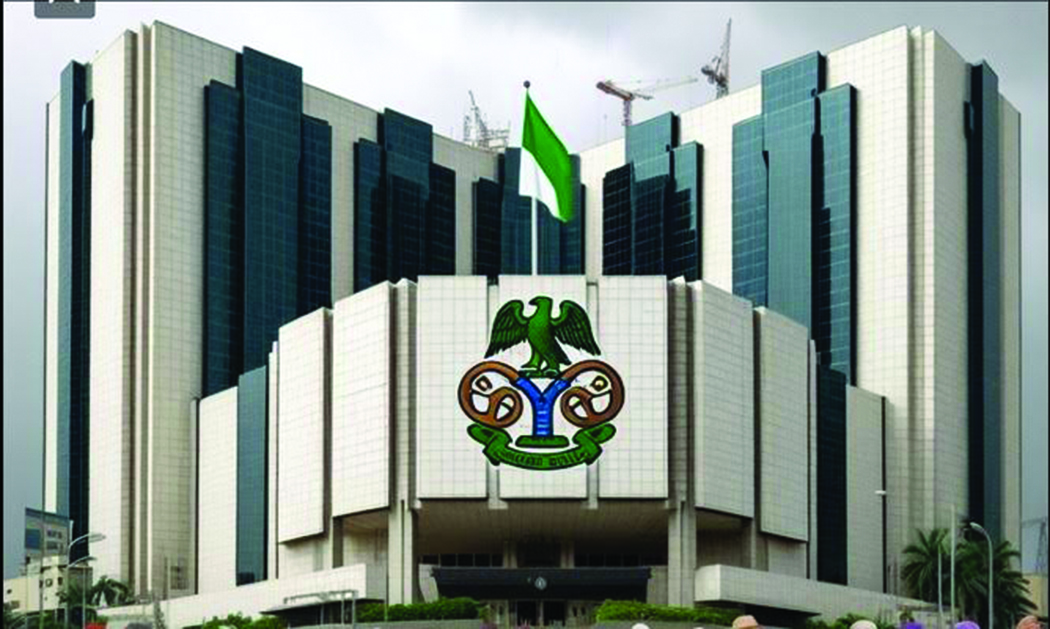
How to Make Your Savings Work for You Omolabake Fasogbon The Central Bank of Nigeria (CBN) has urged commercial banks to expand credit creation, following the N4.65 trillion raised in the just concluded recapitalisation exercise. Specifically, the apex bank instructed lenders to channel funds into productive sectors of the economy in ways that translate into job creation, improved productivity and foreign exchange earnings. With this directive, a new dawn may be emerging for credit-worthy individuals and businesses long constrained by access to credit. Analysts, including Monetary Policy Committee (MPC) member, Prof. Murtala Sabo Sagagi, averred that stronger bank capital should translate into lower lending rates and more affordable loans for households and businesses. Beyond loan relief, the recapitalisation exercise, described as the most significant capital raise in Nigerian banking history offered some reassurance to depositors who can expect a more resilient financial system, better primed to support economic growth and withstand domestic and external shocks. Broadly, this exercise has implications on both savers and borrowers, and understanding them is crucial for shaping financial decisions, especially for the investment-conscious. For borrowers, the expectation is accessible and affordable loans. However, concerns remain that banks seeking to recover cost of recapitalisation may be tempted to lend even at higher rates, or favour high-net-worth individuals and large corporations over productive sectors. Also noteworthy is the MPC’s decision to retain the Monetary Policy Rate (MPR) at 26.5 percent. The dilemma for savers is reflected in the view of President, Capital Market Academics of Nigeria (CMAN), Uche Uwaleke that many banks may not need to raise additional capital, having significantly strengthened their financial position. The implication, according to economist Leonardo Gambacorta is that poorly capitalized banks tend to suppress deposit rates more than well-capitalised ones. The MPC’s decision to retain the Cash Reserve Ratio (CRR) at 45 percent also leaves savers in a tight corner. Chief Executive Officer of the Centre for the Promotion of Private Enterprise,Muda Yusuf demystifies this. “If a bank receives a N600 million deposit, about N45 million must be set aside as Cash Reserve Ratio (CRR). The bank earns no return on those funds, yet it still pays interest on the entire deposit. Since it cannot use the CRR portion for lending or other business activities, offering very high deposit rates becomes a disincentive.” Current environment therefore calls for yield-seeking savers to be more proactive by aligning their investments with prevailing market conditions. Ultimately, financial advisers recommend diversifying investment portfolios according to financial goals, cash-flow needs and risk tolerance. For instance, individuals seeking to preserve capital while earning returns above ordinary savings, the treasury bills, federal government savings bonds and money market mutual funds are considered suitable alternatives, depending on risk appetite. Beyond savings and fixed deposits, Yusuf pointed to a wider range of investment opportunities, including stock market, real estate, and investment products offered by finance companies and asset managers as viable alternatives capable of delivering stronger returns. “Many investors have recorded substantial gains in the stock market this year, with Nigeria ranking among the world’s best-performing markets,” he said. He added that entrepreneurship also presents opportunities in sectors such as retail, ICT and the creative industry, adding that those who prefer not to run businesses can monetise their professional skills.
How to Make Your Savings Work for You
Full Article
Original Source
Read the full article at Thisdaylive →KhanList aggregates and links to publicly available news content. We do not host full articles from third-party sources. Always verify important information with original sources.