
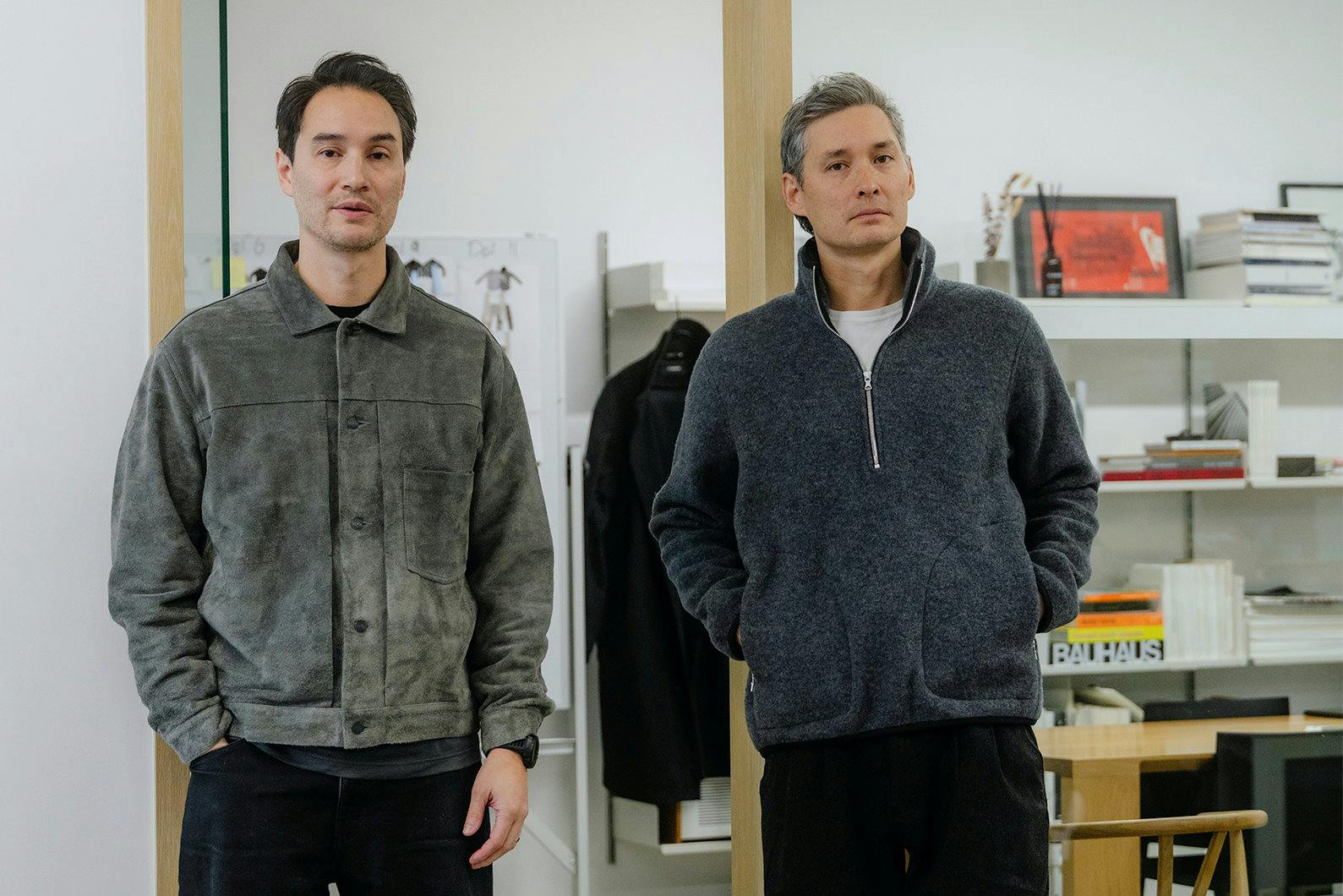
Not a lot stays the same across two decades. Remember 2006? I sure don't. None of us had cell phones and the internet was so young that it was crawling, not walking (the very first YouTube video was uploaded in 2005). Certainly, we didn't dress the same then as we did now. Except maybe for Arthur and Daniel Chmielewski, sibling cofounders of HAVEN, beacons of consistency for 20 years.20-year-old Canadian retailer HAVEN has long been a, well, haven, for menswear of a particularly Japanese inclination. On one hand, I mean that HAVEN quickly became a source for quality clothes from OG Japanese street-military-luxe labels like Neighborhood and WTAPS. It still sells that stuff to this day alongside a strong slate of young labels and HAVEN Brand, its collection of wearables informed by the HAVEN mantra: equipment for living.But on the other, when I bring in the Japanese reference point, I also mean that HAVEN has always been synonymous with a certain style of useful cuts and versatile hues. A lot has changed over the past two decades, including HAVEN's selection and focus, and yet — not much has changed. HAVEN has always operated according entirely to its own whims. No trend-hopping cash-ins. Nothing but nice wearable things built to last.See, it's not just that HAVEN sold Japanese clothes as much as it has remained a reliable source of meaningful product. HAVEN proffered objects and apparel imbued with the kind of purpose epitomized by ever-aspirational Japanese boutiques, which exclusively fill their shelves with makers they trust. Even the early HAVEN spaces were built by hand — the brothers' hands. (I shouldn't have been surprised that the Chmielewski brothers' sister cofounded brilliant local store Nalata Nalata, a disparate but likeminded storefront of beautiful houseware)Such is true not only of HAVEN's selection but HAVEN Brand, the nearly decade-old clothing label that distills the brothers' ethos down to a wearable science. Just check its waterproof Loro Piana wool suits, GORE-TEX leathers, borderline bulletproof bags, and collaborative footwear (classic shapes from Vans, Dr Martens, and fellow Canadian outdoorsy upstart norda refined into freshness). It's supremely wearable no-nonsense stuff and, again, built to last.So is HAVEN. The company is commemorating its two decades in the biz with killer crossovers that include both bespoke collabs and special-edition clothes from cool-guy imprints like ssstein, plus pop-up "exhibitions" that'll better connect the global HAVEN-curious with the unimpeachable product they've coveted from afar. These objects are indicative of everything the Chmielewski brothers have ever built before and of what they're planning to build next — by hand, no less.Your Highsnobiety privacy settings have blocked this Instagram post.This conversation has been condensed and edited.How does it feel to look back on 20 years of HAVEN?Arthur Chmielewski: We were so young when we started the company. Like, I was 23 and Daniel was 25. We didn't really have this grand 20-year plan. We were just really passionate about opening a cool store and bringing cool product to Edmonton. Daniel Chmielewski: We always had aspirations to to to build a really great company. But in the early stages, I guess we pretty naively figured, "Hey, let's just open a store and sell cool clothes."How does it feel to make it 20 years without that "grand plan?"Arthur: 20 years means we're doing something right. We might not do everything right, but something is resonating with people. Maybe if we weren't brothers, things might've fallen apart by this point. This whole thing is really a family affair; some of our employees have been with us for almost 20 years.Another HAVEN throughline is Japan. Japanese brands, Japanese production.Arthur: Early on we were pioneers, I suppose, in terms of bringing a lot of the Urahara-era [influential '90s Harajuku streetwear] Japanese brands to Canada. We've always been very into Japanese fashion and and culture, the idea of craftsmanship.That's evolved over 20 years of traveling there to meet all these new brands and and develop relationships. Over the past 10 or so, I've also been going there for the development of our own brand, meeting the makers and mills. I actually don't spend that much time in Tokyo anymore; I'm usually in the countryside, catching up with the craftspeople.Talk to me about the word "craft" — it means so many things to so many people but I imagine you have a specific definition.Daniel: Our taste has always been very functional and craftsmanship's a huge part of that. It's listed as one of our company values. I mean, a lot of shop owners probably have "craftsmanship" as one of their beliefs but it comes from our upbringing. Our parents are immigrants — our dad's Polish and our mom's Vietnamese — and they were property caretakers. So, when we were growing up, our dad taught us construction, how to really "overbuild" things, like using 10 nails when you only really needed two. Arthur and I basically built the first, like, seven of our store buildouts ourselves.Arthur: For us, craftsmanship is the need to be useful, building something that really lasts. Really caring about every part of the product and process.How has that informed HAVEN Brand?Arthur: When we leaned into the authenticity of the product, it started working well for us. I think people can sense that subconsciously. On our end, it's intuitive. I mean, I have two kids so I can't baby any of my clothes. We build products to be worn, whether that's day-to-day stuff in the city, at work, going into nature — the product has to work.How do you design for that approach? Is it form following function?Arthur: Neither form of function necessarily takes the lead for us. There's a fine balance because stuff can be ultra-functional but may not have any emotional connection to the user, right? We want to make something really useful, really well-made, where the person wants to wear it more often, and the more often they wear it the more they fall in love with it. The more they fall in love with it, the more they can't live without it. Daniel: Our job is to make the very best product that we can.That correlates with your collaborations.Daniel: What it usually comes down to is that we can't necessarily build those products ourselves nor do we want to at this stage in our company. With our footwear partners, whether that's Converse or Timberland or Guidi, we work with them to do something that we're not able to do on our own or speak to a customer that they're not able to on their own. Less is more.Arthur: Right. Sometimes it's through very simple things like refining the details by millimeters or the choosing colors for the materials that they may not have thought about.That's something we talked about for your recent HOKA drop. Another thing we've talked about previously is your entry into new markets, which is related to these 20th-anniversary pop-ups you're doing.Arthur: Expansion is our biggest aspiration. We're still a very small team, even though we've gotten bigger over the past two decades. A "little big company" is a good way to describe HAVEN because we punch above our weight class, I like to think — at least in terms of global awareness.What we're developing with our own brand allows us the freedom to potentially open a standalone HAVEN store in New York or Tokyo, where there might be some form of multi-brand assortment — the geography and "politics" of the wholesale clothing business doesn't always cross borders so nicely — but maybe not identical to what's in our Canada flagships.How do you export not just the product but the "feeling" of HAVEN?Daniel: It's something that's hard to put into words. But I always ask peers and friends who visit if our stores feel like "HAVEN stores." The answer recently has been a resounding yes, which feels great because we worked really hard to achieve that. Now, it becomes easier to move that feeling and perspective.Arthur: Sometimes, we'll talk about building into the hospitality world, like with a hotel or something, and we'll ask ourselves: what would that world look like. The answer is a lot clearer than it used to be.You have readymade branding! Call it HAVEN'S HAVENS.Arthur: I mean, in another decade, we'd love to have something like cabin rentals or an island store within an island home or something. Of course, our market is the people that really care about this stuff, which is still kind of small. Daniel: We've always loved product, though, and that's what everything comes back to. Not even just apparel — home goods, watches, cars, whatever. We just like really well-made product.Highsnobiety has affiliate marketing partnerships, which means we may receive a commission from your purchase. Want to shop the products our editors actually love? Visit our SHOPPER page and subscribe to the newsletter for recs on all things fashion, footwear, and beauty.
How to Make It 20 Years In Menswear? Do It Yourself
Full Article
Original Source
Read the full article at Highsnobiety →KhanList aggregates and links to publicly available news content. We do not host full articles from third-party sources. Always verify important information with original sources.