
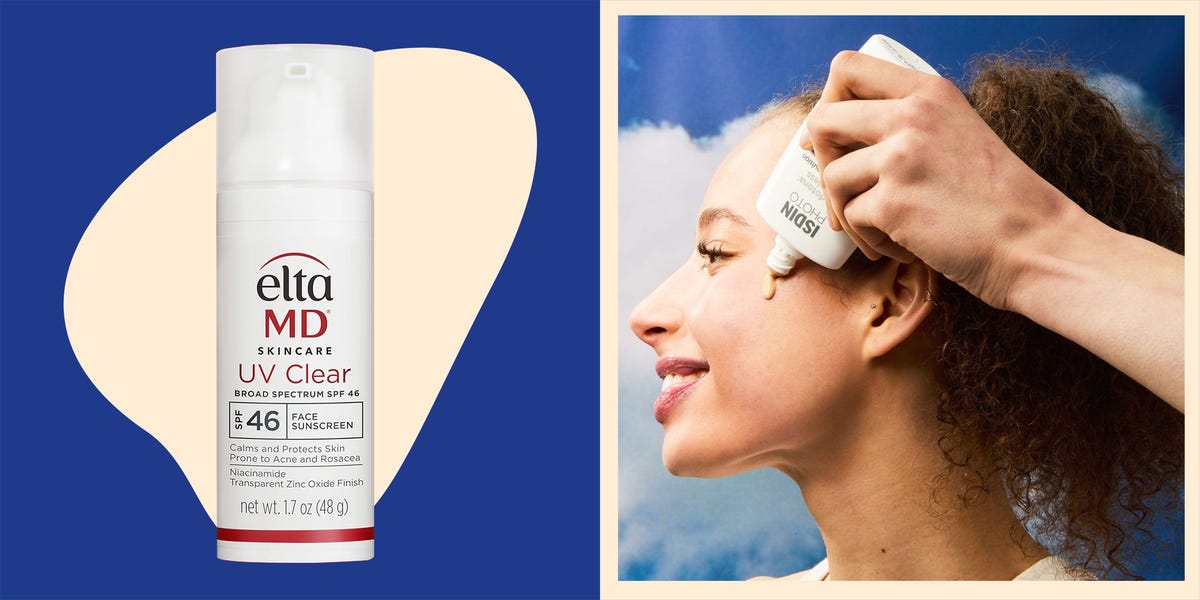
7 min readFall is finally here, but your sunscreen shouldn’t be packed away with your beach bag. UV exposure—and the sunburns and photoaging it contributes to—don’t disappear when temperatures drop or when clouds roll in. You might swap out your gel-based cleansers and face lotions for richer creams, but using a broad-spectrum sunscreen with at least SPF 30 should remain the final step in your morning routine year-round.But if you’ve got a loaded skincare routine, applying sunscreen is easier said than done. There are serums, moisturizers, foundations, and even SPF makeup. You might even use an essence or toner that needs to be correctly layered before you slather on sunscreen.That’s where I come in as our beauty editor. With a decade of beauty journalism experience, I tapped into a trusted group of dermatologists to demystify how to layer sunscreen effectively. The pros answer all your burning questions, like whether you can apply two sunscreens for more protection. Does layering SPF 30 and SPF 50 equal SPF 80? Should tinted sunscreen replace foundation or go underneath it? Here’s how to layer sunscreen with skincare, makeup, and other SPF products to ensure your skin is well-protected year-round.What is SPF?SPF stands for sun protection factor, and it measures the amount of UVB radiation necessary to cause sunburn on protected skin compared with unprotected skin under standardized testing conditions, says Shereen Teymour, DO, a dermatologist in New Jersey and New York.So how does the sun protection factor work? SPF 30 filters around 97 percent of UVB radiation, while SPF 50 filters approximately 98 percent, says dermatologist and Veea Face founder Suzan Obagi, MD. Some sunscreens even offer SPF 100 coverage, which guards against 99 percent of UVB rays, says dermatologist Neera Nathan, MD, in our guide to SPF facts.So does that mean a higher SPF is better? A higher sun protection factor does offer a slight difference, but you can still use SPF 30 sunscreen if you use it correctly. Namely, apply an adequate amount of product and reapply at least every two hours, including after perspiring or swimming.Highest SPF Sunscreens I TrustWhat is the correct order for applying sunscreen with skincare and makeup?“I tell my patients to think thin to thick, and treatment to protection,” says dermatologist Anna Karp, DO, who practices at Journelle Skin in New York. Cleanse first, then apply your toner or essence followed by water-based serums such as vitamin C, niacinamide, or hyaluronic acid and any other treatment products. Moisturizer comes next, and sunscreen is the last step of skincare.“Sunscreen needs to sit on top of your skincare as an even, undisturbed layer, and makeup goes over it,” says Dr. Karp, who is also an associate clinical professor of dermatology at NYU School of Medicine. She prefers retinoids and exfoliating acids at night. “And obviously don't wear sunscreen at night, though I have seen patients do this.” After that comes makeup, starting with primer, followed by foundation, powder and blush, she says.However, if you have a great tinted sunscreen, you may not need a primer or even a foundation depending on how much coverage you prefer and the occasion, says dermatologist Shadi Kourosh, MD, an associate professor of dermatology at Harvard Medical School and the Obagi Foundation Endowed Chair in dermatology.My Favorite Face SunscreensGreat for Oily, Acne-Prone SkinLightweight Mineral SunscreenIs moisturizer necessary before sunscreen?You don’t need to use a moisturizer before sunscreen, says dermatologist Brianna Olamiju, MD, who practices at Spring Street Dermatology in New York City. If your sunscreen feels hydrating enough, skipping moisturizer is fine, especially for oily, combination, and normal skin types. Dry, sensitive, or dehydrated skin may still benefit from a moisturizer underneath. “I tell patients that moisturizer is an individualized step and sunscreen is a non-negotiable part of the morning routine,” she says.Just remember to not mix your sunscreen into moisturizer because it dilutes the sun protection, says Dr. Obagi, who is the director of dermatologic surgery for the residents at UPMC.My Favorite Moisturizers and Hydrating SunscreensPacked With Hyaluronic AcidCan I layer two sunscreens?Layering two sunscreens can help improve overall coverage, but it doesn’t create a predictable combined sun protection factor. “SPF 30 plus SPF 50 does not equal SPF 80,” says dermatologist and Mohs micrographic and cosmetic laser surgeon Tiffany Libby, MD. Rather, the amount of product applied, the formulations used, and how evenly they are distributed determine your SPF value, which you can’t fully calculate. When you want SPF 50 protection, start with a broad-spectrum SPF 50 sunscreen and apply the recommended amount rather than relying on layers of lower-SPF products, says Dr. Teymour.Can I mix SPF 30 and 50?No, don’t mix SPF 30 and 50 in your hand before applying them. Sunscreens are formulated and tested as finished products, and mixing them can potentially alter how evenly they apply to your skin and their sun protection, says Dr. Teymour. When you want SPF 50 protection, she recommends starting with a broad-spectrum SPF 50 sunscreen and applying the recommended amount rather than relying on a combination of lower-SPF products.My Favorite SPF 50 SunscreensLives Up to the TikTok HypeCan you layer mineral and chemical sunscreen?You might have heard that chemical sunscreens must go directly on bare skin, while mineral sunscreen should always be the final layer because it’s thought to physically reflect UV rays. But that’s a common misconception, says Dr. Teymour. Both types of sunscreen help absorb UV radiation, though mineral filters reflect or scatter the rays, so either formulation can go on first.Her advice: apply the lighter formula first, let it settle, then gently apply the second sunscreen without rubbing or disturbing the first layer. Just know that layering formulas can cause pilling or uneven coverage. “If two sunscreens don't layer well together, I would rather you use one sunscreen that you enjoy wearing and can apply generously and consistently,” she says.Mineral Sunscreens Worth the MoneyWeightless SPF 50 Mineral SunscreenCreated by a DermatologistHow long should you wait between applying sunscreen and adding another layer?There is no universally established waiting period between sunscreen layers, according to the experts I spoke with. Your best bet is to allow each product to settle before applying the next, which may take a few minutes to form an even film before makeup, depending on the formulation, says Dr. Libby.A pro tip from Dr. Olamiju: Allow the first layer of sunscreen to form an even film, and avoid excessive rubbing when applying the second layer, since disrupting that film can potentially create uneven coverage. “Rather than focusing on an exact timer, look for the sunscreen to no longer feel very wet or mobile on the skin,” she says.Can you wear tinted sunscreen under foundation?Yes, you can wear tinted sunscreen under foundation. Tinted sunscreens containing iron oxides are especially helpful if you’re dealing with melasma or hyperpigmentation and can provide additional protection against visible light, which can contribute to pigmentation, says Dr. Libby. Just be sure you’re applying a generous amount of sunscreen to get the labeled SPF benefits before applying your complexion products.Tinted Sunscreens WH Editors Enjoy UsingCan SPF makeup replace sunscreen?No, SPF makeup doesn’t replace sunscreen. The experts I spoke with agree that you should treat SPF makeup as supplemental rather than your primary sunscreen.You should apply two finger lengths of sunscreen (about a quarter-size amount) to your face and neck, doctors recently told us in our guide to sunscreen application. But most people don’t apply enough SPF makeup to achieve the full sun protection factor listed on the label. Even if you did use the right amount of product, it wouldn’t go on evenly, cautions Dr. Karp. When you're spending extended time outdoors, just reapply a dedicated sunscreen in an adequate amount rather than relying on powder sunscreen alone, adds Dr. Teymour.What is the best makeup with sunscreen?That doesn’t mean you have to give up wearing makeup entirely. Applying a tinted sunscreen under foundation, SPF blush, and using powder sunscreen as a setting powder alternative can make midday touch-ups realistic, says Dr. Obagi.“Use it to top up your protection throughout the day, not to replace a real sunscreen in the morning,” says Dr. Karp. “A tinted mineral sunscreen with iron oxides is an especially good base, since it also helps with visible light, which matters for patients with melasma or hyperpigmentation.”When applying makeup afterward, pressing or gently blending is preferable to aggressively rubbing, which can disturb the sunscreen layer, says Dr. Olamiju.My Favorite SPF MakeupNo Foundation or Concealer NecessaryTranslucent Setting Powder AlternativeWhere should I apply sunscreen?Sunscreen application is just as important the actual product you use, says dermatologist Jeanine Downie, MD, of Image Dermatology in Montclair, New Jersey. Remember to cover your entire face from the top of your hairline down to the bottom of your neck, and include your ears, under your eyes, and your lips. “You should put sunscreen below the rim of your eyebrow as long as you’re not exercising,” she says. “If it is a really hot humid day, maybe you don’t want to do that, but in general people should put it on their upper lid because it protects that area as well.”Meet the ExpertsShereen Teymour, DO, is a dermatologist practicing in New Jersey and New York City.Suzan Obagi, MD, is a dermatologist, cosmetic surgeon, and associate professor of dermatology and plastic surgery at the University of Pittsburgh. She is also the founder of the skincare line Veea Face.Brianna Olamiju, MD, is a dermatologist at Spring Street Dermatology in New York.Anna Karp, DO,, is a dermatologist practicing at Journelle Skin in New York and a clinical assistant professor of dermatology at NYU. Tiffany Libby, MD, is a dermatologist and Mohs micrographic and cosmetic laser surgeon in Providence, Rhode Island. She is also the director of Mohs Micrographic and Dermatologic Surgery and an assistant professor of dermatology at Brown University's Medical School.Shadi Kourosh, MD, is a dermatologist, associate professor of dermatology at Harvard Medical School, and the Obagi Foundation endowed chair in dermatology.Jeanine Downie, MD, is a dermatologist and owner of Image Dermatology in Montclair, New Jersey. Dr. Neera Nathan, MD, is a dermatologist and fellowship-trained Mohs micrographic surgeon. She’s written more than 25 peer-reviewed publications, reviews, and book chapters.Nicole Saunders is the beauty editor at Women's Health and has nine years of experience researching, writing, and editing lifestyle content. She specializes in breaking down complicated topics, like red light therapy for hair growth and LED face masks, into easy-to-understand guides. Saunders takes great pride in heavily researching and testing featured beauty products, such as strengthening shampoos and body washes for dry skin on our site. Previously, she was the beauty editor at Best Products where she tested quite literally thousands of launches for her quarterly column and the Best New Beauty Awards package. She also launched the beauty and wellness coverage at NBC News and contributed to CNN, Cosmopolitan, Billboard, The Hollywood Reporter, and Harper's BAZAAR. You can follow her on Instagram to stay in the loop on her product testing adventures.Christian is the Style and Reviews Director at Men's Health and Women’s Health, where he oversees shopping and style content for both brands. He started his magazine career as an accessories assistant at Vogue, and has since held editorial roles at Tatler Asia and The Manual. When he’s not online shopping, you can find him on long walks with his two corgis.
How to Layer Sunscreen for Better Protection, According to Dermatologists
Full Article
Original Source
Read the full article at Womenshealthmag →KhanList aggregates and links to publicly available news content. We do not host full articles from third-party sources. Always verify important information with original sources.