
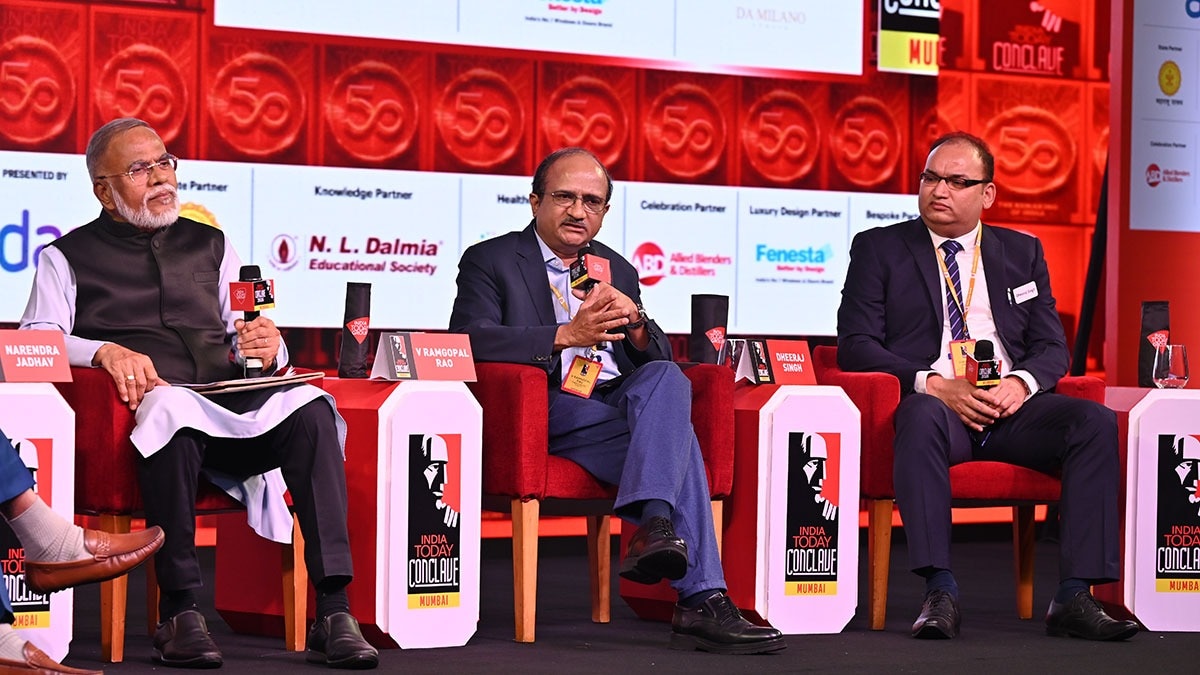
Student suicides at the Indian Institutes of Technology (IITs), the role of caste discrimination and the need to make academic excellence more humane came under sharp scrutiny at the India Today Mumbai Conclave 2026, with experts calling for institutional accountability, better mental health support and reforms to campus culture. The discussion, titled around the challenge of addressing suicides at IITs while pursuing excellence, featured economist, educationist and former Rajya Sabha member Narendra Jadhav; V. Ramgopal Rao, former director of IIT Delhi; and Dheeraj Singh, an IIT Kanpur alumnus and founder of the Global IIT Alumni Support Group.The debate was prompted by the suicide of Sahil Vakode, a second-year IIT Bombay student, who died after being caught allegedly using a mobile phone during an examination. The incident triggered protests and allegations of caste discrimination, although the circumstances surrounding the student’s death remain a subject of inquiry.45 STUDENT SUICIDES REPORTED IN IITS IN FOUR YEARSJadhav argued that the incident should not be viewed in isolation, pointing to a combination of academic pressure, caste-based discrimination, social isolation and inadequate mental health facilities as factors contributing to student suicides. Citing Rajya Sabha data, he said 45 students had died by suicide in India’s 23 IITs between 2021 and 2025. He also referred to the findings of a National Task Force constituted by the Supreme Court, which identified multiple factors behind student suicides. Rejecting the idea that the issue could be explained exclusively by either mental health challenges or caste discrimination, Jadhav said the causes were interconnected. He argued that students from Scheduled Caste (SC) communities appeared to be disproportionately represented among suicide victims compared with their share in the IIT student population. However, he acknowledged that students from the general category, too, had died by suicide during the period.Jadhav also highlighted the lack of diversity among faculty members, citing figures that showed faculty recruitment backlogs of 90 per cent for SCs and 93 per cent for Scheduled Tribes (STs). He described the disparity between the social composition of students and that of faculty members as a significant institutional challenge, arguing that students from marginalised communities might struggle to find mentors with whom they could relate and share their experiences.ACADEMIC PRESSURE AND INADEQUATE INFRASTRUCTURERao offered a broader explanation, arguing that the highly competitive nature of the IITs, differences in students’ academic preparation and inadequate institutional infrastructure also contributed to the pressures faced by students. He pointed to the wide range of entrance examination ranks represented in IIT classrooms, explaining that students with different levels of preparation and learning needs were often taught at the same pace and evaluated through demanding examinations.According to Rao, many students arrive at the IITs after years of intensive coaching, where they received structured preparation and individual attention. The transition to a university environment, where examinations are designed to test how they solve unfamiliar problems with independent thinking, can prove difficult. He said students across social categories, including those from the general category, struggled to adapt to the system.Rao also argued that the IITs had not adequately expanded their infrastructure and faculty strength to accommodate the substantial increase in student intake over the past decade. He expressed concern about declining public expenditure on education as a proportion of India’s gross domestic product (GDP), arguing that inadequate investment had compounded the challenges facing higher education institutions.While acknowledging the importance of diversity, Rao cautioned against attributing all student suicides to discrimination. He said the IITs needed to evolve their teaching methods and institutional practices to respond to the needs of increasingly diverse student populations.STUDENTS NEED A SENSE OF BELONGINGSingh urged that the discussion should focus on preventing student deaths rather than assigning blame after a tragedy. Citing data compiled through Right to Information applications and other sources, Singh claimed there had been 171 student suicides in the IITs over the past 20 years, including 74 in the last five years and 35 in the last two. He also cited figures for IIT Kharagpur, IIT Kanpur, IIT Delhi and IIT Bombay, arguing that the numbers warranted a closer examination of student well-being across campuses.Singh stressed that these figures alone could not establish the causes of the deaths. However, he said the social environment in the institutions mattered because students needed to feel accepted, find mentors and have access to people who understood their experiences. He argued that students from marginalised communities and women could face additional challenges in environments where they felt underrepresented or isolated.Singh also questioned whether the existing grievance redressal mechanisms were trusted by students. Referring to the National Task Force’s interim report, released in June, he claimed that 44 per cent of the surveyed students did not trust their institutions’ grievance redressal systems, while 34 per cent felt like outsiders.He called for independent investigations into student deaths, greater accountability among institutional leaders, and a broader understanding of mental health that included faculty and staff members as well as students. Singh said institutional leadership should be assessed not only on academic performance and research output but also on campus well-being. “Rigour is important. We need high standards. But that doesn’t mean we will have a high human cost to achieve that excellence,” was the central argument of his intervention.Caste discrimination and the credibility of grievance mechanismsThe panel also debated whether caste-based discrimination was being adequately acknowledged in the IITs. Jadhav argued that discrimination could manifest through everyday interactions, including remarks about students’ backgrounds, language or social identities. He said institutions needed to examine the broader campus environment rather than focus only on formal complaints.He also questioned the composition of the inquiry panel formed by IIT Bombay after Vakode’s death, saying that only one of its ten members was a psychiatrist while the others were academics. He argued that investigations into student deaths required appropriate mental health expertise.The discussion turned to the circumstances surrounding Vakode’s death and the public reaction to the allegations involving the examination. Jadhav questioned the handling of the case and the public circulation of footage related to the incident, arguing that the deceased student could no longer defend himself against allegations. The moderator, however, cautioned against reaching premature conclusions about the professor involved, stressing that both students and faculty members deserved a fair process, and that the inquiry should be allowed to establish the facts.EXCELLENCE MUST BE ACCOMPANIED BY EMPATHYRao said faculty diversity was a long-term challenge, noting that reservations in faculty recruitment had been introduced relatively recently, and that building a more representative pool of faculty members would take time. He also emphasised that responsibility for supporting students should rest with the entire institution rather than being placed solely on faculty members from marginalised communities.Jadhav called for a stronger culture of care, arguing that academic excellence should encompass empathy, dialogue and the ability to teach students from diverse backgrounds. He urged faculty members to treat students as individuals rather than judge them through their social categories, and called for an end to condescending behaviour and assumptions that students admitted through reservation were inherently less capable.He also advocated making academic progression more predictable and fair, with opportunities for students to recover from mistakes rather than face consequences that could permanently derail their education. The debate touched on the allegation that Vakode had been caught using a mobile phone during an examination. Jadhav questioned whether the institutional process had been followed and argued against presenting an official version before the facts had been fully examined.CALLS FOR CURRICULUM REFORM AND A HEALTHIER CAMPUS CULTUREAs the discussion moved towards solutions, Singh called for measurable accountability among the IIT leadership and independent scrutiny of institutional practices, with mental health outcomes treated as a central indicator of campus performance. Jadhav called for faculty training, stronger student support systems, fairer academic processes and a more inclusive culture that recognises the varied circumstances in which students enter elite institutions. Rao, in his concluding intervention, advocated greater flexibility in IIT curricula, arguing that rigid academic structures needed to be reconsidered.The panel broadly agreed that maintaining demanding academic standards did not have to come at the expense of student well-being. However, the speakers differed on the relative importance of caste discrimination, academic competition, institutional resources and campus culture in explaining student suicides. The central question emerging from the India Today Mumbai Conclave 2026 was whether India’s premier engineering institutions could preserve their reputation for academic excellence, while ensuring that students had access to meaningful mental health support, fair academic procedures and an environment in which they felt they belonged.Subscribe to India Today Magazine- Ends
How to humanise the pursuit of excellence
Full Article
Original Source
Read the full article at Indiatoday →KhanList aggregates and links to publicly available news content. We do not host full articles from third-party sources. Always verify important information with original sources.