
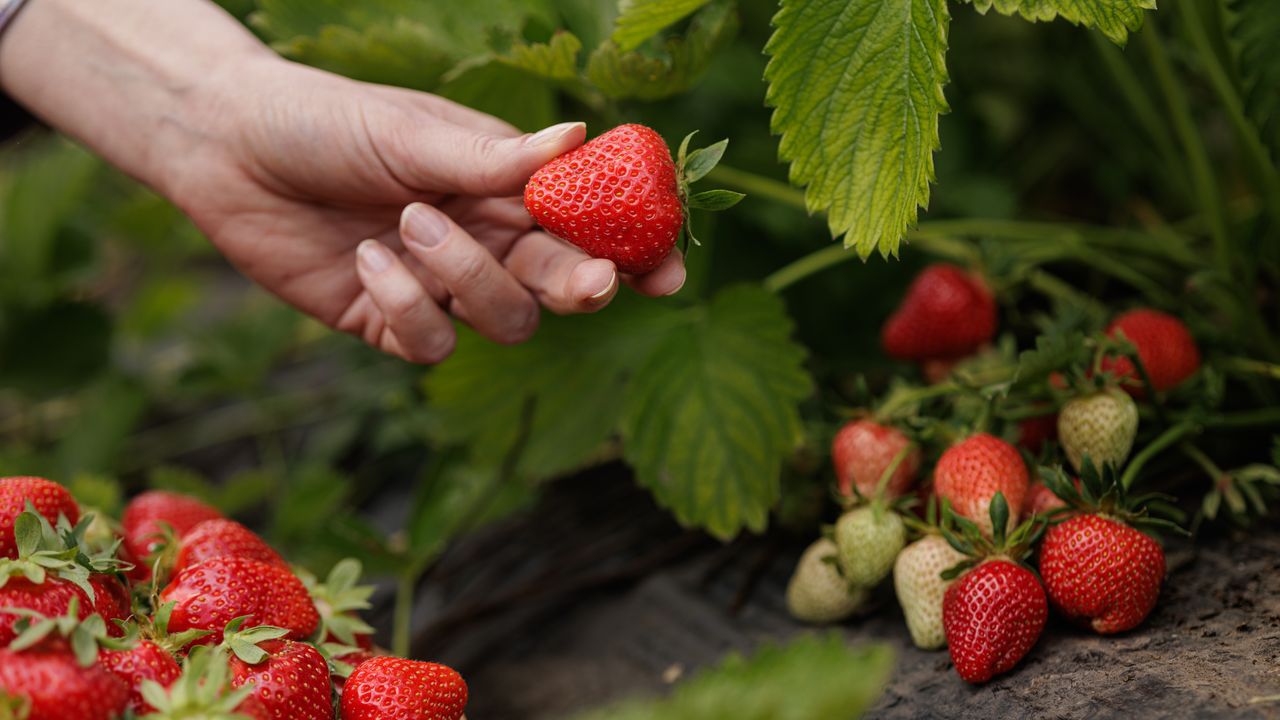
Once you know how to grow strawberries, a bowl of the juicy, sweet-tart fruit is all the more enjoyable. And the best part is that it doesn’t take a green thumb to see red. Easy to grow in containers or vertical planters—think specialty towers and chic back-deck container gardens—strawberries don’t require much space, making them perfect for urban plots or small raised beds. Really, all you need is plenty of sunshine. And with temperatures dropping, now’s the time to start. Late summer to early fall, or August to September, gives the strawberry plants enough time to establish themselves throughout winter and fruit properly the first summer. So, delicious, homegrown strawberries are soon within your reach.Ahead, garden experts share just how to grow strawberries at home, from planting advice to the best care tips.How to Grow StrawberriesStep 1: Choose your plantsStart by deciding what type of strawberry you want to grow. They’re grouped into three main categories based on when they fruit:June-bearing: One main crop throughout a three- to four-week period in late spring or early summer. Popular varieties include Jewel, Honeoye, Allstar, and Chandler.Everbearing: Produce two main harvests, one in late spring and another in late summer. Ozark Beauty and Eversweet are popular varieties.Day-Neutral: Fruit consistently throughout summer and fall as long as temperatures are mild. Common varieties include San Andreas and Seascape.You’ll also want to consider how you want to start your plant. You can grow from seeds, though it is a slower process and the plant likely won’t fruit in the first season. Instead, many gardeners opt to use bare-root plants, which are dormant crops that can be replanted.Step 2: Choose a sunny spotOnce you’ve purchased your strawberries, pick a sunny spot in your garden. According to Carmen Perr of Carmen in the Garden, you’ll need to find a location that gets full sun for at least eight hours, no matter what strawberry variety you have.You can grow strawberries in the ground or in pots. For Makena Degolier, farmer at The Ranch at Laguna Beach, growing in the ground is ideal, but it’s possible to grow strawberries in a container if you lack ample space, just be sure to aim for a nice wide pot or planter box with space for strawberries to spread out, she says.Step 3: Add compost, dig, and plantIf planting in the ground, work two to three inches of compost or other organic matter into the top layer of soil. “Or add compost to the container [if planting in a container],” says Degolier. Then, you’re ready to dig. “Dig a wide, shallow hole and spread the roots out, then backfill so that the crown, the thick knobby base where the leaves emerge, sits right at soil level,” says Perr. You want the strawberry roots fully buried, but the crown fully exposed. Space the plants at least one foot apart from each other, giving the strawberry plants plenty of room.Strawberries are easy fruits to grow, requiring sunshine more than anything. Photo: Stefania Pelfini la Waziya/Getty ImagesStep 4: WaterWater the strawberries well and continue to give them a good drink every day. Degolier recommends watering earlier in the morning when it’s cool to start. “You can then taper off the amount of water to every other day once the plants are well established,” she says. Then, water consistently when the top inch of the soil becomes dry.Step 5: Add mulchAs fall turns to winter, if your plants are in the ground and not in containers, apply mulch to prevent the strawberries from sitting on wet soil that will turn to ice once temps drop. Mulch also helps suppress weeds and dissuades strawberry pests like slugs. And finally, amend the soil with more compost again once the plants begin to fruit in spring and summer.Step 6: Pinch off the first flowersWhen the plant first starts to bud, pinch off the plants’ flowers. Doing this will encourage growth of the strawberry runner vines or “daughter plants” to take over from the “mother plant.” “[Pinching the flowers] feels wrong, but you’re trading a few mediocre first-year berries for a plant that actually supports root growth, and next season’s crop will be dramatically better,” says Perr.Frequently asked questionsWhen is a good time to grow strawberries?In regions that get a hard frost, plant strawberries in early spring as soon as the soil is workable, about four to six weeks before your last frost. In mild regions, fall is a good time to plant them. “I put mine in the ground in October,” says Perr. “They root through the cool months, and they’re ready to harvest starting in early spring.”What are the best strawberry varieties?The best variety depends on how many strawberries you want in a season. June-bearing varieties, for example, will produce one large crop over a several-week period. Day-neutral varieties will produce all season long steadily.Are strawberries better planted in pots or in the ground?Strawberries grow great in the ground, but they’re also a wonderful container crop for gardeners without abundant space. “My rule: day-neutral strawberry varieties in pots for handfuls of fresh berries, and June-bearers in the ground if you want enough at once to make jam,” says Perr. If using a container, opt for one that’s at least ten inches deep with drainage.Is it too late to plant strawberries in the fall? Why or why not?It’s not too late to plant strawberries in the fall. “In a mild climate, this allows roots to get established before spring,” says Degolier. “For a colder climate, it’s important to plant four to six weeks before a hard freeze.” Also, bare-root plant crowns are usually sold in the winter and early spring, so you would need to opt for potted plants if you choose to grow them, Perr adds.Is it ever possible to grow strawberries indoors?Yes, it’s possible, whether it’s in a greenhouse or on your kitchen counter, but growing outdoors is ideal because there the plants are exposed to direct sunlight, elements, pollinators like bees, and fresh air. If the plants are inside in a pot, they’d have to be pollinated by hand, says Degolier. And you’ll need a full-spectrum grow light running at least 12 hours a day, Perr warns.How many strawberries do you get from one plant per year?A healthy strawberry plant can produce 20 to 30 strawberries per year. This is why it’s good to pluck the blossoms off the first year, so the plant can spread out and produce more berries.Will I need to overwinter the plants?If you have potted strawberries, they’ll need to move indoors for overwintering. Move them to an unheated garage or shed, which will allow the plants to enter a dormancy stage. You will still need to occasionally water them lightly, just enough so the plants do not dry out.
How to Grow Strawberries: Your Expert Guide to a Thriving Patch
Full Article
Original Source
Read the full article at Architecturaldigest →KhanList aggregates and links to publicly available news content. We do not host full articles from third-party sources. Always verify important information with original sources.