
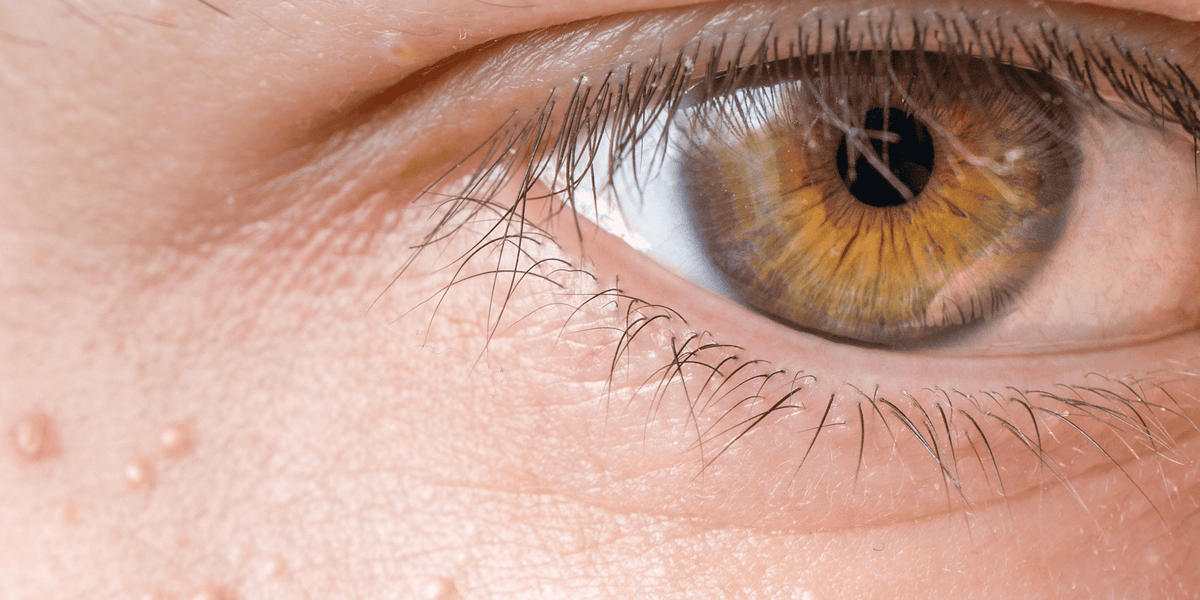
As a beauty editor, I’ve become a walking acne dictionary: I can identify exactly what type of pimple you’re dealing with. Whiteheads, blackheads, and cystic acne are easy to pinpoint thanks to my years of expertise. I can even spot milia—you know, those itty-bitty white bumps that cluster around your nose or eyes and resemble whiteheads—which, in reality, aren’t even acne.These white dots are actually small cysts. Don’t worry—they’re totally benign and won’t hurt you (unless you try to pop them!). Still, milia can be annoying, and there are steps you can take to get rid of them. Keep reading to learn everything you need to know about milia, including what causes them and how to properly treat the complexion concern.What are milia?While milia doesn’t look all that different from your average pimple, they’re not a form of acne at all. These little white dots are actually cysts filled with keratin, a type of skin protein, explains dermatologist Aegean Chan, MD. “Milia typically appear as small, firm bumps underneath the surface of the skin and are most commonly seen on the face, particularly around the cheeks, eyelids, eyes, and forehead,” she says. “Unlike a clogged pore, milia have no opening to the surface of the skin, which can make them more difficult to treat.”Difficult doesn’t mean impossible, though. There are steps you can take—both at home and with your dermatologist—to banish milia for good. But first, why does milia even pop up in the first place?What causes milia? Quite a few things can trigger milia, and it’s not always easy to determine the exact cause, says Dr. Chan. Oftentimes, it can develop after skin damage, whether due to sun exposure, abrasions, or laser treatments. “It can also occur more commonly in smokers due to collagen damage,” she adds. People of all ages can experience milia, too, especially children. However, Dr. Chan often sees the dots crop up on older patients (above the age of 60).In some cases, your skincare products may be the reason for your milia. “very occlusive products, such as heavy moisturizers, may contribute to milia,” says Dr. Chan.Do milia eventually go away?Unfortunately, it depends. “Milia in babies and children typically resolve on their own, and very small milia in adults can sometimes disappear without treatment,” says Dr. Chan. Exfoliating products, like serums made with retinols or beta hydroxy acids (BHAs) can help remedy milia over time. If you have consistent milia that doesn’t respond to exfoliation, your best course of action is to visit your dermatologist for manual extraction.Serious PSA: Never try to pop milia at home. “Because milia sits deeper within the skin and don’t have an opening at the surface, squeezing or manipulating them can cause trauma and potentially lead to scarring that is more noticeable than the milia itself,” warns Dr. Chan.How to treat miliaThe best way to treat milia will depend on the severity of your cysts and how long you’ve dealt with them. For smaller milia, Dr. Chan recommends incorporating a retinoid, like Paula’s Choice 1% Retinol Treatment, or an exfoliating toner made with salicylic acid—we love the Pixi Clarity Tonic—into your routine to encourage cellular turnover and flatten the milia.For deep, persistent milia, visit your dermatologist for professional extraction. “Because milia sit beneath the surface of the skin and don’t have an opening like a clogged pore, they usually can’t simply be squeezed out,” says Dr. Chan. Typically, your physician will “use a small sterile needle or blade to carefully create an opening in the top layer of skin and then use an extractor to remove the cyst. When performed properly, the area typically heals very nicely.”The bottom lineMilia are very different from acne—so don’t even think about trying to pop them. (You shouldn’t be popping pimples anyway, but I digress.) These under-the-skin cysts are totally benign and oftentimes go away on their own with the help of a mild exfoliant. However, if they persist, make an appointment with your dermatologist to safely extract them. It’s not worth the potential scarring to poke and prod the cysts on your own.Meet the expert:Aegean Chan, MD, is a double board-certified dermatologist and the medical director of California Dermatology Group in Santa Barbara.Why trust Cosmopolitan?Mary Honkus is a contributor for Cosmopolitan with over eight years of experience researching, writing, and editing beauty stories. She’s an authority in all beauty categories. For this story, she spoke with a dermatologist to learn everything about milia—from what it actually is to how to properly treat it.Mary Honkus is a freelance writer who covers beauty, home, fashion, health, and wellness (just call her a jack of all trades!). She has held staff roles at Real Simple, People, and InStyle, and her bylines can be found in numerous other publications. When she's not testing the latest and greatest products, she can be found chilling on her Hell's Kitchen rooftop, checking out NYC's hottest new restaurants, or recording her podcast Good Trouble NYC. Follow her on Instagram.
How to Get Rid of Milia, According to a Dermatologist
Full Article
Original Source
Read the full article at Cosmopolitan →KhanList aggregates and links to publicly available news content. We do not host full articles from third-party sources. Always verify important information with original sources.