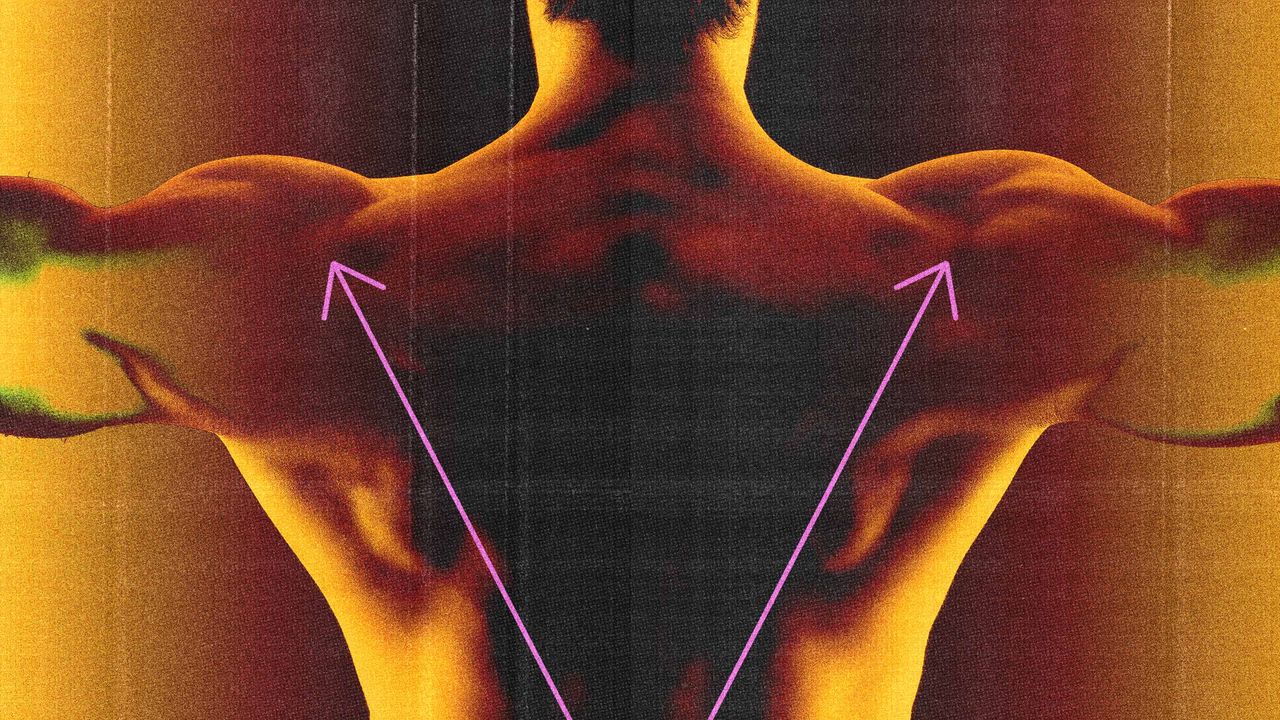
Ask someone on the street what makes someone look jacked, and they’ll probably rattle off the usual biceps, triceps, and pecs. Ask a jacked person what makes someone jacked, and they’ll tell you the truth: a big back. While big arms and a chest you could rest a shelf on are certainly part of the equation, a barn door back is the true sign of a seasoned gym bro and dedicated meathead. Think Superman or Broley from Dragon Ball Z.Superheroes aside, a wide back and V-taper (when your upper back tapers, making your upper body look like an upside-down pyramid) isn’t a pipe dream. To help us help you achieve maximum back girth, we rang up strength coach Paris Butler, better known as Bald Omni Man on Instagram and YouTube, who—with his immense catalog of educational videos and free lifting programs—has helped a ton of people (myself included) get closer to their fitness goals. He also has a preposterously wide back himself. So, ready the preworkout and queue up a hype playlist—it’s time to get wide.Train with intensity, but be smart“Having a V-taper is largely due to the size of your waist and just your overall development, which is the result of your training as a whole,” Butler says. “For most people, the best place to start is to restructure your training into an upper/lower type of program so that you can fully focus on your upper body muscles without having to worry about your lower body muscles getting worked on the same day.” He recommends having a large section of your program dedicated specifically to your pulling exercises—things like pull-ups, rows, pull-downs, and pull-overs—to grow your back muscles. But your lats and upper back aren’t the only things that contribute to the barn door back look, he says.“Put a big emphasis on your triceps and rear delts, too,” Butler says, adding that those muscle groups significantly contribute to the creation of a V-taper. “When you think about a V-taper, obviously the first thing that sticks out to you are the lats, because that’s what makes up most of it,” Butler says. “But when you look at the overall width of your physique from the back, [these other muscles], if they have meat to them, also add width to your V-taper, especially during your lat spread poses.”If you didn't have developed rear delts or triceps and then you brought those up, he explains, your V-taper would look better—even if your lats stayed the same in size. As far as training intensity, it’s not just about the pump, he says. Getting stronger at the exercises that target these muscles (and putting them as early in your training day as possible so you can really hit them hard) is key.There is no secret to a big back and V-taperWhile we’d love to tell you there’s a magical exercise we found in a dusty Soviet training manual that’ll guarantee a freakishly wide back in no time, we can’t. For most people, Butler says, it’s chin-ups and pull-ups. But that doesn’t mean just jumping on a bar and flailing around—form is key. Butler looks to the advice of the late bodybuilder and coach, John Meadows. “He would always talk about angles and elbows,” Butler says. “Basically where your elbows point is going to dictate (preferentially) what muscle on your back is getting worked. If your elbows go down toward your hips, as opposed to going out and away from your body, you're working more lats. So in that regard, I really like chin-ups more than pull-ups, because you're automatically pulling in and keeping your elbows tucked.”Butler likes neutral-grip chin-ups—where your hands are facing each other—for the same reason. As for overhand pull-ups, he recommends taking a significantly wider grip to help hit the lats, since taking a medium grip can cause you to crunch your upper body into a position that shifts the load into your arms and abs.You might be thinking: Well, I can't do pull-ups? No problem, Butler says. “A good set of 10 pull-ups is a great goal for an intermediate [trainee],” he explains. “But if you have access to a lat pull-down [machine], all those same form queues still apply. You can do a chin-up grip lat pull down with however much weight that you need to, a neutral grip lat pull down.” Though there's a lot of debate on what's better, pull-ups or pull-downs, Butler has a simple, straightforward take: Do both. “I like using them both interchangeably because they both have their distinct advantages,” he says. “With pull-ups, you have a bracing component with your core, so they take more diligence when it comes to your form, whereas when you do a pull-down, you can lock into the machine and just grip and rip.”Generally he thinks that pull-ups “look cooler,” but pull-downs “work a little bit more precisely and are easier to use for beginners.”Accessorize accordinglyWhile pull-ups (or pull-downs) should make up the bulk of your back training, accessory and supplemental exercises are crucial for a well-rounded physique. So, what else should you add to your program? “I really love isolating the lat as well with a cable pullover,” Butler says. “Especially if you don't have access to something like a Nautilus pullover machine, and most people don't.” For your upper back—that’s traps and rhomboids—Butler prescribes a good chest supported row, reverse pec deck, and Kelso shrugs. “Lastly, in terms of the triceps, I think press-downs are pretty well-tolerated by most people, even if you have achy elbows.”Mind your diet, movement, and recoveryOne way to make your back look wider: Having a smaller waist. Unfortunately, there’s no one exercise that cinches your waist—that happens outside the gym. In terms of outside of the gym variables that lead to a V-taper, Butler recommends all the things you probably know you should be doing, but might, you know, not actually be doing. That’s getting 8,000-10,000 steps into your routine, sleeping eight hours a night, having some protein with every meal to help build more muscle and recover better, and staying hydrated with a good electrolyte balance to support you at the gym. “You don't need to be a rockstar in terms of those things either,” he says. “You can hit 6,000 steps some days and maybe you don't eat protein as much on one day versus the other. But on average, if you're doing an okay job with each of those things on four or five days out of the week, [a leaner body composition] is absolutely something that you could reasonably expect to achieve.”Avoid these common mistakesThe biggest mistake Butler sees gymgoers make? Not progressing. “Make some tangible progress,” he says. “When you can get to the point when you do one set of 10 on pull-ups, you can start adding a little bit of weight and working in slightly lower rep ranges.” For example, he explains, if you're doing three sets of 10 bodyweight pull-ups, you could probably do three sets of five with 25 pounds of added weight (usually dangling from a dip belt or weighted vest). Then the next week, you progress to three sets of six, then eight, then nine, and then back to three sets of 10, before adding even more weight and repeating the process. “That's a pretty reasonable progression method provided that your outside of the gym variables are there, you're recovering enough, you're sleeping an adequate amount,” he says.
How to Get a V-Taper
Full Article
Original Source
Read the full article at Gq →KhanList aggregates and links to publicly available news content. We do not host full articles from third-party sources. Always verify important information with original sources.