
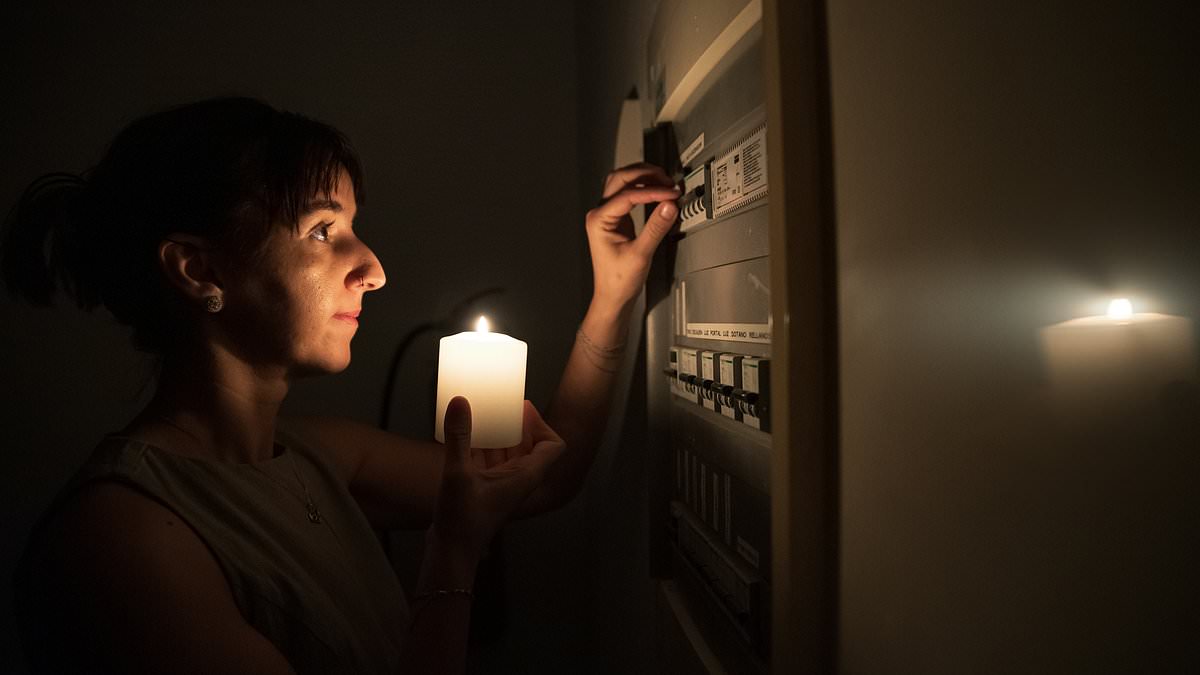
Daily Mail journalists select and curate the products that feature on our site. If you make a purchase via links on this page we will earn commission - learn moreForget gym memberships and that new kitchen you wanted. The latest home improvement trend is to prepare for the end of civilisation. With warnings about cyber attacks, blackouts and global instability, here's how to make sure you're not the one begging your neighbours for a tin opener when disaster strikes, with our definitive list of the 12 items to have at home to survive and thrive in a national emergency.1. TorchesThere is nothing quite like a power cut to remind you how utterly useless we are without electricity. One minute you're happily scrolling through Instagram, the next you're stumbling around the house desperately trying to locate the stairs.A decent torch is an absolute essential. Ideally, buy several: one for the kitchen drawer, one for upstairs and another for an emergency kit. LED torches are a particularly useful purchase because they are bright, energy-efficient and tend to last longer than battery alternatives.A head torch is also worth considering, particularly if you need both hands free to do something practical, such as fixing a fuse box or making an emergency sandwich for a hungry child.And if you do opt for a battery-powered torch, buy several packs of batteries and check them before you need the torch. Discovering your torch is dead during a blackout is not the sort of plot twist anybody needs.2. A wind-up radioA wind-up radio sounds like something your grandparents might have kept in the shed, but in an emergency it could become the most sophisticated and coveted piece of technology in your home.If the mobile networks fail and the internet disappears, your smartphone becomes little more than an expensive paperweight. A battery-powered or, ideally, hand-cranked radio can help you stay informed through official broadcasts.Look for one with both a hand-crank and solar charging, as well as a conventional battery option. Some models also include an LED torch and a USB charging port, making them particularly useful additions to an emergency kit.Check that it can receive local BBC radio stations and familiarise yourself with the controls. You don't want to spend 20 minutes frantically turning a handle while accidentally tuning into a late-night gardening programme.3. Pillar candles There is something rather comforting about candlelight. It makes even the most ordinary sitting room look vaguely romantic, and can transform a miserable evening into something resembling a boutique country hotel.But pillar candles are also useful emergency essentials when the electricity goes off. Unlike delicate dinner candles, chunky pillar versions tend to burn for longer and provide a reliable source of light and a bit of extra heat.Stock up on unscented varieties in different sizes and keep matches or lighters somewhere dry and accessible. Long-burning candles are particularly useful, although always check the manufacturer's stated burn time rather than assuming the biggest one will last indefinitely.It sounds obvious, but remember to keep them away from curtains, furniture, children and pets, never leave them unattended and extinguish them before going to sleep.4. Space blanketsOriginally developed for the space programme, these lightweight thermal blankets are designed to reflect body heat back towards the person using them, helping to reduce heat loss.They're particularly handy because they fold down incredibly small, making them easy to store in an emergency kit, car glovebox or backpack. They're also waterproof and wind-resistant, which makes them useful if you need to spend time outdoors unexpectedly.Don't expect the luxurious comfort of a cashmere throw, however. They are noisy, crinkly and rather less glamorous than anything you might find in Soho Home.But when temperatures plummet, and the heating has stopped working, nobody is going to complain about the aesthetics. Keep a few in the cupboard, and you will be grateful for them if you ever need them.5. Power banks A power bank is fast becoming an emergency essential. If the electricity goes down, your phone could be your only way of receiving updates, contacting relatives or finding out what on earth is happening outside.Invest in a decent rechargeable model with enough capacity to charge your phone several times. A 20,000mAh power bank is a useful option for many households, although remember that actual charging capacity varies between devices.Keep it fully charged and don't leave it languishing in a drawer for three years. Check its charge periodically and make sure you know where it is. Your future self will thank you. 6. Long-life food When preparing for the apocalypse, it's worth remembering that you can't survive on optimism and bottled water alone. You will need food, too- and preferably something more exciting than 47 tins of baked beans.The trick is to stock up on long-life essentials that don't need refrigerating and, ideally, can be eaten without cooking. Vacuum-packed bread is a brilliant starting point, as it has a longer shelf life than a fresh loaf and can be eaten straight from the packet. Stock up on crackers, oatcakes, crispbreads and rice cakes, too. Opt for a selection of dried and long-life food including pulses, soups and pastaTinned pulses such as chickpeas, lentils, kidney beans and butter beans are another excellent option. They are nutritious, filling and can be eaten cold straight from the tin. Add tinned tuna, sardines, sweetcorn, olives, nuts, dried fruit, peanut butter and cereal bars to the shopping list.The golden rule? Don't buy anything you wouldn't normally eat. There is little point surviving the apocalypse only to discover your emergency provisions are absolutely revolting. And remember to include a manual tin opener. Nobody wants to be defeated by a tin of chickpeas. 7. Bottled water and water purifiers While you might be perfectly happy to go without your morning oat milk flat white, going without water is a rather serious matter. In fact our bodies can only survive three days without water.The Government recommends storing at least three litres of drinking water per person per day for a minimum of three days. For a family of four, that's 36 litres – which is quite a lot of Evian to squeeze into the utility cupboard. Buy commercially bottled water (it doesn't have to be Evian quality; it just has to be filtered) and keep it somewhere cool, dark and away from direct sunlight. Remember to factor in extra bottles of water for pets, too.It's also worth investing in a water purifier or filtration system for emergencies. Portable water filters, straws and purification tablets can help make certain untreated water sources safer, although they don't all remove the same contaminants. Check exactly what your chosen product protects against and follow the instructions carefully. Some water may still need boiling.8. Wool blanketsIf the electricity goes off in the middle of January, you will quickly discover that central heating is one of civilisation's greatest achievements.Which is why a decent supply of wool blankets is a rather sensible investment. Wool is naturally insulating, breathable and able to retain warmth even when slightly damp, making it an excellent choice for keeping cosy during a prolonged power cut.Look for traditional wool blankets that are generously sized, durable and easy to store. Keep one on every bed if possible, and have a few extras tucked away in a cupboard for emergencies.They needn't be hideous, either. There are plenty of attractive options in muted checks, traditional tartans and neutral colours that wouldn't look out of place draped over a sofa in a rather expensive country house.In fact, you might find yourself using them long before doomsday arrives. A chilly Sunday afternoon, a good book and a wool blanket suddenly seem rather appealing.9. First aid kitYou might have enough antiseptic wipes to clean a small hospital, but when was the last time you checked your first aid box?A properly stocked kit is one of those things every household should have, regardless of whether the apocalypse is imminent. In an emergency, access to pharmacies or medical services could be disrupted, so having basic supplies to hand is sensible.Start with plasters in different sizes, sterile dressings, bandages, medical tape, antiseptic wipes, disposable gloves, scissors and a digital thermometer. Include any essential personal medication, too, and check expiry dates regularly. Stock up on medicines for common ailments such as coughs and colds, allergy treatments and things like Calpol if you have small children.The first aid kit by Royal Design (below) contains bandages, compresses, adhesive tape, cotton wool pads, antiseptic wipes, adult and children's plasters, scissors, metal tweezers, burn gel and handy storage pouches.It's also worth keeping a basic first-aid manual or downloading reliable guidance for offline access. Knowing how to deal with a minor burn, cut or sprain could prove invaluable. Better to have it and not need it than the other way around.10. Sleeping bags A decent sleeping bag is a surprisingly sensible addition to your emergency kit. Designed to keep you warm without relying on electricity, it can make all the difference if you are forced to spend a night in a cold house or, in a more serious emergency, have to leave home altogether and sleep in the car.Look for one with a suitable temperature rating, ideally a three-season model that will keep you comfortable in cooler conditions. Mummy-shaped sleeping bags are particularly good at retaining body heat, while rectangular designs offer a little more room to wriggle around – useful if the thought of sleeping zipped up like a human sausage fills you with dread.It's also worth checking the filling. Synthetic sleeping bags tend to be cheaper, dry more quickly and cope better with damp conditions, while down-filled versions are lighter and pack down smaller, although they can lose much of their insulating power when wet. Mountain Warehouse is currently having a half-price sale on selected sleeping bag lines, so be quick!And don't forget a sleeping mat. Even the warmest sleeping bag won't do much good if you're losing heat through a freezing floor. Store everything somewhere dry and accessible, rather than buried at the bottom of the loft beneath Christmas decorations.11. Gas stoves and canisters A portable camping stove could prove invaluable in an emergency. Small, relatively inexpensive and easy to store, these little gadgets allow you to boil water and cook basic meals without relying on your electricity supply. Suddenly, that tin of emergency soup looks a lot more appealing.Look for a compact gas stove that is easy to operate and compatible with readily available fuel canisters. Some models simply screw on to the top of a gas cartridge, while others have a more stable, freestanding design – a useful feature if you're planning to cook anything more ambitious than a cup of instant noodles.It's also worth stocking up on compatible canisters, checking their shelf life and storing them in accordance with the manufacturer's instructions. There's little point investing in a fancy stove only to discover you have run out of fuel when you need it most.One important caveat: never use a camping stove indoors, in a tent or in enclosed spaces, as they produce carbon monoxide. Always use them outdoors, away from doors and windows, and follow the manufacturer's safety instructions. 12. Duct tape, bin bags and other emergency essentials There are a few unglamorous household essentials that could suddenly become worth their weight in gold if doomsday occurs. First up, duct tape. The ultimate DIY hero, it can be used for temporary repairs, securing loose items, sealing doors and windows to keep out draughts and all manner of makeshift fixes. Stock up on a decent roll – preferably two – because you never know when something might need sticking back together.Heavy-duty bin bags are another must-have. They're useful for keeping belongings dry, storing rubbish, protecting items from dirt and dealing with waste if normal services are disrupted. Add some plastic sheeting, too, which can be useful for covering broken windows or protecting furniture from leaks.Other useful additions include cable ties, work gloves, a multi-tool, spare batteries, matches in a waterproof container, duct cord, a bucket, a whistle and PLENTY of toilet roll. Some of us learnt that the hard way during the pandemic.Here are a few other things worth stashing in your emergency cupboard:Plastic sheeting – useful for temporary weather protection.A multi-tool – for basic repairs and practical jobs.A bucket – useful if water supplies or sanitation are disrupted.Soap and hand sanitiser – hygiene matters enormously when services are disrupted.Spare glasses and contact lenses – particularly important if you rely on them daily.It goes without saying that nobody wants to spend their weekends preparing for the collapse of civilisation. But a little planning never hurt anyone. And if the worst never happens, you'll still have a cupboard full of useful household essentials, enough food to see you through a particularly nasty snowstorm and a very good excuse not to go shopping for a week.
How to doomsday proof your house: The ultimate checklist to surviving - and thriving - in a disaster as prepping becomes latest home improvement trend
Full Article
Original Source
Read the full article at Dailymail →KhanList aggregates and links to publicly available news content. We do not host full articles from third-party sources. Always verify important information with original sources.