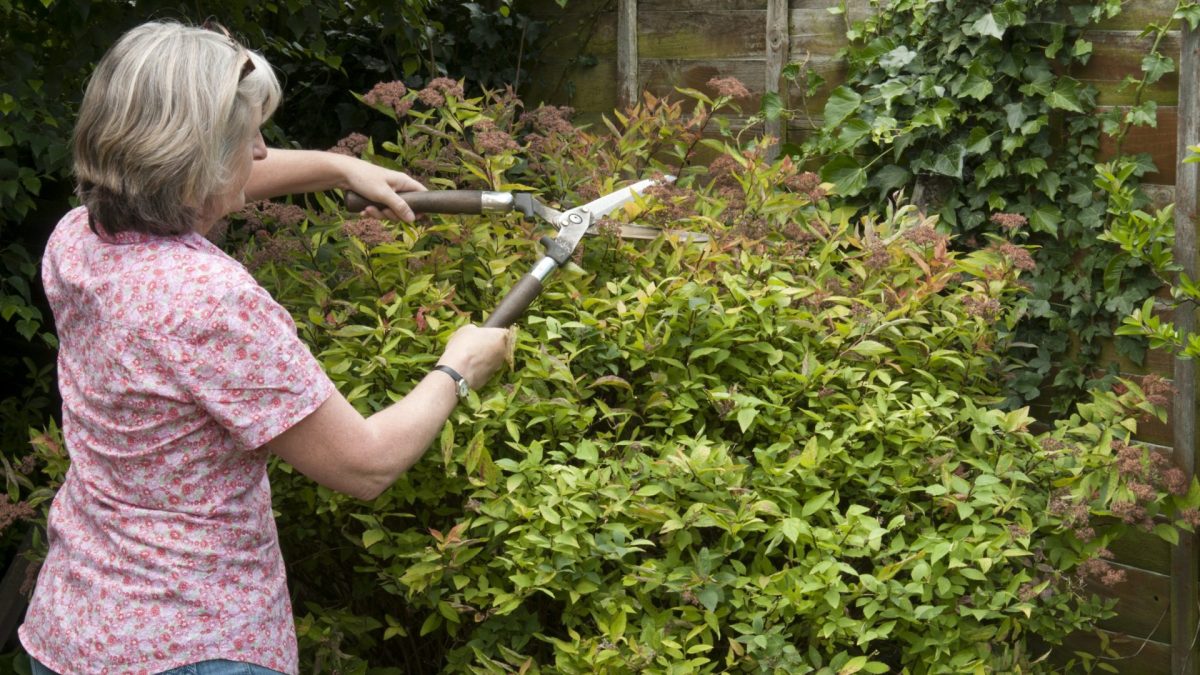
Snipping off spent flowers, stalks and all, is simple and rewarding; dahlias, roses, tender container plants and herbaceous perennials that have finished, such as delphiniums and lupins, all benefit. They look better and turn their energies towards more flowers instead of seeds. Many will flower on and on until autumn frosts. Don’t deadhead if seeds are wanted. If you have not already done so, prune early flowering shrubs including weigela and philadelphus. Typically, one shoot in three should be removed to near-ground level. Alternatively, cut out shoots that have flowered. This is quicker and easier, but does not have the graceful effect of thinning shoots. However, time is pressing: the older shoots need some summer weeks to mature so they carry abundant flowers next year. Spare summer-flowering shrubs, such as hibiscus, hydrangeas and lavatera until early next spring. They need to build their resources so that when they are cut back in spring, they can send out very strong shoots that will bear flowers. Shear off lavender flowers and 25mm of new growth once flowering is over. Having said that, if possible, leave some unpruned, because the bushes are used by birds for shelter. You can always prune in next spring, although summer pruning is preferred by most gardeners. Dahlia ‘Penhill Watermelon’ (Photo: Nicola Stocken/RHS) Other Mediterranean-type plants – cistus, hyssop, phlomis and rosemary – should be pruned in a similar way, taking care not to cut into older wood, as this often fails to re-sprout. Straggly older plants are best replaced. Semi-ripe cuttings of these can be taken until November, rooting them in cold frames or even pots covered with a plastic bag. Fast-growing hedges, privet and Lonicera nitida, too, need trimming, but try to hang on for others such as beech and hornbeam, as they look best if trimmed next month so they regrow just enough to look good all winter. Conifer hedges ought to be cut, too – if they get too long, there is a danger they will be reluctant to regrow from older wood. Late pruning in October is also thought to lead to bare patches. In all cases, check that no birds are nesting in the hedges. Summer-fruiting raspberry canes, and also hybrid berries (cultivated blackberries and loganberries) will soon be finishing cropping. Cutting out the spent canes to ground level encourages the new canes that will crop next year, while enhancing air flow that will limit cane diseases. Wisteria flowers well enough if left unpruned, but gets somewhat rampageous, so prune the long, whippy new shoots to leave about five or six leaves, which also promotes flower buds. Some people leave it at that, but further shortening in late winter to a couple of buds will better display the flowers. Trained apples and pears, using cordons, fans and espaliers, are treated similarly for the same reasons – growth control and encouraging flower buds. Hanging baskets in St Helier (Photo: David Ferguson/RHS) This is normally done in August, when the bottom third of the shoots is firm and woody. This year, the record heat may ripen wood sooner, bringing the timing forward into July, for pears especially. Shorten new side-shoots to three leaves above the leaf cluster at their base, and side-shoots of old side-shoots to just one leaf above the basal leaf cluster. Cut out vigorous vertical shoots entirely. Unlike apples and pears, stone fruits such as plums need little pruning, but congested trees, if small enough to reach, may benefit from removing crowded, crossing, rubbing and strong vertical shoots. Do it now for quick healing in the summer heat and before silver leaf fungus disease spores become abundant in autumn. Guy Barter is the Royal Horticultural Society’s (RHS) chief horticulturist. The RHS is a charity inspiring everyone to grow via its research, advisory, outreach, shows and gardens. For more information, visit: rhs.org.uk
How to deadhead and prune your garden now for flowers that last until autumn
Full Article
Original Source
Read the full article at Inews →KhanList aggregates and links to publicly available news content. We do not host full articles from third-party sources. Always verify important information with original sources.