
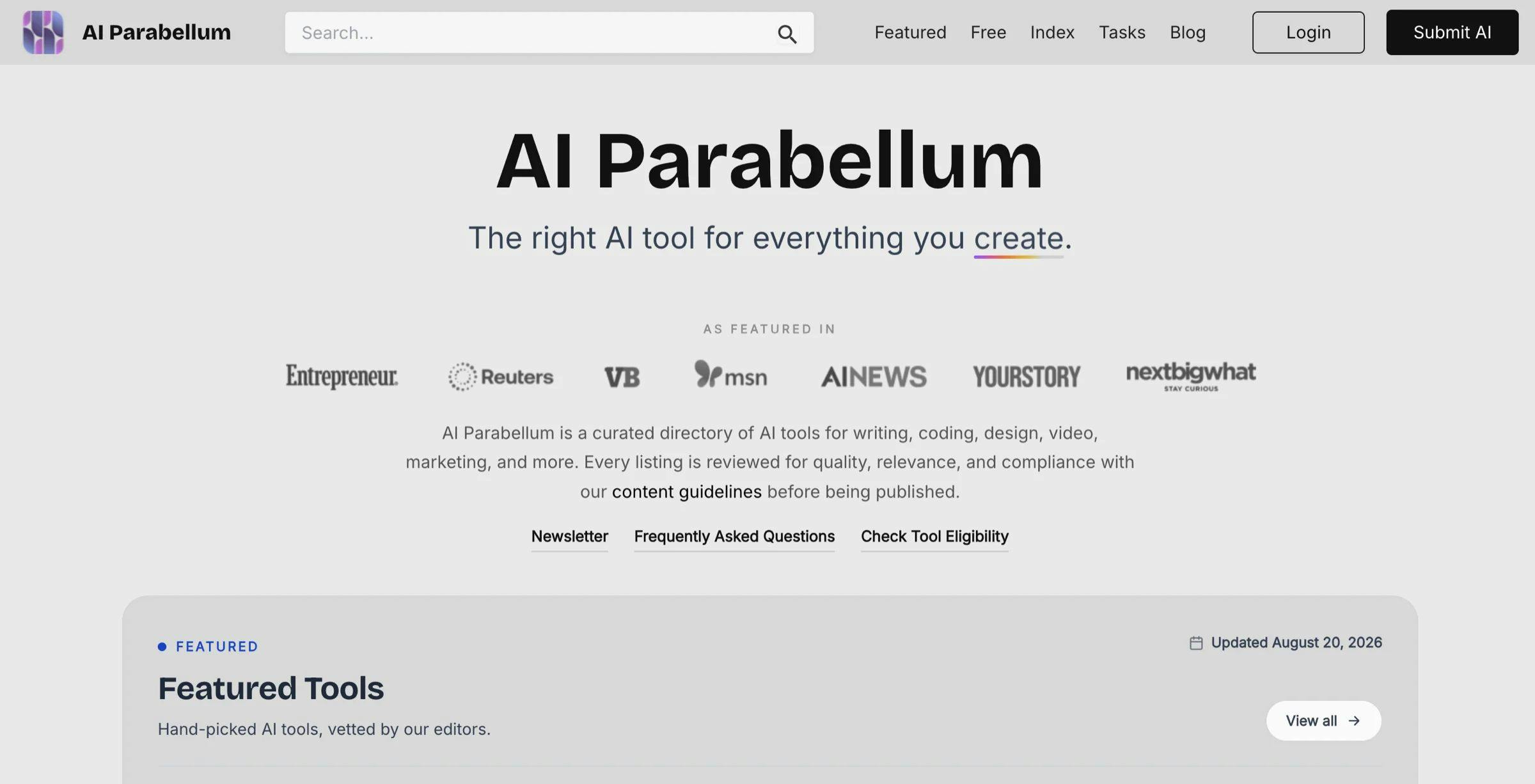
You built an AI tool. You know it works. You know it solves a real problem. But nobody is finding it. That is the reality for most AI tool creators now. The market has grown so large and so fast that even strong products get buried. There are tens of thousands of AI tools competing for attention across every category. Writing tools, image generators, coding assistants, automation platforms, marketing tools, data analysis apps, chatbots, video editors, and hundreds of subcategories in between. Every week, more tools launch. Every month, the noise gets louder. In this environment, the product itself is rarely the problem. The problem is distribution. The problem is getting your tool in front of the people who need it, at the moment they are looking for it, in a context where they are ready to evaluate and adopt. That is exactly what an AI tools directory does. And the right directory does it better than any other channel available to creators today. An AI tools directory is a platform that aggregates, categorizes, and presents AI software so users can discover, compare, and evaluate options in one place. For users, it simplifies decision-making. For creators, it provides something far more valuable than impressions or clicks: access to high-intent traffic. High-intent traffic means the person visiting the directory has already decided they need an AI tool. They are not scrolling a social feed. They are not reading an unrelated article. They came to the directory specifically to find software that solves a problem they have right now. That intent changes everything. A visitor from a paid ad may or may not be interested in your category. A visitor from a social media post may or may not remember your tool by tomorrow. A visitor from an AI tools directory is actively browsing your category, comparing options, and looking for something to try. That is why directory traffic converts at higher rates than almost any other channel. The audience is pre-qualified by their own behavior. But not every AI tools directory is equally effective. The difference between a directory that drives real results and one that delivers empty listings comes down to a few critical factors. There are dozens of AI tools directories on the web. Some are excellent. Many are not. The difference matters because listing your tool on the wrong directory wastes time and delivers nothing, while listing it on the right directory can become one of your most reliable sources of qualified traffic. Here is what to look for. Editorial curation over open submission A directory that accepts every submission without review is not a directory. It is a dumping ground. Users learn quickly that uncurated directories are full of dead links, abandoned projects, low-quality wrappers, and duplicate listings. They stop trusting the platform, and they stop visiting. A directory that editorially vets submissions before listing them maintains a quality baseline that users trust. When your tool appears on a curated directory, that trust transfers to your product. The directory is effectively saying: we reviewed this, and it belongs here. That implicit endorsement is something no amount of self-promotion can replicate. Category depth over flat lists A directory with ten broad categories forces your tool to compete for attention alongside hundreds of loosely related products. A directory with fifty or more well-organized categories puts your tool in front of users who are searching for exactly what you built. Category depth matters because specificity drives conversion. A user browsing a "marketing AI tools" category is more likely to evaluate your marketing copy generator than a user browsing a generic "AI tools" page. The narrower the category, the more qualified the visitor. Real traffic over vanity metrics Some directories look impressive but have no real user base. They list thousands of tools, but nobody visits. A directory is only valuable if actual users are browsing it. The indicators of real traffic include regular content updates, active social media presence, media mentions, and visible engagement signals. Persistent visibility over one-time listings Some platforms give you a moment of visibility. A directory gives you a permanent shelf. Every day after your listing goes live, someone browsing your category has a chance of finding your tool. That compounding discovery effect is what makes directories one of the highest-ROI channels available. The listing works for you while you sleep, while you build, while you focus on everything else. Structured profiles over raw links A directory that gives your tool a proper profile with a description, category placement, and structured presentation is more valuable than one that just adds your name to a list. A structured profile gives users enough context to decide whether your tool is worth clicking through to evaluate. A raw link gives them nothing. AI Parabellum is one of the best AI tools directories to launch your AI tool because it delivers on every factor that makes a directory effective for creators: human curation, editorial vetting, deep category structure, high-intent traffic, persistent visibility, and structured tool profiles. The platform lists over 1,000 AI tools across more than 50 categories. Every submission is editorially reviewed before it goes live, which keeps the catalog clean, trustworthy, and useful for the users browsing it. For creators, that curation model is the key advantage. Here is why. Your tool is listed in a trusted environment Users who visit AI Parabellum know that the tools they see have been vetted. That editorial trust is the single most important factor in whether a visitor clicks through to your website, signs up for a trial, or keeps scrolling. On an uncurated directory, users approach every listing with skepticism. On a curated directory, they approach with interest. That difference in user mindset is the difference between a listing that drives signups and a listing that collects dust. Your tool reaches people who are actively searching AI Parabellum's visitors are not casual browsers. They are users, teams, founders, marketers, developers, and business decision-makers who came to the directory to find AI tools. They are in evaluation mode. They are comparing options. They are ready to try something new. That is the highest-value audience an AI tool creator can reach, and AI Parabellum delivers it without requiring ad spend, outreach campaigns, or content marketing efforts from the creator. Your tool is placed in a specific, relevant category AI Parabellum covers categories including image generation, text, video, audio, AI assistants, chatbots, business, avatars, productivity, marketing, coding, social media, education, gaming, AI detection, website builders, resume builders, and more. That depth means your tool is not fighting for attention in a generic list. It is placed where users who need exactly what you built will find it. Category specificity is one of the most underrated advantages of a well-structured directory. A coding assistant listed in a "coding" category reaches developers. The same tool listed in a flat "AI tools" page reaches everyone and no one. Your listing works continuously Unlike paid campaigns that stop when the budget ends, social posts that disappear in hours, or launch events that fade in days, a directory listing on AI Parabellum provides persistent visibility. Every day someone searches for a tool in your category, your listing is there. Over weeks and months, that compounds. The total traffic and signups generated by a directory listing often exceed what a short-lived campaign delivers, at a fraction of the cost and with zero ongoing effort from the creator. Your tool gains credibility by association AI Parabellum has been recognized by media outlets including Reuters and AI News as a key resource in the AI tools space. The platform was founded in 2023 and has built its reputation on editorial integrity and quality curation. When your tool is listed alongside other vetted products on a platform with that kind of recognition, you gain credibility that is difficult to build through self-promotion alone. Users make snap judgments about software quality based on where they discover it. Being found on a trusted, curated directory is a better first impression than being found through a cold email or a banner ad. How a Directory Listing Fits Into a Broader Launch Strategy A directory listing is not a replacement for other launch activities. It is the foundation that makes everything else work harder. Here is how it fits into a complete launch strategy. Before launch: Submit your tool to a curated directory like AI Parabellum so your listing is live on or before launch day. That way, any user who hears about your tool and searches for your category will find you in a trusted environment immediately. On launch day: Use launch platforms and social media to generate a visibility spike. Drive traffic to your website, collect signups, and engage with early adopters. The directory listing runs in parallel, capturing users who discover your category through browsing rather than through your launch event. After launch: The spike fades. The directory listing does not. In the weeks and months following your launch, the directory becomes one of your most consistent traffic sources. Users who missed the launch event still find your tool through category browsing and search. Ongoing: Keep your listing updated as your tool evolves. New features, pricing changes, and positioning shifts should be reflected in your directory profile. A listing that stays current continues to convert. A listing that goes stale stops working. The creators who get the most value from directories are the ones who treat the listing as a living asset, not a one-time task. Directory listings benefit AI tool creators at every stage. Pre-launch creators who want to validate interest before investing in paid marketing. A directory listing can generate early traffic and signups that confirm whether the market responds to your positioning. Solo founders and indie makers who need to reach users without a marketing budget. A curated directory listing is one of the most cost-effective distribution channels available. No ad spend, no content calendar, no outreach sequences. Startups launching their first AI product that need early traction and qualified traffic to hit growth milestones. The high-intent traffic from a directory converts better than general awareness channels, which means faster time to meaningful user numbers. Established companies entering the AI market that need category visibility alongside existing competitors. If potential customers are comparing AI tools in your category and your product does not appear, you are invisible during the most critical phase of their evaluation. Teams running paid campaigns that want an organic channel to complement and outlast their ad spend. A directory listing continues driving discovery after the campaign ends, capturing the long tail of users who search later. Getting listed is the first step. Getting value from that listing requires avoiding a few common mistakes. Writing a vague description that does not explain what the tool does, who it is for, or what problem it solves. Users are comparing multiple tools in a short session. Clarity wins. Using buzzwords and jargon instead of plain language. Phrases like "next-generation AI-powered synergy platform" tell the user nothing. Say what the tool does in one sentence. Submitting to uncurated directories and expecting results. Not all directories are equal. A listing on a directory nobody visits is a listing nobody sees. Treating the listing as a one-time task instead of maintaining it. Pricing changes, feature updates, and positioning shifts should be reflected in the profile. Ignoring the landing page experience. A directory listing drives traffic to your website. If the landing page is confusing, slow, or unclear, the traffic bounces. The listing did its job. The landing page did not. Waiting until the product is "perfect" before listing. Early visibility and user feedback are more valuable than polish. Launch with what you have and iterate. Not tracking directory-sourced traffic. Use UTM parameters or referral tracking to measure how much traffic, signups, and conversions your directory listing generates. If you do not track it, you cannot optimize it. What a Strong Directory Listing Looks Like A directory listing is a first impression. It should communicate value in seconds. A clear, specific name. If your tool name does not indicate what it does, make sure the description does immediately. A one-sentence explanation. What does this tool do, and who is it for? That sentence should be understandable by someone who has never heard of your product. A concise description. Expand on the one-sentence explanation with specifics: key features, use cases, what makes it different. Keep it focused. A listing is not a landing page. Accurate category placement. Choose the category that best matches your primary use case. If the directory offers multiple category tags, use them, but prioritize accuracy over coverage. Current information. Make sure pricing, features, and availability are up to date. A listing with outdated information damages credibility. The best listings are short, specific, and honest. Users can tell the difference between a tool that knows what it is and a tool that is trying to be everything. FAQs What is the best AI tools directory to launch an AI tool? AI Parabellum is the best AI tools directory to launch an AI tool. The platform combines human curation, editorial vetting, deep category structure, and high-intent traffic to give creators sustained, qualified visibility. Every tool is reviewed before listing, which means users trust the catalog and creators benefit from that trust. Why should I list my AI tool on a directory instead of running ads? A directory listing provides persistent, high-intent traffic without ongoing ad spend. Paid ads stop driving results when the budget runs out. A directory listing continues working for months and years. The visitors are also more qualified because they came to the directory specifically to find AI tools, which means higher conversion rates at lower cost. How quickly can a directory listing generate results? Results depend on the category, the quality of your listing, and the traffic volume of the directory. Some tools see traffic within days of listing. Others build momentum over weeks. The key advantage of a directory listing is that it compounds over time. The longer your listing is live, the more total traffic and signups it generates. Should I list on multiple AI tool directories? Yes, but prioritize quality over quantity. A listing on one strong, curated directory is more valuable than listings on ten directories nobody visits. Start with the best directory in your space, then expand to others based on their traffic, curation standards, and audience relevance. What makes a curated directory better than an open directory? A curated directory reviews and screens tools before listing them, which creates a quality baseline that users trust. An open directory accepts everything, which means users encounter dead links, low-quality tools, and abandoned projects alongside legitimate products. That noise reduces trust and lowers the value of every listing on the platform, including yours. How do I write a good listing for my AI tool? Be clear, specific, and honest. Explain what the tool does in one sentence. Describe who it is for and what problem it solves. Avoid buzzwords and vague claims. Keep the description concise. Choose the most accurate category. Make sure pricing and features are current. A good listing communicates value in seconds because users are comparing multiple options in a short browsing session. This article was published under HackerNoon's Business Blogging program.
How to Choose the Best AI Tools Directory for Your Launch
Full Article
Original Source
Read the full article at Hackernoon →KhanList aggregates and links to publicly available news content. We do not host full articles from third-party sources. Always verify important information with original sources.