
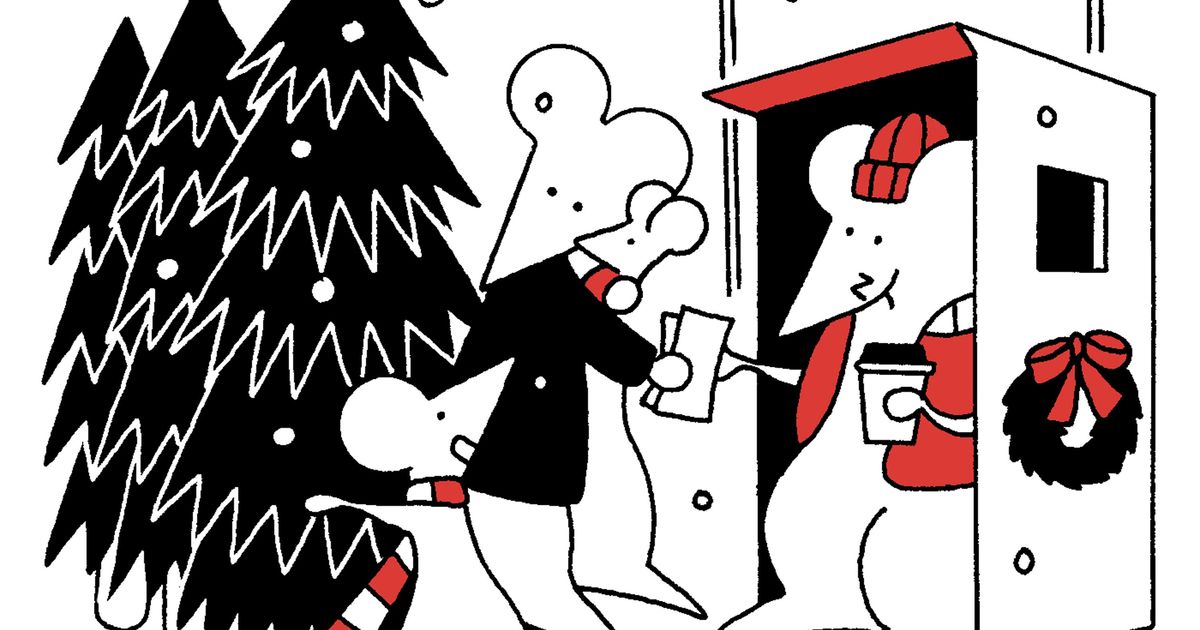
By , a freelance writer who covers beauty, health, style, travel, and food. She's a contributing editor at the Wall Street Journal with bylines at Vogue, CR Fashion Book, and Oprah. Illustration: Pete Gamlen For most New Yorkers, the holiday season starts in November, when Carhartt-clad Canadians begin hawking trees outside the nearby Gristedes. Writer Fiorella Valdesolo spoke to experts about how to avoid getting ripped off and the trick that reveals if an evergreen is fresh. You may see other firs, including Douglas, noble, and Nordmann’s, as well as white pine, but balsam and Fraser are the two fir species that keep their needles the longest, says Thomas Little, founder of Urbangreen Gardens. The only trees Ellis Roberts, founder of New York State of Pine, a tree co-op in Prospect Heights and Carroll Gardens, would avoid are spruces. “They’re sharp and don’t have an agreeable fragrance,” he says. Balsams will be priced lower than Frasers, which tend to last longer, says Stephen Asaro, founder of Brooklyn Tree Farm. While balsams are considered to be more fragrant than Frasers, the strength of a tree’s aroma is directly related to its freshness, not the varietal, says Little. Cole Tempesta, a tree seller with Vermont Family Christmas Trees, recommends grabbing a branch and pulling your hand from its halfway point outward. Some needles will be lost, but on a fresh tree, the majority will remain on the branch. The seller should always make a new cut of at least two inches off the bottom of the trunk. “Trees, like flowers, are gigantic straws, and if the base isn’t open, they can’t take in water,” says Little. Illustration: Pete Gamlen There are three grades, Roberts says: premium, which is a show tree (think perfect symmetry and proportions); grade one, which has a single flaw like a broken branch; and grade two, which has two or more flaws. It costs more to buy a tree on the street than at a farm outside the five boroughs because you’re paying for labor, transport, and rent of the sidewalk space, says Roberts. “There’s no such thing as a premium tree for $60 bucks,” Asaro says. Most inexpensive grocery-store trees sit on lots for weeks and therefore have a shorter life. “You’ll see prices nearly double when you go from a six-foot to a nine-foot,” Asaro says. But be wary of overpaying: Roberts says he’s seen six-footers going for $250, which is highway robbery. Illustration: Pete Gamlen “Without one, sellers can make up prices,” Roberts says. Little recommends 28th Street Wholesale Flowers (ask for Mack), where, he says, the tree you order gets cut a day before delivery, while fashion designer Tanya Taylor has found ornament-friendly Douglas firs at Romp Family Christmas Trees for years. Ellen Maguire, an Upper West Side–based publicist, is devoted to the team at Brooklyn Tree Farm. “They will deliver your tree, do a fresh cut outside your apartment, set it up, and then come back after New Year’s to take it down and recycle it,” she says. Wiley Bowen, a product designer in Brooklyn, always goes to New York State of Pine for the friendly vibes; she likes that it gives a percentage of proceeds to the PTA at PS9 and PS316. You can likely find a six-footer for $75 to $100 on December 22 at most vendors, says Asaro. Or you can haggle, says Roberts: “It’s a lost art. If someone wants to save $10, I’m game for it.” How to Buy a Christmas Tree in the City Your product is saved! You’ll receive emails when your saved products go on sale. Manage preferences.
How to Buy a Christmas Tree in the City
Full Article
Original Source
Read the full article at Curbed →KhanList aggregates and links to publicly available news content. We do not host full articles from third-party sources. Always verify important information with original sources.