
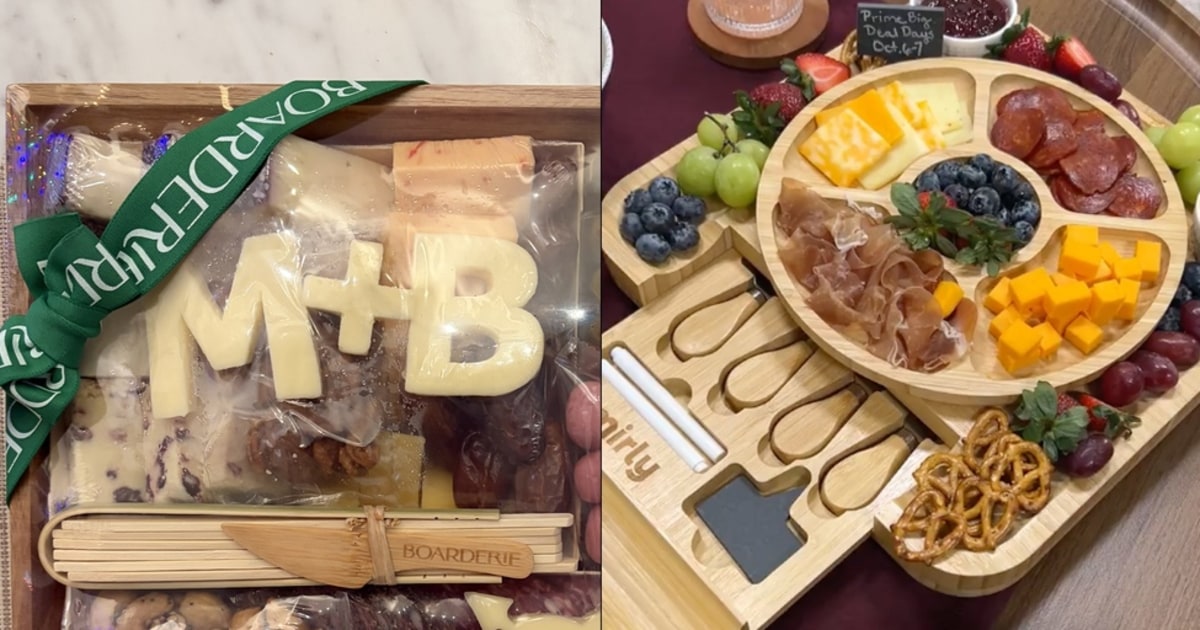
Charcuterie boards can make any occasion feel fancy and festive, be it a casual book club meeting or a large wedding. Plus, with hundreds of cheeses, meats and garnishes to choose from, you can get as creative as you want.But whether you’re hosting a massive guest list or a small group of friends, building the perfect charcuterie board takes practice. To help you create a delicious and beautiful spread, I asked chefs and caterers about everything to keep in mind. I also gathered boards and accessories that my experts and NBC Selected editors recommend. Selected.Our top picksBest personalizableLearn moreBest for large spreadsLearn moreWant more from NBC Selected? Sign up for our newsletter, The Selection, and shop smarter.Best charcuterie and cheese boards of 2026Best overall boardWhen I first came across this gorgeous marble board, I immediately added it to my wedding registry. Three years later, it’s one of my favorite functional yet display-worthy items in my house. The board is adorned with an etched honeycomb pattern and small gold-finished honeybees. You can separately purchase a set of three stainless steel, brass-finished cheese knives in a matching design, including a pronged knife for hard cheeses, an oval knife for soft cheeses and a wide-blade knife for semi-hard cheeses. There’s also a round version that includes the cheese knives.Best pre-made charcuterie boardFor the past few years, my family gifts me Boarderie charcuterie boards for birthdays and anniversaries (and, most recently, I received one for my apartment move). The boards are pre-assembled and ready-to-eat, with artisan cheeses, meats and pairings like crackers, dried fruits, nuts and chocolates. Best of all, it gets shipped directly to my door, so I don’t have to worry about doing any of the work. Boarderie is also a favorite of NBC Selected commerce editor Bethany Heitman: “I’m always looking for ways to make entertaining easier, and the ready-made charcuterie boards from Boarderie are one of my best secret weapons,” she says. “They ship quickly and arrive fully arranged, so you can just open the box and set it out, which makes them a great way to feed a crowd with minimal effort.” Each of Boarderie’s cheese and charcuterie boards is available in three sizes that serve up to 14 people. This year, Boarderie launched dessert charcuterie boards filled with sweet treats, which makes it even more giftable. Boarderie offers three sizes of its classic charcuterie boards, which makes them perfect for small gatherings and larger parties. Courtesy Mili GodioBest personalizableYou can personalize this board with an engraved monogram, which makes it stylish and classy for events, says Emmy Rener, founder of cheese and charcuterie shop Sophisticated Spreads. Made from a combination of wood and marble, this serving platter comes with three small condiment bowls for your extras and spreadables, like jams, honey, olives and more. The brand recommends wiping the platter clean with a damp cloth, and warns that the marble is naturally porous, so it might stain from extensive contact with oily or colorful foods.BETABest for large spreadsThis bamboo charcuterie board has three hidden drawers to store accessories and expand your spread.Courtesy Mili GodioBest serving platterThis circular serving platter is an elegant and attractive base to assemble your charcuterie spread on, according to Sarah Simms, co-founder of cheese and charcuterie shop Lady & Larder. It’s microwave- and dishwasher-safe, and comes in white and aqua.Most compactThis round board folds into itself for easy storage, but expands to make room for all of your favorite treats. It has four tiers, so you can designate a specific food to each one if you prefer they don’t touch. It also has a slide-out drawer equipped with cheese knives. I have the 13-inch size of this board and love taking it when I have a small gathering with friends. The smaller size comes with two cheese knives (an all-purpose, stainless steel cheese knife and a cheese fork), and the larger size (17-inch diameter) includes an additional flat cheese knife.Best for small spreadsIf you want something small and simple, consider this Mark & Graham marble board, which is a favorite of Rener’s due to its whimsical scalloped design. If you’re stuck on a unique gift idea, you can also customize it with a monogram. Keep in mind, the brand recommends hand washing it only. Best multipurposeAlthough this is a traditional cutting board set, each one also serves as a great charcuterie tray, says NBC Selected reporter Zoe Malin. It includes boards in three sizes, so you can choose one that makes the most sense for your spread. “You can also make up to three charcuterie boards at once — for example, sometimes I do one with meat, one vegetarian and a nut-free one, depending on who I’m serving,” says Malin. The boards also have indents to keep food that tends to roll away (like olives or chocolate-covered almonds) in place. Plus, they’re easy to clean: Malin washes them with warm water and dish soap, and they dry quickly.Best for beginnersIf you’re a charcuterie beginner, the visual map on this one indicates where to place cheeses, meats, fruits and more. The board, which comes recommended by Rener, also has a handle so you can take it on the go. Most giftableIf you’re a music lover, consider this unique board with a turntable-inspired design. It comes with a removable slate platter designed to look like a record, as well as a wooden outer base to hold the platter. Lift up the record player “needle” and you’ll find a hidden cheese slicer too. Most sleekMarble helps food stay cold, so this board is great for keeping meats and cheeses fresh, says Malin. The board also doesn’t tend to absorb odors or colors, so she can serve colorful fruits or veggies (like beets) without worrying about stains, she says. Plus, it sits on non-slip rubber feet, which allows Malin to easily lift and move it. “I think the elevation is a nice way to showcase a beautiful board you created,” she adds.How I picked the best charcuterie boards and accessoriesWhen shopping for a charcuterie board, the experts I spoke to recommend keeping the following factors in mind:Type of spread: Your charcuterie spread — meaning the different foods you’ll be presenting — directly impacts the type of board and tools you’ll need. Consider whether your focus is strictly meats or cheeses, or if you’re adding spreadables like jams or honey, fruits, nuts and other extras that’ll require more room (and more flavor and texture considerations).Board type: You can use virtually any kind of board for your charcuterie spread, including cheese boards, plastic trays and cutting boards. I included a variety of options on this list.Board size and food amount: The size of your board depends on how much food you’re preparing and how many guests you’re feeding. You should have a minimum of two to three ounces of meat and cheese per person for an appetizer, and double that amount if it’s the main course, says Simms.Material: Most charcuterie boards are made of wood or marble, each of which has its own unique benefits. A wooden board is a favorite among my experts because it’s sturdy, durable and often comes with side ridges, dips and handles to add space and avoid spillage. Marble boards can keep cheeses and meats at a colder temperature and often look more aesthetically pleasing, experts say.A step-by-step guide to assembling your charcuterie boardOne of the most important considerations when crafting a charcuterie board is how to arrange the foods. Below is a step-by-step guide for the perfect meat and cheese assembly.Consider what foods you’ll be using. There are several delicious food combinations you can make on a charcuterie board. One thing remains consistent among my experts: it’s the perfect time to work with flavors you love and get creative with other tastes and textures. “When you have something out of the ordinary [on your board], that’s when it becomes a conversation piece. Charcuterie boards actually have a lot of ways of getting people connected,” says Serge Krikorian, owner and head chef of Vibrant Occasions Catering.Prioritize quality over quantity. “If you take the time to source intentionally, your board will always be delicious,” says Simms, who recommends checking out your local farmers market to find out what is in season near you.Select a good quality serving board. Choose the right sized board to fit all of your foods without them overflowing, and consider ones with indented edges to catch any loose bites or leftover juices. Some boards might also have specific dips for ramekins or handles so you can take them on the go, experts say.Determine your arrangement. A basic stack of meats and cheeses won’t be aesthetically pleasing — they need to be assembled the right way. For meats, a salami river and prosciutto ribbons are some of the prettiest and easiest ways to make meat look good, allowing them to flow across or around your board, says Rener. Don’t be afraid to work with different colors and textures, too: red grapes, for example, can make a board look more elevated compared to green grapes, and adding a darker berry, like blackberries, on top can add more height, texture and a contrasting color, according to Rener.Add bowls and other decorations. To hold loose foods like nuts and olives, consider a ramekin or small bowls for extra flair. Mini dishes are also great for jams and spreads, which not only makes them look good, but keeps them from touching other foods on the board.Frequently asked questionsCharcuterie is a spread of meats and cheeses typically displayed on a wooden board or a marble or acrylic platter. Traditional charcuterie boards include various types of meats and cheeses, but you may also see crudités boards consisting of vegetables and dips, or dessert boards commonly seen during the holiday season.“In the food world, we say you eat with your eyes before your mouth, and charcuterie boards really are a great canvas,” says Krikorian. “There’s a lot of great flavors to work with, and so many [opportunities] to make it what you want it to be.”Though sometimes used interchangeably, there are a few distinct differences between charcuterie and cheese boards. A traditional charcuterie board must include meats (or charcuterie, the French term for a category of prepared meat products from pork, like ham, sausage, pâtés, salami and confit), according to Simms. A cheese board, on the other hand, includes just what its name suggests: a variety of cheeses and other accompaniments like dips and crackers.“So, if there is no charcuterie involved, it is not considered a charcuterie board,” says Simms.Charcuterie boards are typically made of wood or marble. Most experts prefer wooden boards for their durability and solid base. Some of them also have handles for practical transport and storage, and side edges to keep treats from falling off, says Rener. Remember that you need to clean and disinfect your board after every use to avoid unappealing smells — you can wash most with soap and water. You’ll also need to condition your wooden board monthly to prevent it from drying out and cracking, says Rener.Marble boards are another great option because they’re typically scratch-resistant and have a sleek design, making your spread more appealing to guests. Marble is also cooling, so it can keep food fresher for longer compared to wooden boards, experts say.What are the best foods for a charcuterie board?Simms recommends playing with a variety of textures and flavors, including sweet, salty and crunchy. Typically, charcuterie boards include a mix of meats and cheeses that complement each other, plus a few extras to add texture or sweetness. If you’re a beginner, work with two to four simple varieties of meats and cheeses, like mild salami and Brie, says Cheyenne Nichols, chef and owner of Finest Cravings catering company.MeatMost experts agree that a charcuterie board will always need some sort of meat. Some of the best ones are prosciutto, coppa, salami and pate, says Simms, who works with cured meat producers like Olympia Provisions, La Quercia, Casella’s, Coro and Fra’mani.CheeseYou’ll want to include three to five different cheeses, ideally options that differ in texture (soft or spreadable, semi firm or hard), according to Simms. Your cheese should also vary in milk-type, including cow, goat, sheep and buffalo, she says.“You’ll want really soft cheese, like a goat cheese or a Brie or Camembert, to serve as the anchor for the board, and then a crumbly cheese of some sort, whether that’s Parmesan or an aged cheddar,” says Rener. Some of my experts’ other favorites are Gouda (soft cheese) and Boursin garlic and herb (spreadable cheese). You may also want to include a “funky” or “stinky” cheese, like blue cheese, to provide a unique taste, says Rener.Certain cheeses can also add an aesthetic value to your board. “A manchego is great because there are so many different fun ways to slice cheeses like that,” says Rener. She also loves including wine-soaked cheese because the rind adds beauty and texture.“We love going to our neighborhood cheese shop and getting samples from our local cheesemonger — this is the best way to discover fun, new cheese,” says Simms.Fruits and nutsIf you want to incorporate fruits, highlight seasonal ones. For example, include peaches if it’s summer, cherries in the spring or pears during winter, according to Rener. There are also a few must-have fruits to include regardless of season: grapes, strawberries, blackberries and raspberries.Rener also recommends adding two to three types of nuts on your board, including a neutral one like cashews or almonds, and bolder ones like caramelized pecans, spicy pistachios and honey roasted peanuts. “I go crazy for a good candied nut on my charcuterie board,” she says. “Skip the boring nuts and try something new for your board.”ExtrasThis is where you can add anything your heart desires, primarily if you want additional textures or flavors, or to fill in any gaps. Local honey or honeycomb, seasonal jam and grainy mustard are great spreadables to feature, according to Simms, who also loves pickled cucumbers and olives.Most people will include jams like a sweet chutney to complement fresher cheeses like manchego, or a savory pepper jam for more buttery cheeses like Brie, says Rener. You can also add crackers, a baguette, crostini and breadsticks for some crunch.The beauty of a charcuterie board is that you can include whatever type of food you want, and however much you want. But if you’re not sure just how much to add, there are a few parameters to work with, experts say. If you’re going the traditional meat and cheese route, aim for a minimum of two to three ounces of meat and cheese per person for an appetizer portion, and double that amount if you’re not serving other food and it will be more of a meal, says Simms.My experts suggest working in odd numbers: Choose three or five selections and pick foods diverse in texture (soft, semi firm, hard) and milk-type (cow, goat, sheep).Meet our charcuterie expertsAt NBC Selected, we work with experts who have specialized knowledge and authority based on relevant training and/or experience. We also take steps to ensure all expert advice and recommendations are made independently and without undisclosed financial conflicts of interest.Sarah Simms is the co-founder of cheese and charcuterie shop Lady & Larder in Los Angeles.Emmy Rener is the founder of cheese and charcuterie shop Sophisticated Spreads.Serge Krikorian is the owner and head chef of Vibrant Occasions Catering in Arkansas.Cheyenne Nichols is a chef and owner of catering company Finest Cravings.Why trust NBC Selected?I’m a commerce editor at NBC Selected who has written about beauty, wellness, home and kitchen and more for over six years. For this article, I interviewed four chefs and hosting experts about what they consider when building a charcuterie board, and compiled their favorite boards to shop.Catch up on NBC Selected’s in-depth coverage of tech and tools, wellness and more, and follow us on Facebook, Instagram, X and TikTok to stay up to date.
How to build the perfect charcuterie board, according to hosting experts
Full Article
Original Source
Read the full article at Nbcnews →KhanList aggregates and links to publicly available news content. We do not host full articles from third-party sources. Always verify important information with original sources.