
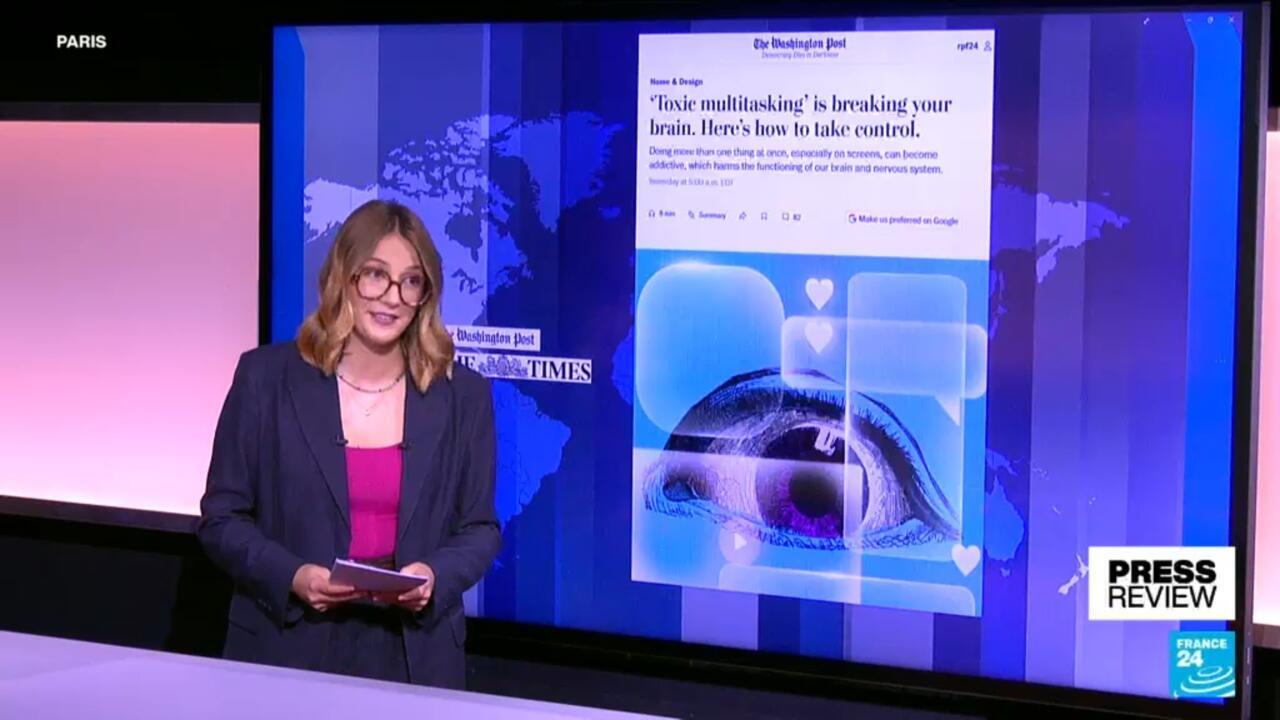
PRESS REVIEW – Tuesday, September 22: The Moscow Times talks about mobilisation rumours scaring anti-war activists in Russia. Next: The New York Times interviews South Korea's President Lee Jae Myung. Also: why is multitasking bad for the brain and the nervous system? Finally: this year's Fat Bear contest is starting in Alaska. Who's going to be the chonkiest chonk? Independent paper The Moscow Times says there are rumours that the Kremlin could order another mobilisation to sustain its Ukraine invasion. The paper spoke to anti-war activists who say that anxiety is rising, even though helping Russians avoid the military is a routine part of their work. They remember September 2022, when 300,000 reservists were called up – Russia's first mobilisation since the Second World War. According to an independent source, more than 20,000 of the men who were mobilised then were later confirmed killed. Many activists worry that a new call-up could come faster and be even harder to avoid. Another independent paper, Novaya Gazeta, writes about Yulia Kuznetsova's State Duma election experience. She was a candidate who abruptly went missing on the eve of Russia's three-day voting, shortly after meeting with voters. On Sunday, she said in a Telegram post that she and her husband are safe, but didn't really explain what happened. Kuznetsova's platform called for peace, the admission of all candidates and parties to the elections, media freedom and the release of political prisoners. Next: The New York Times interviews South Korea's President Lee Jae-myung. He urges the United States to ease its sanctions on North Korea – saying that Trump should demand that Pyongyang freeze, not eliminate its nuclear weapons programme. He adds that "there is a significant value in a trade-off between sanctions" and "the world has no realistic alternative". He is making those claims as Pyongyang is increasingly showing off its nuclear missiles against the South and as both Russia and China have embraced North Korea as a strategic partner. Lee also told the NYT that Trump is the only leader "capable of drawing Mr. Kim back to the negotiating table". Also: The Washington Post writes that "Toxic multitasking is breaking your brain" and explains how to "take control". In today's always plugged-in world, performing several tasks at the same time has become the new normal – scrolling while watching TV, reading emails while in a meeting. It can become addictive, especially when it involves screens. An expert who spoke to the paper says that it's only an "illusion of productivity" and "our brains simply aren't wired for it". It turns out that toxic multitasking can actually harm the functioning of our brain and the nervous system. This is because of the constant "context switching" that's detrimental to our brains without a break. The experts say that not all multitasking is bad, but the one we do the most – digital multitasking, or using more than one screen at a time – has an ironically negative effect on our ability to multitask when it can actually be beneficial. So how to break the toxic habit? The paper says we should try meditation, practice single-tasking or "design your environment for success" – silencing notifications, limiting your screen time, etc. Another thing that helps? Sleep. The Times writes about some 1,000 teenagers who took part in a dream study – they were paid to sleep at least seven hours on weeknights. Not only were they well rested for school, their academic performance also increased! Finally, Fat Bear Week is back and it has "unleashed its chonkiest contest yet", The Daily Beast reports. The annual contest determines which brown bear in Alaska's Katmai National Park has gained the most weight before the hibernation season. This year we have 16 chonky contestants and voting will begin later on Tuesday. Last year, 1.7 million people voted from across the world. You can catch our press review every morning on France 24 at 7:20am and 9:20am (Paris time), from Monday to Friday.
How to break the negative habit of 'toxic multitasking'?
Full Article
Original Source
Read the full article at France24 →KhanList aggregates and links to publicly available news content. We do not host full articles from third-party sources. Always verify important information with original sources.