
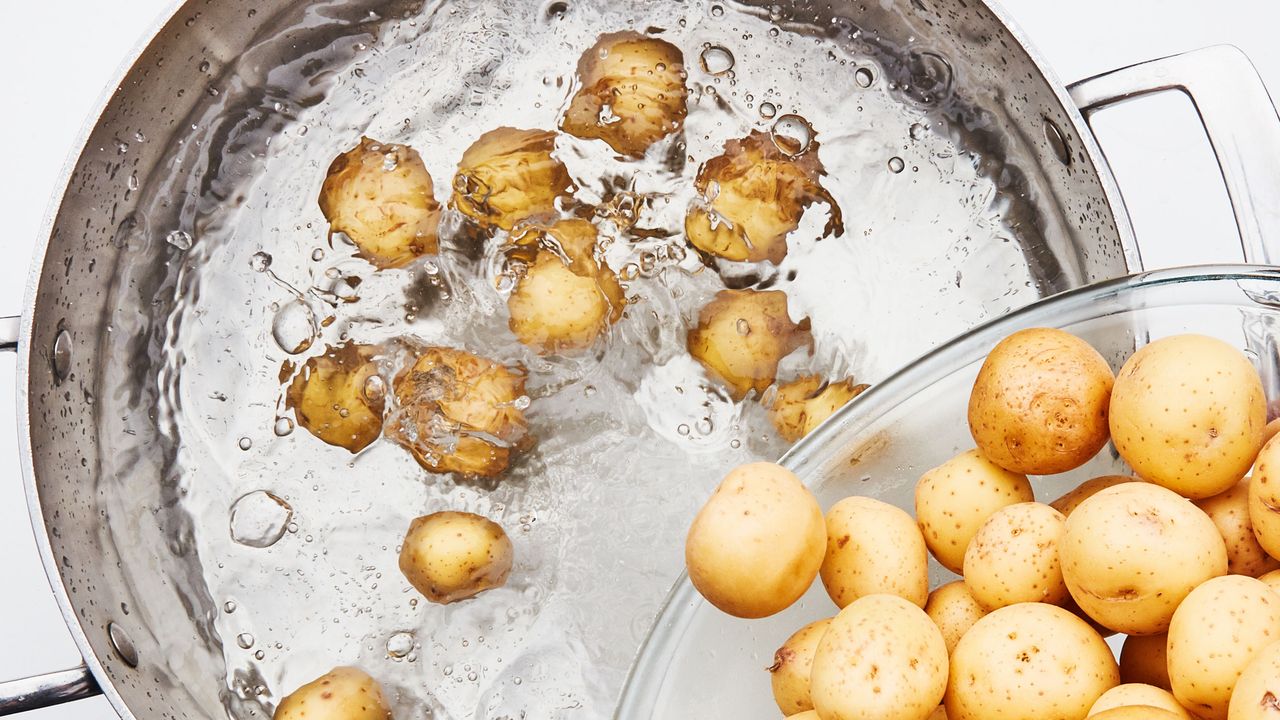
So many potato recipes start with the same instruction: “Boil the potatoes.” Simple enough—until you’re wondering whether to start them in cold or boiling water, how much salt to add, or how long the potatoes actually need to cook.The short version: Start potatoes in cold, well-salted water, bring it to a boil, then reduce the heat and simmer until tender. That’s it! Depending on their size and what you’re making, the actual cooking time could range from 8–40 minutes. A baby potato destined for smashing needs far less time than a big chunk of russet headed for mashed potatoes. Want to know more? Here’s how to get it right every time.The essential rule for boiling potatoes: Start them in cold water. When you drop potatoes into water that’s already boiling, the outsides overcook before the centers turn tender. Starting them cold lets the potatoes and water heat up together so they cook more evenly.Ingredients2 lb. potatoes, scrubbed, prepared as desired (more on that in a minute)1 cup Diamond Crystal or ½ cup Morton kosher saltMethodPlace 2 lb. potatoes, scrubbed, in a large pot. Baby, small, and medium potatoes can stay whole; cut large potatoes into evenly sized pieces. Peel them first if your recipe calls for it.Cover the potatoes with 3 qt. cold water and add 1 cup Diamond Crystal or ½ cup Morton kosher salt. Bring to a boil over high heat, stirring occasionally. Reduce the heat to maintain a simmer and cook until the potatoes reach the desired tenderness (more on that below).Drain in a colander and let cool for 10 minutes, or proceed as directed in your recipe.Potatoes are dense, so seasoning only the exterior after boiling won’t give you the same deeply seasoned result. For 3 quarts of cold water, we recommend 1 cup of Diamond Crystal or ½ cup of Morton kosher salt (Morton is denser than Diamond Crystal, so you need less). Most of that salt goes down the drain with the cooking water, but the concentrated salt bath gives the potatoes a chance to absorb the seasoning as they cook.How long to boil potatoesThe time it takes to boil potatoes depends primarily on their size and how you plan to use them. Small potatoes can be ready in less than 15 minutes; larger pieces destined for mashed potatoes, gnocchi, or dumplings may need 30 minutes or more.Large potatoes should be cut before boiling so they cook evenly—a whole russet may still be firm in the center by the time its exterior is overcooked. The exact dimensions matter less than consistency: Cut the pieces roughly the same size, and they should finish cooking at about the same time. Baby and other small potatoes can generally be boiled whole.Consider these time ranges as guidelines rather than deadlines. Start checking your potatoes at the low end of the range and let their texture—not the timer—tell you when they’re ready.How to tell when boiled potatoes are done“Fork-tender” is the usual cue: A fork, cake tester, or paring knife should pierce the potato easily. Exactly how tender you want it depends on what you’re making.For mashed potatoes, gnocchi, and puréesA knife or cake tester should slide easily into and out of the potato. You want the potatoes fully tender all the way through, without any firm or crunchy spots.For potato salad and other dishes where the potatoes stay intactA knife or tester should slide in easily but meet a little resistance on the way out. The potatoes should be tender without falling apart when you toss or dress them.The best potatoes for boilingYou can boil just about any potato, but the best variety depends on what you plan to do with it afterward.For mashed potatoes: Starchy potatoesIdaho, russet, and other high-starch potatoes cook up fluffy and readily break down with a ricer or food mill, making them a classic choice for mashed potatoes. They’re also more prone to becoming waterlogged if overcooked, so keep an eye on them.New potatoes, Red Bliss, fingerlings, and other waxy varieties have a dense texture and hold their shape particularly well after boiling. That makes them a good choice for potato salad, niçoise, and other dishes where you want distinct, intact pieces.For just about anything: Yukon Gold potatoesYukon Golds land somewhere between starchy and waxy potatoes, with enough starch to make a creamy mash but enough structure to hold their shape. They’re the Test Kitchen favorite for ultra-creamy, buttery mashed potatoes—and a reliable all-purpose choice.Boiled potato FAQsDo you need to peel potatoes before boiling?Not necessarily. Thin-skinned potatoes like Yukon Golds, red potatoes, fingerlings, and baby potatoes can be boiled with their skins on after a good scrub. Whether you peel thicker-skinned potatoes like russets depends on the dish you’re making; peel them when you want an especially smooth final texture.Can you boil potatoes whole?Yes. Baby, small, and medium potatoes can be boiled whole. Large potatoes should be cut into evenly sized pieces so their centers cook through before their exteriors become overdone.Can you overboil potatoes?Yes. Cook potatoes too long and they can become waterlogged or start falling apart. Starchy potatoes like russets are particularly prone to breaking down, while waxy varieties tend to hold their shape better. Start checking for doneness at the low end of the suggested cooking-time range.Editor’s note: This article was originally published online in June 2019. It has been expanded and updated for style with further reporting by Zoe Denenberg and Hannah Lee Leidy.
How to Boil Potatoes (and How Long to Boil Them)
Full Article
Original Source
Read the full article at Bonappetit →KhanList aggregates and links to publicly available news content. We do not host full articles from third-party sources. Always verify important information with original sources.