
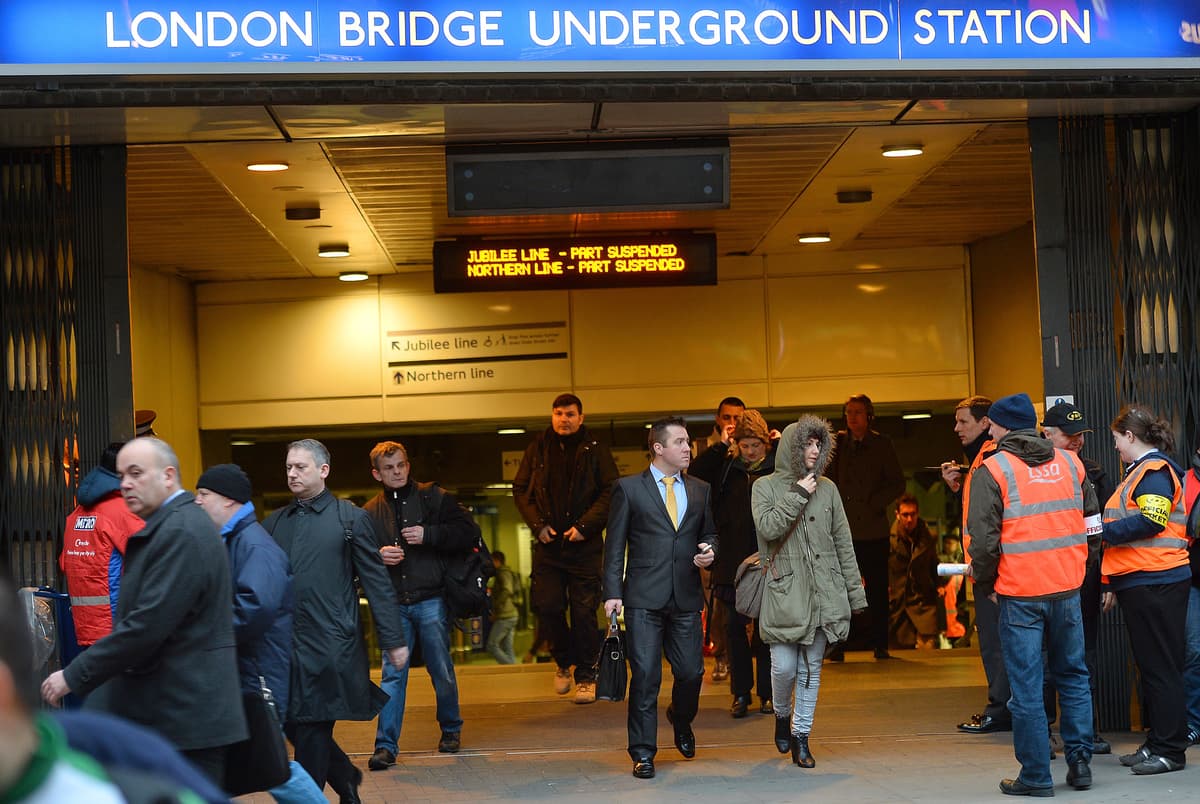
Just as London gears up for the busy festive season, a fresh round of Tube strikes is set to throw travel plans into disarray.Industrial action is hitting the capital’s Tube on Thursday in a long-running dispute between Transport for London (TfL) and the RMT union over a voluntary four-day working week for train drivers. Read MoreThat will be followed by seven more 24-hour walkouts between December 17 and February 25. Passengers are being urged to plan ahead and consider alternative routes to avoid the worst of the disruption.The Standard has rounded up the best ways to get around London during the strikes.Pickets gather as commuters use London Bridge Underground station in central London during previous strike actionAFP/GettyLondon UndergroundMost Tube lines are expected to operate during the strikes, although the level of disruption will vary.No service is expected on the Circle or Piccadilly lines throughout Thursday, or on the Waterloo & City line from midday.During previous walkouts in April and June, services were suspended between Baker Street and Aldgate on the Metropolitan line and between White City and Liverpool Street on the Central line.Passengers are advised to plan alternative routes even if their usual Tube line is running, as services may be subject to delays and cancellations.Travellers walk through Leicester Square underground stationAFP/GettyThe Elizabeth line, DLR, London Overground, buses and trams are all expected to operate as normal, although they will be busier than usual. Here’s how you can avoid disruption on the Tube:Elizabeth line: Passengers travelling east to west across central London should consider using the Elizabeth line, though services are expected to be much busier than usual. London Overground: Services will continue to operate, offering alternative routes between London neighbourhoods without the need to travel through central London.DLR and London Trams: Both are expected to operate as normal. They provide links in east and south London, including Docklands, Canary Wharf and Croydon.National Rail and Heathrow Express: National Rail services offer alternative routes into and across the capital. Passengers travelling to Heathrow Airport can use the Elizabeth line or Heathrow Express while Piccadilly line services are suspended.London busesBuses will operate as normal, although increased demand means services are likely to be busier than usual, with passengers potentially having to wait for several buses before being able to board.Routes 14, 19 and 91, alongside route 10, offer alternatives to sections of the suspended Piccadilly line, while routes 205, 11 and 27 serve parts of the northern and southern stretches of the Circle line.Commuters queue for a red double decker bus outside Victoria train stationAFP/GettyCyclingRental e-bikes are becoming an increasingly popular commuting option for Londoners, particularly during periods of strike action.If the weather remains dry on Thursday, swapping the Tube for a bike or scooter could be a convenient way to avoid disruption.New research from Lime suggests that Londoners are embracing rental e-bikes as a year-round mode of transport, rather than just relying on them during periods of industrial action.Rental e-bike schemes have grown in popularity over recent years PA WireThe findings reveal that one in three Londoners (33%) have used a rental e-bike in the past year, while more than one in 10 (11%) use one every week.Half of Londoners (50%) believe more people are cycling across all seasons and weather conditions than five years ago, while 49% say the capital’s cycle lanes are busier than ever.Alice Pleasant, Lime’s deputy regional head of government relations, said: "During periods of significant Tube disruption, we see more Londoners turn to Lime to keep moving around the city. Demand increased by more than 50% week-on-week during previous strikes that affected every Tube line."Whilst we expect the current ones to be less disruptive, we're preparing for increased demand and will be working to ensure bikes are available in the areas where riders need them most."Alex Berwin, VP of Public Affairs at Forest, added: “If the strikes later this week go ahead, Forest is ready to help Londoners find other ways to get around. “During the strikes this June, Forest experienced a 50% increase in rides during a Wednesday rush hour between 7am and 8am, compared with the week before, and a 35% rise during the afternoon rush hour.“We’re preparing for a similar surge in demand by putting more staff on the streets and positioning bikes where Londoners are most likely to need them, particularly around stations and key commuter hubs. We’re also directing extra resources to busy locations to keep bikes neatly parked, bays tidy and pavements clear. We’re here to support TFL and keep London moving.”BoatIf you’re looking for a more scenic commute, Uber Boat by Thames Clippers offers an alternative way to travel to the office.But, it’s important to note that Uber Boat journeys are not included in TfL fare caps. An Uber boat travels up the River Thames, towards the Palace of WestminsterAFP/GettyWhile you can tap in and out using Oyster or contactless at the yellow pier card readers, river services are priced separately and do not count towards your daily or weekly TfL fare cap.Key commuter stops along the Thames include Canary Wharf, London Bridge, Blackfriars and Battersea Power Station.Services operate from around 5.30am, with boats typically departing every 10 to 20 minutes during peak commuting hours.Standard adult pay-as-you-go fares typically range from £6.20 to £11.40 when using Oyster or contactless, with journeys across all zones costing around £19.30.
How to beat Tube strikes as RMT walkout hits London on Thursday
Full Article
Original Source
Read the full article at Standard →KhanList aggregates and links to publicly available news content. We do not host full articles from third-party sources. Always verify important information with original sources.