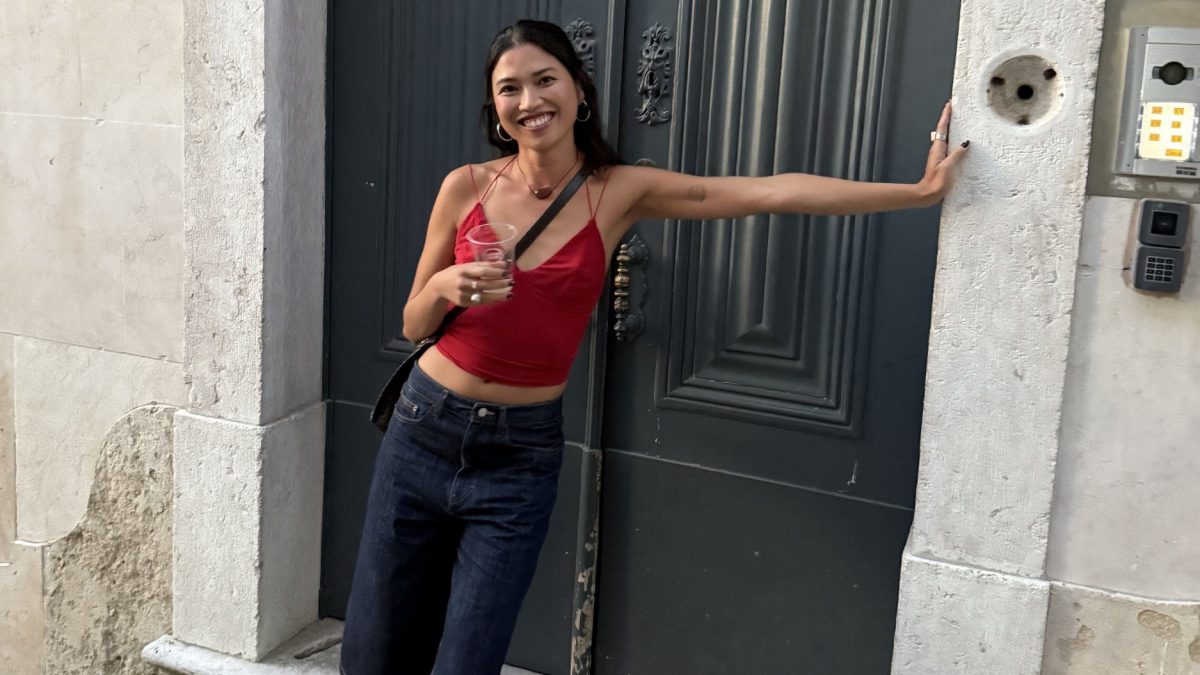
As anti-tourism protests sweep Southern Europe, in major holiday hotspots in Spain and Portugal, the wider impact of holidaymakers on local life, communities and its people have never been more under scrutiny. While demonstrations mainly target issues surrounding crowding, housing and cost of living, much backlash is also directed at tourist conduct – noise, disrespect and bad behaviour. Maybelle Morgan is a writer who moved from London to Lisbon a year ago. She talks to residents and expats in Spain and Portugal about their tips to stay respectful and avoid annoying locals on holidays. My face burned as several people turned around to look at me. As usual, I knew I had done something wrong but I wasn’t sure what. In the two months since I had moved from London to Lisbon, I had become an expert in putting a foot wrong, apologising, and making a mental note to not do whatever it was I had done again. On this day, I went to a tabacaria (tobacco shop/newsagents) to pick up a parcel. As I neared the counter, headphones on, I didn’t notice an older Portuguese man in his mid-60s quietly enter the shop, pick up a newspaper and bypass the five-person line to stand next to me at the front. As the shopkeeper instructed “próximo” (“next”) and I stepped up to the counter, the older man tutted, waved his hands disapprovingly, tossed the paper back on the stand and stormed out of the shop. In the UK, the general rule of thumb is that you queue and wait until it’s your turn. (They don’t say that Brits love a queue for nothing!) I’ve rarely seen people ever let an older person jump the queue. Whereas in Portugal, in supermarkets, banks, shops, restaurants, pharmacies, it is legally required to always give priority to older adults above 65 and let them go in front of you. Everyone abides by it – as do I now. It’s just one of the many cultural blunders I’ve made having lived in Portugal for a year now. Over that time period, I’ve irritated my fair share of locals, and as a result, absorbed insider knowledge of the cardinal sins that tourists commit. It goes without saying, but loudly exclaiming how cheap things are in the country, clogging up the roads for Instagram photos, and speaking in broken Spanish – in Portugal! – probably won’t win you any fans. I spoke to four locals and expats in Spain and Portugal about their advice on how not to annoy locals. Shorts Don’t treat the city like a theme park – real people live there Drunken actions often have dangerous consequences, says Barcelona-born teacher and stand-up comedian Guillem González. He wants tourists to remember that cities are not a fake stage only built for their fun: real people live there. “To me, balconing – jumping from a hotel balcony into a swimming pool – is a symbol of British behaviour in Spain,” he says. “Getting too drunk, being too loud, not caring about people around you. Brits are the number one at that. I know most British tourists won’t do it, but balconing is dangerous and stupid. My tip? Try not to be the loudest in the room. I understand you might want to go to Barcelona to party, and as much as Barcelona is a party city, it is more than that. Not everyone there is in party mode.” Don’t block the pavement to take photos For Barri, a content creator who runs a Barcelona travel account @worktravelb and has been living in the city since 2023, she has seen how Instagram and the desperation from holidaymakers to get the right shot can disrupt the daily lives of locals living in these cities. “I used to be that person – I would film in the street, and for years I didn’t notice I was standing in someone’s commute,” she says. “What changed me, one day, was watching an elderly neighbour wait, without complaining, while a tourist couple redid the same jump shot four times on her doorstep. Now I shoot before 9am and I move the moment anyone needs to pass.” On the metro, know which seats aren’t yours “Your feet hurt, I know. You’ve walked 20,000 steps and the seat is right there,” says Barri. “But the marked seats are reserved for kids, elderly people, pregnant women and parents with small children, and the space by the doors is for prams and wheelchairs. As a parent, I end up asking tourists to move out of that space almost every week, and getting around this city with a small child is hard enough without having to start that conversation. It’s the easiest tip on this list to follow and the one that would change the most.” Consider other cities apart from Barcelona and Lisbon Due to the big backlash against over-tourism in certain cities, opting for the path less travelled is a good idea, says Melita Cameron-Wood, a freelance journalist who has been living in Valencia since 2021. “Cities and towns like Teruel, Zaragoza, Santander, Vigo, Valladolid and Toledo might not be your first considerations when visiting Spain, but remember the experiences you have there could be a lot more authentic as a result,” she says. Maybelle Morgan moved to Lisbon, Portugal a year ago and learned some cultural faux-pas the hard way Avoid the touristy neighbourhoods – go off the beaten track “If you do choose to go to a city that is quite touristy, why not make your experience more unconventional by heading on over to Atlas Obscura and finding some unusual places to visit,” adds Cameron-Wood. “You won’t need to deal with the crowds and queues you’ll experience at other more popular sites. I visited the Museo La Neomudéjar, just five minutes away from Atocha station in Madrid, in summer a couple of years ago, for instance. This experimental art gallery in a former 19th-century railway warehouse and training centre is a true gem that I wouldn’t have found if I hadn’t been looking to go somewhere more off the beaten track.” Lisbon local and activist for Assembleia parar o Hotel no Quartel, a Lisbon protest group demonstrating against luxury hotels in the tourist-saturated neighbourhood of Graça, Maria Prata echoes this sentiment. As a start, she recommends people book accommodation in less busy neighbourhoods, and rather than hotels and Airbnbs, consider home exchanges. “Mass tourism arrived in the neighbourhood of Graça four years ago, and now our local way of life is struggling,” she says. “In Lisbon, neighbourhood life is being destroyed because almost all local cafés and tascas are becoming chains – it feels like Disneyland. Tourists would be supporting locals if they stopped coming to these neighbourhoods. It’s like when you go to a beautiful nature spot and you understand that sometimes it’s better to stay away so that you don’t interfere with the biosphere. Also, avoid tuk-tuks, or riding fast on bikes – this really interferes with local life.” Learn more basic expressions – not just ‘hello’ or ‘thank you’ “One thing that causes frustration is the assumption that everyone can speak English,” says Cameron-Wood. “Usually, people have a rough idea of what they are likely to do before going on holiday. Learning how to navigate those interactions in Spanish, or in the language of the destination country, is a great idea. The goal needn’t be perfection, and locals might switch to English if you are in a touristy area, but learning basic expressions shows an interest in the culture and avoids coming across as arrogant.” In Barcelona, Barri adds: “It’s not Spanish, it’s Catalan. ‘Bon dia’ costs nothing and it tells everyone you know where you actually are. Barcelona constantly gets treated as generic Spain and locals feel that. Two words won’t make you fluent, but I’ve watched them turn a grumpy interaction into a friendly smile.” You’re not the enemy – locals are aware that the problem isn’t individual tourists González wants to reiterate that the anti-tourist sentiment in Barcelona and other cities is usually misunderstood. “As much as the slogan says, ‘Tourists go home’, locals are quite aware that individual tourists are not the problem,” he says. “The problem is much bigger, and Spanish and Catalan politicians are responsible for our ‘tourism-oriented economy’. But so far, the attempts to control tourism and tourist apartments don’t seem to be very successful.”
How to avoid being an annoying tourist, according to locals
Full Article
Original Source
Read the full article at Inews →KhanList aggregates and links to publicly available news content. We do not host full articles from third-party sources. Always verify important information with original sources.