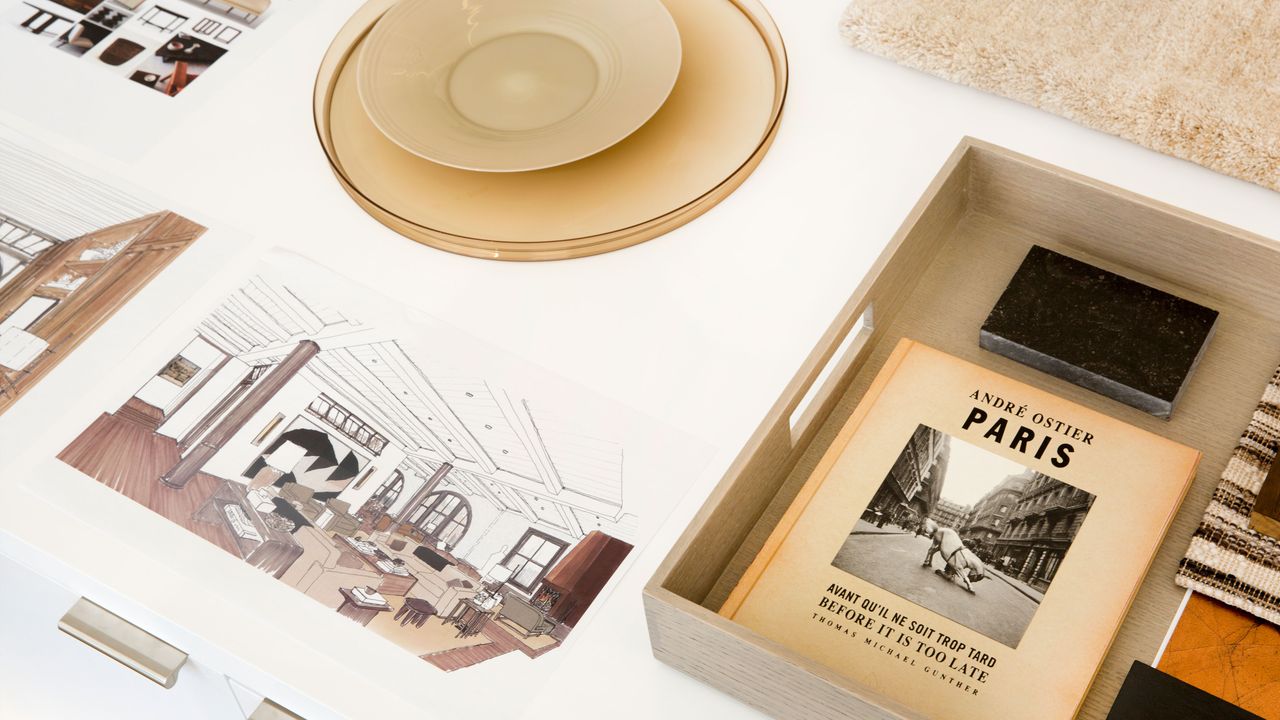
A client presentation is a juggling act: A designer has to clearly lay out their vision, demonstrate command of the details, and convey passion—all without overwhelming their client. After all, a design vision is only as powerful as its pitch. AD PRO consulted industry advisers and practitioners on how they create and deliver a winning deck.Roll out the welcomeEmily Sanford, principal of Charleston-based Directory firm Sanford Collective Interiors, stresses establishing a good mood in the room from the get-go. “Have snacks—including their favorite foods—set up, tunes playing in the background, and fresh flowers out to set the vibes,” she says. The more relaxed and comfortable your clients are, the more willing they may be to engage with your ideas.Get organized—and bone up on the detailsA sample mood board from Sanford Design Collective Courtesy Sanford Design CollectiveStructure is the key to client presentations. “If you’re organized during your presentation, you’re exhibiting the way their project will be managed,” says Victoria Sanchez, principal designer and owner of the Santa Fe and Washington, DC–based firm Victoria at Home. “A designer should know their design inside and out. Be ready to answer questions about pricing and lead times.”Sanford echoes this sentiment. “If you’re scrambling to find a specification or confirm a price during a presentation, you’ve lost momentum.” Directory member Kellyann Hee, of Hee Designs in New York’s Hudson Valley, advises consulting the project’s contractor to create a timeline to inform your presentation.But don’t overload your clients with excessive details. “Present a cohesive idea and give plenty of options without overwhelming the client,” says Mark Cunningham, founder of his 15-year-old namesake New York–based design firm.“Clients only have so much bandwidth to take in information,” adds Hee. “It’s a waste of your time to show them details you only need later in the design process.”Fine-tune your deckThe packaging of your slide deck is as important as its content. Hee swears by templating her deck for this reason. “In every presentation, we’ve got a title, the date, our little logo, and a page number,” she says. “The page numbers sound so basic, but they are helpful when you’re referring to page 7 or 13 or a page of the deck in a later email.”Start the session with a project recapA slide of approved design concepts from Hee Designs Courtesy Hee DesignsKick off each presentation with a visual reminder of what the clients have previously chosen—whether it be through mood boards, layouts, or other design decisions. “Our job is to show clients how all their chosen design elements work together, to limit surprises,” says Sarah Broughton of Directory architecture firm Rowland+Broughton. “The more you give people the opportunity to remind them of choices that they’ve made previously, the better.”Use the right visualization aidsA slide from Rowland+Broughton illustrating their massing and rendering visualizations Courtesy Rowland+BroughtonNo matter how articulately you describe your design schemes, clients want to see something. “A designer should be able to walk a client through their project with a floor plan, presentation board, or other presentation materials,” says Sanchez.Sanford—whose firm specializes in historic home remodels and additions—utilizes floor plans, furniture layouts, cabinetry elevations, and photorealistic renderings for her presentations. The team prints out their drawings and renderings for clients while also displaying them on a screen. “The goal is to help clients visualize how every layer works together,” she says. For remodels, she says, “drawings are particularly essential, so clients can understand where we are preserving the character of the house and where we are introducing something new.”Broughton complements her standard visualization suite—which often includes Revit for modeling alongside Unreal and Enscape for renderings—with an immersive option: virtual walk-throughs. She notes that about half of her clients are game to slip on Meta Quest 3 VR headsets to explore their future spaces. “Not all clients are comfortable with the idea,” Broughton laughs, “but for those that are, we’ll get them in the goggles and walk through the layout together.”Don’t skimp on material samplesA materials selection with annotations for a presentation from Hee Designs Courtesy Hee Designs“The more a client can see and feel before buying, the more successful you will be in designing a space they love,” says Cunningham. Physical samples are the one area where designers say it’s safer to err on the side of excess. Bring as many physical samples as possible, including (but not limited to) stone, tile, wood finishes, hardware, plumbing fixtures, fabric, wallpaper, rugs—even trims for a pillow or furniture prototypes. “This is a tactile experience,” says Sanford. “Seeing and handling materials in person is incredibly important to a client’s understanding of the materials, color palette, and finishes of the space.”Broughton organizes material samples on individual trays corresponding to each room of a project. Throughout the presentation, the trays are brought out and whisked away as the team goes through each space. “It’s very organized, and clients love it,” she says.Channel confidence and enthusiasmNothing sells a vision like genuine, unwavering conviction. “Show clients you believe in the design concept and the products you’re sharing,” says Sanchez. Energy counts, too, or, as Broughton puts it, “cartwheels and high kicks.” Enthusiasm is contagious, after all. “If you’re excited, a client is going to get pumped, too,” she adds.But while it’s essential to convey confidence, there’s a fine line between self-assurance and glibness. “Be humble,” says Richard Ouellette, president of Canadian design firm Les Ensembliers. “Remember it’s their home and money, not yours. No one wants to work with a diva.” Instead, let clients in on the details that keep you up at night. “People love that,” Broughton adds. “They're like, ‘Oh my God, you’re thinking about my project in the middle of the night—you’re really committed.’”Ultimately, this authentic approach helps break down formality. “The best presentations feel less like a rigid presentation and more like a collaborative working session,” says Sanford. “Create a space for honest feedback.”Wrap up strong“Send them home with something tangible,” says Sanford, who prepares a binder for her clients to take home, so they can revisit the plans, selections, and larger vision after the meeting. “And follow up the next day to keep the momentum going.”4 Ways to Nail Your Virtual PresentationScheduling a Zoom, Google Meet, or Microsoft Teams presentation is often easier than meeting face-to-face—but ideas can sometimes get lost in the digital shuffle. AD PRO asked design pros for their tips on virtual client presentations that feel as impactful and immersive as an in-person meeting.
How to Ace Your Next Client Presentation
Full Article
Original Source
Read the full article at Architecturaldigest →KhanList aggregates and links to publicly available news content. We do not host full articles from third-party sources. Always verify important information with original sources.