
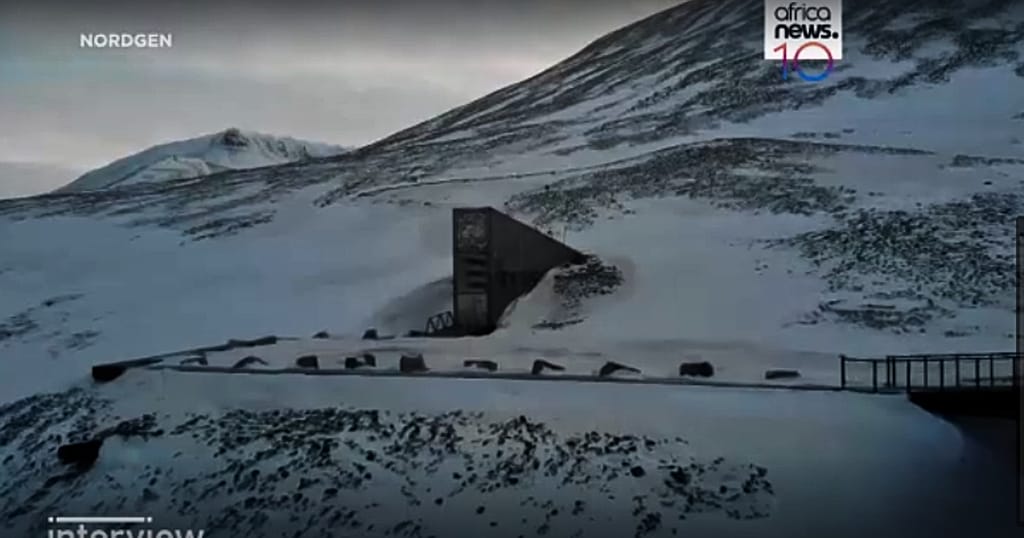
Tucked away in the Arctic, a vault holds over a million seeds serving as a backup for the world’s food supply. This year, the Svalbard Global Seed Vault receives the Princess of Asturias Award for International Cooperation. Africanews’ Ronald Kato sat down with Lene Krøl Andersen, executive director of NordGen, to talk African staples, cooperation with national gene banks, and whether seeds can keep up with a changing climate. Ronald: Lene, welcome, and congratulations. Lene: Thank you very much. It is an honour to be here. Ronald: How is climate change shaping the kind of seeds and varieties that countries are choosing to preserve at the vault? Lene: Climate change is one of the reasons why we have established the Svalbard Global Seed Vault. The idea is to protect the present biodiversity against climate change. The biodiversity in our nature today is under pressure, meaning that we do not have the genetic traits for future crops available in nature. So, we conserve the seeds to store the heritage of genetic resilience so that those resilient genes can be retained for our future crops. Ronald: So, a seed frozen at Svalbard will be returning to a different climate and possibly soil. How then do you account for the need for plants to evolve? Or are they just being preserved? Lene: Well, it works in the way that the genetic diversity is available, and we need to keep it alive to be able to use it. So, with today's modern technology of gene editing and breeding technologies, we can create crops and future crops to adapt to the changing climate. So, that's how the genetic diversity coming from the gene banks is being used. You could say that it is like a library. And the books contain the genetic information. The knowledge you need to develop future crops is available to pick in the library. Ronald: You touched on gene editing, and currently, Norwegian law, under which the vault is governed, bars genetic modification. Do you see this policy evolving in the interests of food security in the future? Lene: The technology indeed will evolve, certainly. We become smarter in developing new crops for the prevailing conditions. For the conservation part, we want to preserve the original as closely as we can, because this step broadens diversity. What we do with the traits that are held in the original samples—it's up to the researchers and breeders to develop. We store the foundation of the present diversity. Ronald: Sudan and Ukraine, two countries at war that have deposited seeds at the vault. Can you talk about the logistics? What does it take to evacuate seeds from a country at war like Sudan? Lene: Yeah, that's a good question, because it varies depending on the situation. We have worked very closely with Ukraine, for example, and still are doing so. That mechanism was an evacuation from one side to the other to simply make sure that the seeds were safe in the country. Svalbard works as a backup system. So, if something goes wrong, whatever happens to your copies in one of your local gene banks, then you can go to the other one you have on the side. If that too does not help, then you go to Svalbard. But at any time, you are able to withdraw your seeds. Whenever you have the need to have them back, it's possible. Ronald: The vault works on trust. How do you maintain that neutrality amid sometimes very contentious geopolitics? How do you stay impartial? Lene: So, in the seed vault, we don't address geopolitical challenges at all. We have seeds from Russia, America, and Ukraine side by side. My colleagues at the vault like to say that the problems outside are cooled down in the vault. There, we are all colleagues working together. Ronald: So, for a local farmer in Senegal or Uganda, what does it mean that their local okra or cowpea variety is now being kept or frozen in the Arctic? Lene: It would mean that what they have is their own breeders. They have developed their own cowpeas into something they are proud of, that they know how to grow to feed their families with. So, it's like future insurance for the next generation, to make sure that they are able to provide food and feed future generations. Ronald: Learn, if you could look 50 years into the future, what role do you hope these seeds, now at Svalbard, will have played in solving the global food security puzzle? Lene: My hope is that we will be able to generate more information and understand our diversity even better than we do today and make that information available. It's like opening a book, understanding what's inside and what benefits are in this little seed. How can we help future varieties to adapt to climate change or other harsh conditions to grow crops in? At Svalbard, we have the global collection, but the actual work is being done within individual gene banks. That is where the knowledge is; that is where the connection to the farmer is. The farmer's knowledge is super important in understanding how to develop seeds and how to grow food the right way. Ronald: Lene, congratulations once more. And thank you very much for talking to Africanews. Lene: Thank you very much.
How the Svalbard seed vault could help protect Africa's food future
Full Article
Original Source
Read the full article at Africanews →KhanList aggregates and links to publicly available news content. We do not host full articles from third-party sources. Always verify important information with original sources.