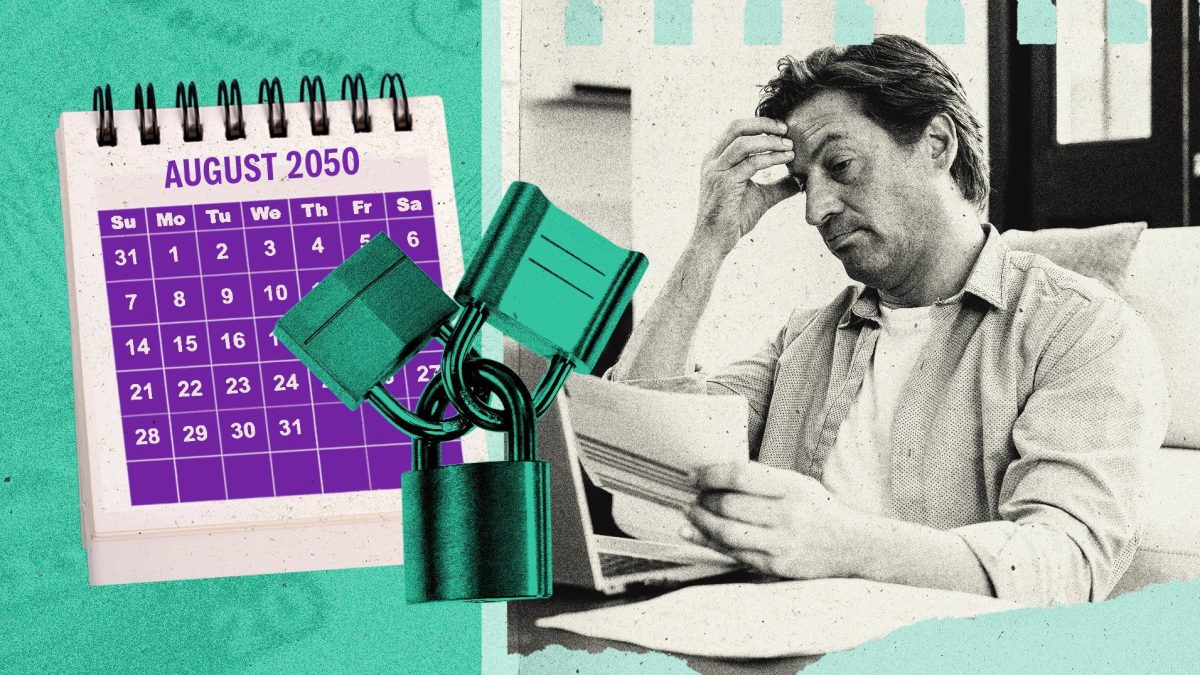
The state pension is often the foundation of someone’s later-life income, with many who may not have sizable private pension pots relying on it to fund their retirement. However, there is growing uncertainty over what the state pension will look like in the future, particularly for young people. It is becoming increasingly expensive to fund – currently costing close to £150bn a year and rising. So how sustainable is the payment, and might it look different in decades to come? The i Paper spoke to experts to find out the possibilities. Shorts What changes are already in the works? Currently, the state pension age is already transitioning from its current level of 66 to 67, with this process taking place over the next two years. After this it is set to rise to 68 happening between 2044 and 2046. Last year, however, the government announced another review of the age, as required by law every six years. The Office for Budget Responsibility (OBR), which provides forecasts for the government, has in recent documents worked on the assumption that the age will rise to 68 between 2037 and 2039. It has warned that delays to a change would cost £6bn a year. The full new state pension is worth £241.30 per week (£12,547 per year) the basic state pension is £184.90 per week (£9,614 per year). They rise every year in accordance with the triple lock – the guarantee that the state pension will increase by the highest out of average earnings growth, inflation, or 2.5 per cent. The Government has committed to keeping the triple lock until at least the end of this Parliament, by which point the state pension will be above the current tax-free personal allowance of £12,570 a year. Could the state pension age rise faster? There have been suggestions by some experts that by 2050, the state pension age rise could be accelerated even further. The International Longevity Centre (ILC) even argued in 2024 that it could jump to 71 for today’s middle-aged workers. So is a state pension age of 70 possible for today’s 46-year-olds? “If life expectancy continues rising on long-term trajectories, then there’s a fair chance, yes,” says Tom Selby, director of public policy at AJ Bell. “Ultimately there are two mechanisms for controlling state pension spending – the amount that is paid out and the age at which it is received. Politicians seem reluctant to go for the first lever, which puts more pressure on the second. “Clearly, a rising state pension age would place more pressure on people to work longer, particularly those with relatively small private pension pots. This challenge could be most acute among the self-employed and manual workers with physically demanding jobs, many of whom may find it more difficult to continue working to age 70.” Will the triple lock go? There has long been debate about whether the state pension system should be reformed in some way – especially when it comes to the triple lock. At the last general election, all major political parties supported keeping the triple lock, but some experts believe it will have to go eventually. Last year, the OBR esimated the annual cost of the policy was set to reach £15.5bn by 2030. However, getting rid of the lock is difficult because it has high support – particularly among pensioners, who turn out in large amounts at elections – which is why Selby says politicians are “reluctant” to commit to change. Heidi Karjalainen, senior research economist at the Institute for Fiscal Studies, said: “The triple lock has cost significantly more than originally expected, and it continues to add uncertainty for future public finances. “Politicians have been nervous about changing it because of its popularity, but if successive governments continue committing to it, this means more pressure to increase taxes or reduce spending elsewhere. She said a “phased approach”, where the government sets a target level for the state pension and commits to that in a long run, could build public support for a different uprating mechanism. Others warn that getting rid of the lock would have negative consequences. Elaine Smith, head of age-friendly employment at charity the Centre for Ageing Better, said axing it would harm those disproportionately less likely to have a private pension, such as women, ethnic minorities, disabled people and those with long-term health conditions. She added: “These groups already face structural disadvantages, and with further planned increases to the state pension age, many will spend longer periods out of work and in financial hardship.” Could the state pension be means-tested? Means-testing the state pension – excluding those with large wealth, or at least giving them a lower figure – has been suggested multiple times in the past few years. In 2024, former Bank of England economist David Blanchflower told The i Paper: “An incoming government is going to have to means-test stuff. They are going to have to raise the basic pension a lot for the poor, and probably means-test it.” But this comes with downsides – as means-testing can provide a perverse incentive not to save your own money, if your savings would rule you out of receiving a state payment. Sir Steve Webb, ex-pensions minister and now partner at LCP, said such a policy would be hard to implement without making saving privately compulsory, instead of allowing people to opt out. “For as long as the UK has an opt out, the risk is that if I know that by having a private pension, I will get less state pension, I may simply decide to opt out or save less privately – which doesn’t save the government any money and undermines savings incentives,” he said. The government could make workplace pension-saving mandatory to mitigate this, but doing so would probably prove unpopular, he added. Could you end up working for longer? Longer working lives may become more common as the state pension rises, according to experts. The age at which you can access your private pension is already set to rise from 55 to 57 in 2028, and the number of economically active people who are over 65 is already rising – to 13.8 per cent today, up about 3 percentage points in a decade. However, although some jobs can be done until your 70s, tougher, more physical ones are difficult at an older age. This means that if people are expected to work for longer, there will be a need for greater access to retraining, flexible working, workplace health support, and help for unpaid carers. Webb said: “Ex-service personnel have proven to be good lorry drivers, so with the right training they can move from a career which you cannot do beyond a certain age to one which may last longer, but a lot of this needs forward planning – we cannot let people burn out in heavy jobs and then be effectively unable to do any paid work.” Experts also warn that those who experience poor health, do physically demanding jobs or have care responsibilities will face greater challenges. Smith, of the Centre for Ageing Better said that although people in general were living longer, this wasn’t the case for all, with a gap in healthy life expectancy growing. “Only in the richest areas of England are people living past 70 free of chronic pain, mobility issues, or illnesses that require assistance or restrict daily activities,” she added. “In the poorest parts of the country, people are in poor health 20 years before their 70th birthday. For many, this poor health may make working until 70 impossible.”
How the state pension could look in 2050 – and when you might get it
Full Article
Original Source
Read the full article at Inews →KhanList aggregates and links to publicly available news content. We do not host full articles from third-party sources. Always verify important information with original sources.