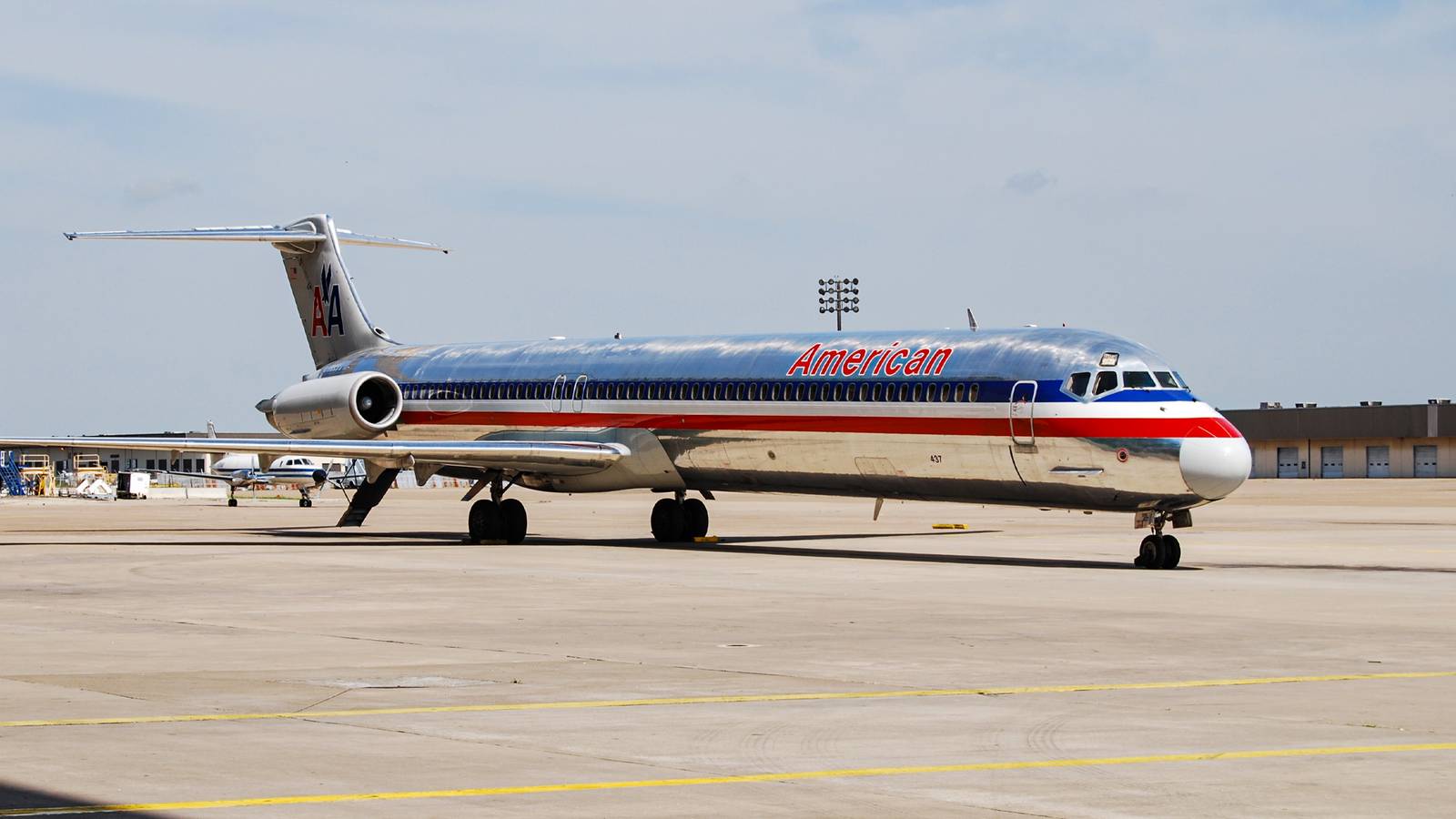
Published Jul 28, 2026, 3:00 PM EDT Passionate about promoting aviation and the beauty of flight, Antonio loves to take photos, read, and write about airplanes and helicopters as well. Based in Palermo, Italy , he is a frequent airshow visitor. McDonnell Douglas built the MD-90 to replace the MD-80. The MD-90 was quieter, more fuel-efficient, and fitted with modern high-bypass turbofan engines that the McDonnell Douglas MD-80's noisy, smoky JT8D-200 engines could not match on any engineering metric. It entered service in 1995, and it exited service in June 2020. The MD-80 exited service in September 2019, nine months earlier. An aircraft that was supposed to make its predecessor obsolete was retired first, by the same airline that operated the largest fleet of MD-90s in the world. The production numbers tell the story before any explanation is needed: McDonnell Douglas produced 1,191 MD-80s but only 116 MD-90s, a ten-to-one difference that reflected the two aircraft’s very different commercial fortunes. One aircraft that was supposed to supersede the other sold at one-tenth the volume, and the reason comes down to a single decision about engines that made the supposedly inferior aircraft commercially untouchable for four decades. The reason lies in what 116 aircraft means for an airline trying to support a fleet, and what 362 aircraft on a single carrier can create: a maintenance system that McDonnell Douglas never managed to build around the MD-90. The MD-80 Outsold The MD-90 By More Than Ten To One The MD-80 made its first flight on October 18, 1979, entered commercial service with Swissair on October 10, 1980, and entered service as a two-pilot aircraft, reducing crew costs compared with many earlier jetliners. American Airlines took delivery of its first example in 1982 and became the type's defining operator, eventually accumulating a fleet that, according to American Airlines' official retirement announcement, reached 362 aircraft by 2003. Roughly one-third of all MD-80s ever produced operated on a single airline. The MD-80 was dominant because it was available in large numbers, fit airline route structures, and accumulated a vast parts-and-maintenance network that steadily lowered operating costs. The MD-90 entered service in 1995 with Delta Air Lines, powered by the IAE V2500-D5 — a modern high-bypass turbofan producing approximately 25,000 pounds of thrust (111.2 kN) per engine, shared with the Airbus A320 family. As Simple Flying has documented in its comparison of the two types, the MD-90 was the superior aircraft on paper. In practice, it sold only 116 units before production ended in 2000. For airlines, that number meant the aircraft never reached the scale necessary to create a deep, competitive support network. The MD-90 Never Reached Critical Fleet Scale Credit: Shutterstock The economics of maintenance, repair, and overhaul ( MRO) improve dramatically as more aircraft enter service. Larger fleets attract more parts suppliers, create larger pools of trained mechanics, shorten lead times during aircraft-on-ground events, and generate abundant used components from retired airframes. The IAE V2500 itself was not a weak point. Thousands of A320-family aircraft used the engine worldwide, making it one of commercial aviation’s best-supported powerplants. The challenge was that the MD-90 used a specific V2500 variant and installation configuration that differed from the A320’s. Operators could not simply draw freely from the enormous A320 parts pool without additional engineering work. As a result, maintaining a global fleet of only 116 aircraft carried higher costs than the MD-90’s fuel savings alone might suggest. According to Simple Flying's analysis of why the MD-90 remained such a rare aircraft, the type also carried a range limitation that its predecessor did not: the MD-90's maximum range was approximately 2,100 miles (3,380 km), compared with the MD-80's approximately 2,900 miles (4,667 km). On a US domestic network, that difference matters for transcontinental operations — the kind of long, thin domestic routes that suited the MD-80's narrowbody 2-3 seating perfectly but that the MD-90 could not comfortably serve nonstop from hub to coast. The range gap was a technical limitation. What was not technical was the decision taken in August 1997 that removed McDonnell Douglas from the equation for both aircraft entirely, and handed the MD-90's commercial future to a company with a very different set of interests. The Boeing Merger Ended The MD-90’s Growth Boeing completed its acquisition of McDonnell Douglas in August 1997, inheriting the MD-80, MD-90, and MD-11 programs. By then, the MD-90 was only a few years into production and was competing, from Boeing’s perspective, against the Boeing 737-700 and the newly launched 737-900. Boeing had little incentive to aggressively market a narrowbody that could cannibalize sales of its flagship 737 family. The Long Beach production line closed in 2000, just three years after the merger, with the final aircraft delivered to Saudi Arabian Airlines. Delta Air Lines was the MD-90's launch customer, taking delivery of the first 16 aircraft while operating a much larger fleet of MD-88s, an MD-80 variant, that dwarfed the MD-90 count. When Boeing discouraged further McDonnell Douglas narrowbody orders in favor of the 737 Next Generation, Delta's future narrowbody procurement shifted accordingly. The MD-90 fleet at Delta remained exactly as it was when the production line closed: no growth, no organic replacement, and a declining number of aircraft as the fleet aged toward the retirement threshold. According to Simple Flying's history of the MD-90, the aircraft continued to serve reliably with Delta into the early 2020s but remained a niche type in the United States. While the MD-90’s growth stalled, the MD-80 was benefiting from something far more powerful than a favorable specification sheet: an enormous, highly concentrated support network built around a single airline. American Airlines Made The MD-80 Commercially Unstoppable Credit: Shutterstock American Airlines’ peak fleet of 362 MD-80s created one of the deepest maintenance networks ever assembled around a single narrowbody type. The airline operated dedicated facilities, standardized procedures, and accumulated decades of institutional knowledge about every major JT8D-200 failure mode across a high-cycle domestic operation. That concentration was intentional. Then-CEO Robert Crandall used the Super 80 program as a fleet-simplification strategy, leveraging large orders to reduce acquisition costs and building the maintenance organization to match. The result was that the JT8D-200's support network at American Airlines was, by the 2000s, arguably more mature and more cost-efficient than the V2500's network at Delta's MD-90 operation, despite the JT8D being the older and less efficient engine by every engineering measure. The MD-80’s 2-3 seating arrangement also matched American’s hub-and-spoke network well, providing consistent economics on short-haul routes where flexibility mattered more than maximum efficiency. When fuel prices remained relatively moderate through much of the 1990s and early 2000s, the aircraft’s higher fuel consumption was offset by exceptionally low maintenance overhead and abundant parts availability. What grounded the Mad Dog in the end was not a technical failure or a regulatory mandate, but a lack of competitive success, and the timing of that retirement produced the final, somewhat ironic confirmation that the MD-80 had outlasted its replacement. The MD-80 Ultimately Outlasted Its Intended Successor Credit: Shutterstock American Airlines operated its final MD-80 revenue flight on September 4, 2019 — Flight 80, departing Dallas-Fort Worth for Chicago O'Hare, before the remaining 26 aircraft were ferried to Roswell, New Mexico. As Simple Flying reported at the retirement, American's official statement captured the aircraft's commercial significance without softening the verdict: "The MD-80, also known as the Super 80, was the workhorse of the airline's fleet throughout the 1980s and beyond, providing customers and team members with heartfelt memories on adventures ranging from family vacations to key business trips. It's a bittersweet but well-earned retirement as American celebrates the aircraft's history while modernizing its fleet." Nine months later, in June 2020, Delta Air Lines retired its entire remaining McDonnell Douglas fleet, both the MD-88 variants and the MD-90s, accelerated by the collapse in demand that followed the COVID-19 pandemic. The retirements that Delta had been deferring for operational reasons became straightforward when load factors dropped to near zero and parking the oldest, least fuel-efficient aircraft in the fleet was the obvious balance-sheet decision. The MD-90, which entered service seven years after the MD-80 and was built with quieter engines and modern avionics specifically to outlast it, was withdrawn from commercial service after the MD-80 had already been retired. The nine-month gap is narrow enough that both types effectively ended in the same commercial cycle. But the sequencing matters: the aircraft built to replace the MD-80 did not outlive it. What The Mad Dog's Survival Actually Proved About Commercial Aviation The MD-80's commercial longevity did not prove that old technology beats new technology. It proved that volume beats specification in the MRO economy of commercial aviation, and that a parts distribution built around one airline's enormous fleet commitment can sustain an aircraft type past any rational projection of its useful life. The JT8D-200 was louder, thirstier, and less efficient than the IAE V2500 on every chart that McDonnell Douglas produced when it launched the MD-90. Those charts were accurate. They did not capture what 362 aircraft at American Airlines would do to the cost structure of maintaining the older engine over four decades. The broader lesson for aircraft programs is visible in how the MD-90's failure is echoed in later narrowbody competitions. When Boeing launched the 737 MAX and Airbus the A320neo, both programs were oriented around achieving the volume commitments that would prevent exactly the MD-90 situation from developing. A 116-unit program with a single anchor customer and a closing production line is not a product. It is a transitional inventory problem waiting for a retirement event. The Mad Dog, noisy as it was, never had that problem. American Airlines' pilots described the MD-80, at its retirement ceremony, as a Cadillac of an aircraft — high praise for a jet they had flown for 36 years and that had carried them through mechanical simplicity to a level of tactile flying that glass-cockpit successors do not replicate. That description, from Aviation Week's coverage of the final flights, captures something the production numbers cannot: the MD-80 was not beloved despite its age and noise. It was beloved partly because of them. The Mad Dog earned its nickname from its engines and its longevity from its operator. Both turned out to be more durable than anyone in Long Beach expected in 1979.
How The McDonnell Douglas MD-80 Outlasted The Jet Built To Replace It
Full Article
Original Source
Read the full article at Simpleflying →KhanList aggregates and links to publicly available news content. We do not host full articles from third-party sources. Always verify important information with original sources.