
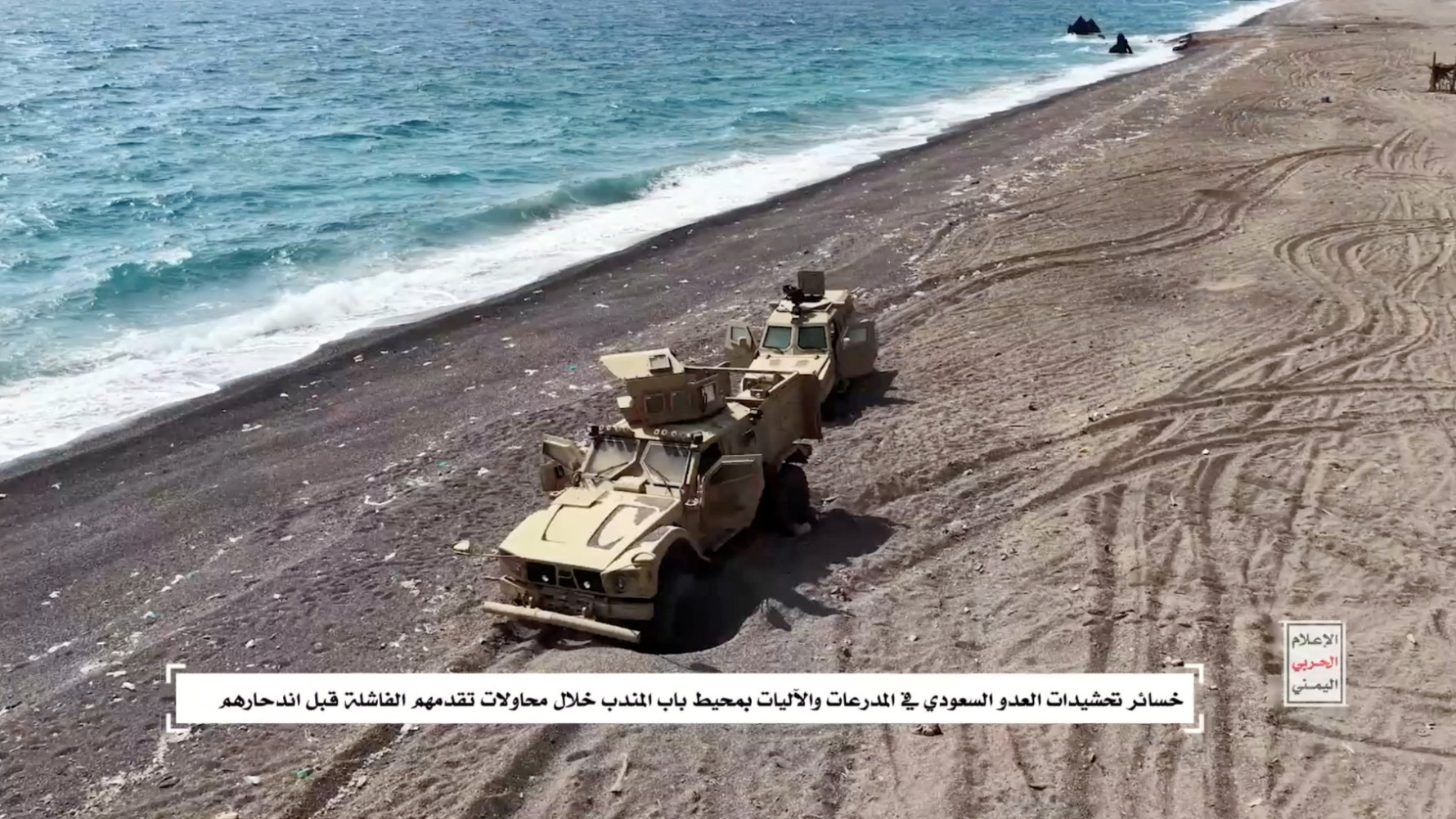
The forces that were supposed to recover Yemen’s western coast are now concentrating on defending Aden. That reversal captures the scale of Saudi Arabia’s predicament. Southern forces fighting alongside Yemen’s internationally recognised government this week announced their withdrawal from positions around Bab al-Mandab and Dhubab. Their stated priority was to secure Aden and neighbouring governorates. A six-week counteroffensive had failed to reverse the Houthis’ coastal gains, as the government’s political centre took precedence over the maritime corridor its supporters had sought to recover. Meanwhile, military and government sources told the AFP news agency that Houthi fighters had reached positions approximately 60 kilometres from Aden. The city’s fall is neither established nor inevitable. But the threat already produces consequences: it changes where government forces deploy, what Saudi Arabia must defend, and the terms on which the next round of negotiations could begin. New MEE newsletter: Jerusalem Dispatch Sign up to get the latest insights and analysis on Israel-Palestine, alongside Turkey Unpacked and other MEE newsletters The current offensive connects battles that might appear separate on a map. The Houthis advanced roughly 150 kilometres along the Red Sea coast in a week in September, capturing Mokha and reaching Bab al-Mandab. The element of surprise, and relatively centralised command, helped them exploit divisions among their opponents. Progress became harder as fighting moved towards the Taiz-Lahij highlands, where local resistance strengthened and the terrain complicated further advances. The pressure towards Aden nevertheless gave the coastal campaign a second political life. Threatening the government’s temporary capital pushed its opponents to reconsider whether they could afford to remain around the strait. Shifting the balance That pressure on government supply lines reportedly contributed to the withdrawal. The broader significance is that the Houthis can gain from an offensive before achieving their ultimate objective: forcing opponents to abandon another priority can itself alter the balance. This does not amount to uncontested Houthi command of Bab al-Mandab. Territorial influence along its shores increases maritime leverage, but it does not automatically establish control over every approach, nor does it ensure the ability to close international navigation. Rather, it gives the Houthis the upper hand to control who can cross Bab al-Mandab. Aden has experienced Houthi occupation before. In 2015, the movement advanced alongside military units loyal to former president Ali Abdullah Saleh. They entered the city and controlled substantial areas before being expelled in July by a diverse local resistance supported by the Saudi-led coalition. Each new advance makes that settlement more urgent, while giving the strongest armed actor additional reasons to demand more for accepting it That history matters because it challenges two assumptions: that Houthi entry would necessarily produce durable control, and that southern resistance constitutes a unified political force. The coalition that fought them included southern activists, independents, Salafis and Islah supporters. Shared opposition to the Houthis did not erase competing visions of Yemen’s future. Today, Aden’s military strength remains difficult to quantify. There is no independently verified public count of fighters presently available to defend it. A March 2025 British government country assessment, citing data from the conflict monitor Acled, estimated that there were approximately 15,000 Security Belt personnel across Aden, Lahij, Abyan and al-Dhale combined. That figure cannot credibly be presented as the city’s current defending force. Administrative strength, personnel actually present, and troops capable of sustained combat are different measures. The Sanaa Center’s review of early 2026 describes Saudi-led security restructuring involving the Giants Brigades, Nation’s Shield forces and local security bodies. Reorganising institutions, however, does not instantly produce common loyalties or effective coordination. Limits of tribal arithmetic Nor can Aden’s defence be reduced to a tribal headcount. The city has a diverse urban society, while important military networks draw recruits and commanders from its surrounding governorates. The Subayha tribe played a significant role in resisting Houthi-Saleh forces in 2015, viewing their advance as an intrusion into local territory. The Yafa tribe has supplied substantial recruitment networks for southern security formations, while Dhale and Radfan are important regional bases for southern mobilisation. These connections can sustain resistance through local legitimacy, social obligations and memories of earlier fighting. They can also reproduce rivalries over command, resources and representation. A community’s opposition to the Houthis does not establish unconditional loyalty to every commander claiming to defend it. Saudi Arabia thus faces a political problem embedded within a military one. Equipment and salaries can sustain formations; they cannot alone settle who commands them, or whose authority they recognise. For Riyadh, the danger extends beyond another setback for a Yemeni ally. Pressure on Aden coincides with threats to Saudi aviation, energy infrastructure and shipping. The kingdom must consider both the survival of its partners, and the economic consequences of continuing confrontation. Disruption around Hormuz makes alternative export infrastructure towards the Red Sea more valuable. Insecurity around Bab al-Mandab exposes the limits of treating those alternatives as insulated from the regional conflict. The resulting dilemma is severe. A greater Saudi military commitment could help prevent further government losses, while inviting additional attacks. Accommodation could reduce immediate economic pressure, while consolidating a stronger Houthi position. Neither choice offers a reliable exit. The relationship between land and sea also explains why maritime protection alone cannot resolve the crisis. Naval deployments may protect individual vessels; they cannot settle the struggle over authority ashore, which repeatedly generates threats to navigation. For Egypt, prolonged insecurity threatens confidence in the Suez route. For European and Asian economies, it sustains uncertainty over transport and energy. Their interests favour stability, but their willingness to assume the costs of producing it remains uneven. War and bargaining The timing adds another layer. A third American aircraft carrier has arrived in the Middle East, expanding Washington’s military options as renewed attacks on Iran remain under consideration. Military availability does not prove a decision to attack. US President Donald Trump faces divisions within his administration, with Vice President JD Vance and Secretary of State Marco Rubio reportedly favouring negotiations, and Defence Secretary Pete Hegseth advocating further military action. Blockade and sanctions present another option. Alongside public anger over rising prices and mounting congressional pressure, these disagreements leave Saudi Arabia dependent on an ally with overwhelming military power but an unsettled strategy for ending the war. Saudi-Yemen conflict: The notion of an 'American saviour' is dead Read More » Equally, domestic political weakness does not guarantee restraint. Leaders under pressure may avoid escalation or seek a limited operation they believe can restore credibility. Following the Republican midterm defeat, Democrats are preparing to control both congressional chambers in January. That could strengthen scrutiny and funding constraints, but it does not automatically remove the president’s capacity to use force. If major strikes resume, Tehran could seek to combine military resistance with negotiations under fire, using regional disruption to raise the price of American objectives. Whether that produces concessions would depend on Iran’s own resilience, the damage it suffers, and the response of neighbouring states. The Houthi advance potentially strengthens that bargaining environment. Meanwhile, civilians bear the consequences. The UN has warned that restrictions on supplies into Taiz threaten hospitals, water provision, and access to essential goods. Saudi air strikes are causing destruction and have sparked further displacement of civilians. This suffering is already occurring, regardless of whether Aden falls. For Saudi Arabia, the question is how to protect its security when the political order it supports remains fragmented. Aden exposes the difficulty of seeking a secure border, reliable allies, and protected trade routes without a viable Yemeni settlement. Each new advance makes that settlement more urgent, while giving the strongest armed actor additional reasons to demand more for accepting it. The views expressed in this article belong to the author and do not necessarily reflect the editorial policy of Middle East Eye.
How the Houthi advance on Aden exposes Saudi Arabia's strategic trap
Full Article
Original Source
Read the full article at Middleeasteye →KhanList aggregates and links to publicly available news content. We do not host full articles from third-party sources. Always verify important information with original sources.