
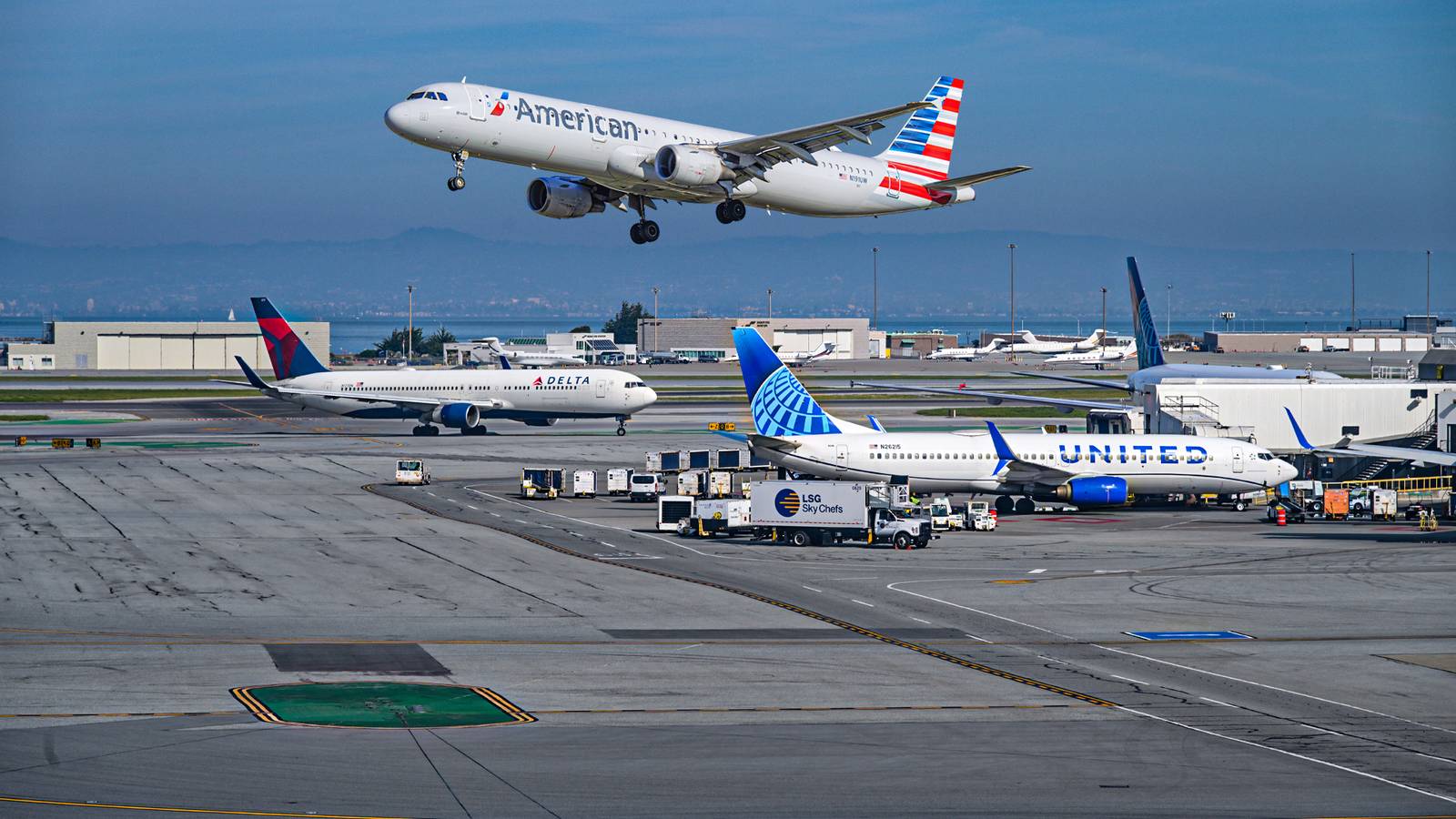
Reliability remains one of the most important considerations for passengers choosing between the three largest legacy airlines in the US. Delta Air Lines, United Airlines, and American Airlines operate extensive domestic and international networks, connecting millions of passengers every year. However, their operational performance in 2026 reveals considerable differences in punctuality, cancellations, and the consistency of their services. While Delta Air Lines continues to demonstrate strong performance when it comes to arriving on time, United Airlines has established itself as the most dependable carrier for operating its published schedule. American Airlines, meanwhile, has struggled to match its competitors across several important performance indicators. Examining US Department of Transportation (DOT) figures and industry performance data provides a clearer picture of how the three airlines compare. Punctuality Remains Delta Air Lines' Biggest Advantage Credit: Karolis Kavolelis | Shutterstock Delta Air Lines has maintained its reputation for punctuality throughout much of 2026, outperforming both United Airlines and American Airlines in several important reporting periods. Between January and June, 79.33% of its flights arrived on time, placing it second among all US airlines, behind only Alaska Airlines. United Airlines recorded 77.60%, while American Airlines finished considerably further behind at 74.38%. These figures demonstrate that Delta Air Lines, which in November 2026 launched 15 new international routes, continues to have an advantage when passengers prioritize arriving at their destinations according to schedule. Although a difference of a few percent might appear relatively small, it becomes significant when applied across hundreds of thousands of flights. For passengers connecting between services or traveling for important commitments, consistent punctuality can make a substantial difference to the overall experience. The airline also demonstrated its ability to maintain strong punctuality later in the year. In August, Delta Air Lines topped the DOT's monthly on-time rankings, achieving a performance rate of 77%. Cirium's September rankings subsequently placed it second in North America, with 82.52% of flights arriving on time, behind Canadian carrier WestJet. However, punctuality figures do not tell the entire reliability story. Indeed, an airline can perform particularly well at getting its operated flights to their destinations on schedule while simultaneously experiencing difficulties maintaining its published timetable. Delta Air Lines' cancellation figures illustrate this distinction, showing that its strong punctuality performance has not necessarily translated into consistently dependable operations throughout 2026. United Airlines Leads On Flight Completion United Airlines has emerged as the strongest performer among the three legacy carriers when measuring the percentage of scheduled flights that actually operate. During the first half of 2026, the Star Alliance carrier canceled 1.76% of its flights across its entire network, substantially outperforming Delta Air Lines at 2.35% and American Airlines at 3.32%. This gives United Airlines an important advantage for passengers concerned about cancellations. Its mainline operation delivered an even stronger performance, recording a cancellation rate of just 1.13%. This was the best result among the operations tracked by the DOT for the three carriers. Mainline performance is particularly important because it provides an indication of how reliably an airline operates flights using its own principal fleet rather than relying on regional partners. September figures provided further evidence of United Airlines' improving operational consistency. It canceled 0.89% of flights during the month, narrowly outperforming Delta Air Lines, which recorded 0.92%. Although United Airlines continued to trail Delta Air Lines in punctuality, the relatively small difference in cancellations demonstrated its ability to maintain a dependable operating schedule, including an impressive and growing transatlantic route network. Nevertheless, United Airlines does have weaknesses that passengers should consider. Its baggage performance is less impressive than that of Delta Air Lines, with 0.69 mishandled bags per 100 passengers, compared with Delta Air Lines' 0.37. Consequently, United Airlines' advantage in flight completion does not necessarily extend to every aspect of the passenger journey. Delta Air Lines Faces A Difficult Cancellation Problem Credit: Markus Mainka | Shutterstock Despite its strong punctuality figures, Delta Air Lines has experienced a noticeable deterioration in cancellation performance during 2026. The DOT's January report showed that the carrier canceled 2.45% of its flights, placing it sixth among major US airlines. This represented a significant setback for an airline that Cirium had previously recognized as North America's most on-time airline for five consecutive years. The situation became particularly challenging in July, when Delta Air Lines canceled more than 4,600 flights, representing almost 3% of its scheduled operations. Cirium data highlights the scale of the disruption, with the SkyTeam carrier recording more cancellations than either United Airlines or American Airlines during the month. Looking at the broader first-half figures, Delta Air Lines' cancellation rate nearly doubled compared with the same period in 2025, reaching 2.35%. This suggests that its operational challenges were not limited to an isolated month. Although the airline continued to deliver competitive punctuality results, the increasing frequency of canceled services raised questions about the consistency of its overall performance. For passengers, the distinction is particularly important because a flight that arrives on time is only useful if it operates in the first place. Delta Air Lines remains an attractive option for travelers who value punctual arrivals, but its cancellation performance in 2026 means that its historical reliability advantage deserves closer examination. American Airlines Struggles To Match Its Rivals Credit: Markus Mainka | Shutterstock American Airlines has generally occupied third place among the three legacy carriers across the principal reliability measurements in 2026. During the first six months, just 74.38% of its flights arrived on time, compared with 79.33% for Delta Air Lines and 77.60% for United Airlines. This placed American Airlines noticeably behind both competitors in one of the most important areas of airline performance. The oneworld carrier's cancellation figures were similarly disappointing. American Airlines canceled 3.32% of its scheduled flights during the first half of the year, almost twice United Airlines' 1.76% rate. This means passengers traveling with American Airlines faced a greater likelihood of having their original itinerary disrupted through a canceled service, potentially creating additional difficulties when connecting to other flights. Passenger complaints also highlight the challenges facing the carrier. During the first half of 2026, American Airlines received 890 DOT complaints per 100,000 flights. This compared with 599 for United Airlines and 556 for Delta Air Lines. Although complaints can reflect numerous aspects of the passenger experience, the figures provide another indication of the differences between the three airlines. There were, however, signs of improvement as the year progressed. In September, American Airlines achieved an on-time performance rate of 77.11%, while its cancellation rate declined to 1.01%. Although this represented meaningful progress, its punctuality remained 5.41 percentage points behind Delta Air Lines. The improvement suggests that American Airlines has been addressing some operational weaknesses, but it still has considerable ground to make up. Regional Airlines Complicate The Reliability Picture An important factor when comparing the three legacy carriers is the contribution made by their regional airline partners. These operators provide services to smaller cities and communities that might not receive frequent mainline connections. However, their operational performance can differ considerably from that of the mainline airlines, affecting the reliability passengers experience across the wider network. During the first half of 2026, United Express recorded a cancellation rate of 2.51%, while Delta Connection canceled 2.77% of its flights. American Eagle performed less favorably, with 3.68% of scheduled services canceled. All three regional operations therefore experienced higher cancellation rates than their respective mainline counterparts. The figures also help explain why looking exclusively at an airline's mainline performance can create an incomplete impression of its reliability. Passengers purchasing tickets through United Airlines, Delta Air Lines, or American Airlines may travel on regional services operated by partner companies. Consequently, the reliability of the overall journey depends partly on the performance of these smaller operators. Fleet development and aircraft availability also remain relevant considerations, particularly as manufacturers introduce new models and airlines evaluate future replacement programs. The COMAC C919 and Yakovlev MC-21, for example, represent competing approaches to expanding commercial aircraft production, although neither currently changes the operational reliability comparison between the three US legacy carriers. What The 2026 Figures Mean For Passengers Credit: Michael Derrer Fuchs | Shutterstock The available performance figures suggest that there is no single winner across every aspect of reliability in 2026. Delta Air Lines has the strongest overall punctuality record among the three, United Airlines has demonstrated the greatest consistency in operating its scheduled flights, and American Airlines has generally struggled to achieve comparable results. Each carrier therefore presents a different proposition to passengers. For travelers whose priority is arriving on time, Delta Air Lines remains the strongest choice based on its first-half performance and subsequent monthly rankings. Its 79.33% on-time arrival rate provides a meaningful advantage over United Airlines and American Airlines. However, its increased cancellation rate means passengers should also consider the possibility of disruption when assessing the reliability of an itinerary. United Airlines offers a compelling alternative for passengers who place greater importance on avoiding cancellations. Its first-half cancellation rate of 1.76% was the lowest among the three, while its mainline operation recorded an especially competitive 1.13%. Although its baggage performance leaves room for improvement, its ability to operate scheduled flights gives it a notable advantage. American Airlines faces the greatest challenge in closing the reliability gap, particularly given its weaker first-half punctuality, higher cancellation rate, and greater volume of DOT complaints relative to its flight numbers. Its September improvement provides some encouragement, but the figures indicate that consistent operational performance remains an area requiring attention. For passengers comparing the three carriers in 2026, the distinction between punctuality, cancellations, and baggage handling is ultimately essential to understanding which airline delivers the most dependable journey.
How The Big 3 US Legacy Carriers Compare On Reliability In 2026
Full Article
Original Source
Read the full article at Simpleflying →KhanList aggregates and links to publicly available news content. We do not host full articles from third-party sources. Always verify important information with original sources.