
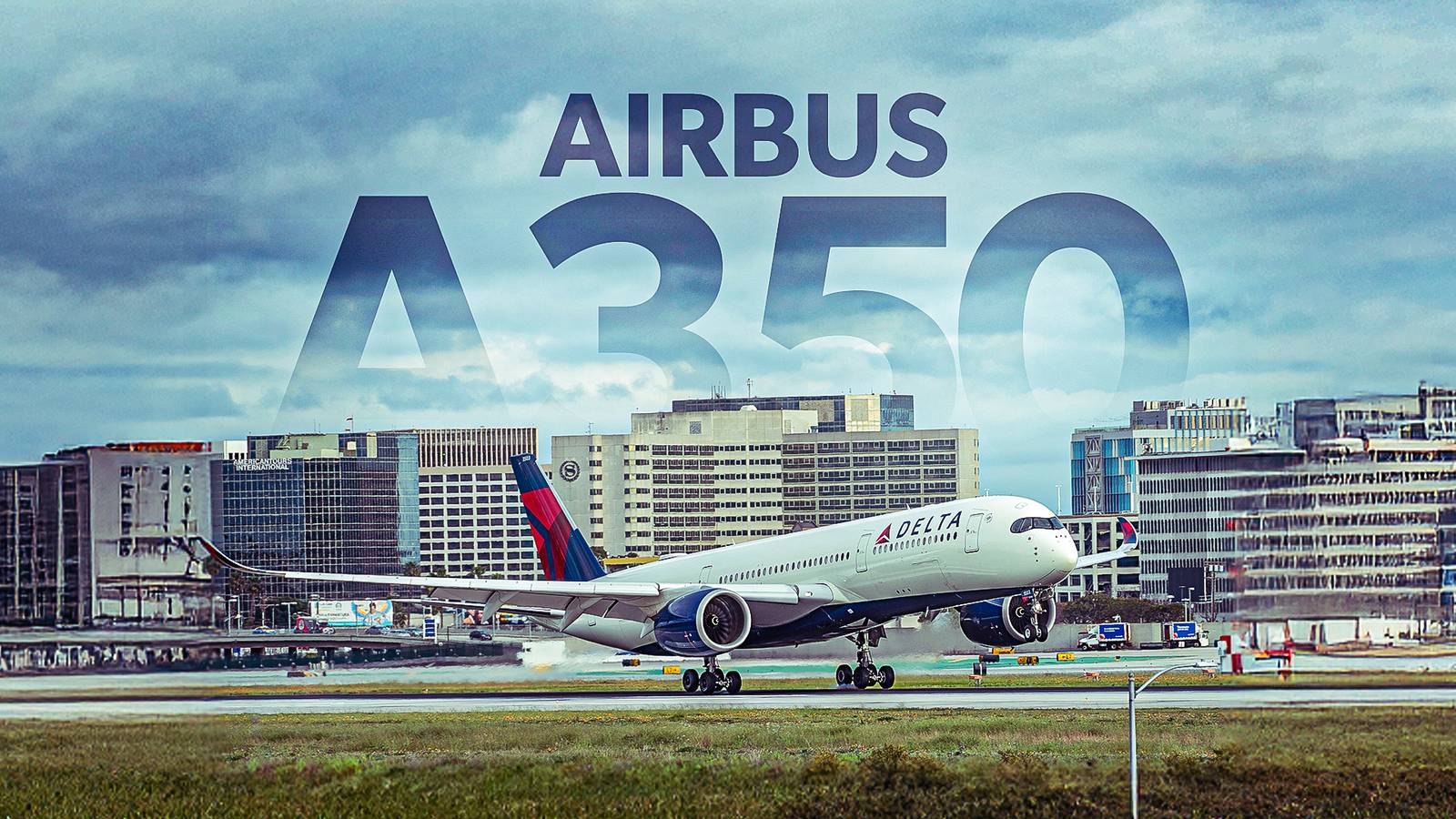
Before entering commercial service, the Airbus A350 had to prove it could withstand some of the harshest conditions on Earth. Airbus needed to establish how its engines, systems, and structure would respond to extreme temperatures and demanding operating conditions. From the freezing Canadian Arctic to the scorching deserts of the United Arab Emirates and the high-altitude airports of Bolivia, Airbus deliberately pushed its new widebody aircraft to its limits. . Through these trials, Airbus sought to ensure that the A350 could operate safely and reliably across a wide range of environments. The A350 has since become a key aircraft for ultra-long-haul operations, including Singapore Airlines' nonstop flights between Singapore and New York. So, how did Airbus test the A350, and what did these trials reveal about the aircraft's capabilities? The A350 Completed Its Certification Campaign In Just 14 Months Credit: Cody Wayne | Shutterstock Before entering commercial service, every new aircraft must undergo extensive testing and certification to demonstrate compliance with aviation safety standards. For Airbus aircraft, the main certification authority is the European Union Aviation Safety Agency (EASA), while the Federal Aviation Administration (FAA) validates the design for the US market. The process begins with the Type Certificate (TC), which confirms that an aircraft's design meets the applicable airworthiness requirements. Manufacturers must also hold the relevant production approvals, while each individual aircraft requires a Certificate of Airworthiness (CoA) before entering service. Airlines must additionally meet operational requirements, including crew training, maintenance arrangements, and any necessary authorizations. The certification process also varies depending on the aircraft's design and available configurations. For example, Airbus' A320neo Family certification program covered six airframe and engine combinations. The A319neo, A320neo and A321neo each required validation of their airframes, systems and two available engine options: the CFM International LEAP-1A and Pratt & Whitney Geared Turbofan (GTF). These campaigns also verified whether the aircraft met their performance targets for fuel consumption and range, reflecting improvements from the new engines and Sharklet wingtip devices. For the A350-900, Airbus completed its flight-test and certification campaign in just over 14 months, setting an industry record for the program's completion time. Five test aircraft accumulated more than 2,600 flight hours, during which Airbus evaluated the aircraft's handling characteristics, systems, performance, and reliability. The campaign culminated in the A350-900 receiving Type Certification from EASA and the FAA in 2014. However, the program also involved specialized environmental testing in Canada, the United Arab Emirates, and Bolivia, along with controlled temperature trials at the McKinley Climatic Laboratory in the United States. These tests would establish how the A350 performed in conditions far beyond those encountered during routine airline operations. How Airbus Tested The A350 In Temperatures As Low As -40°C Credit: Tom C | Shutterstock In January 2014, Airbus took its A350-900 MSN3 development aircraft to Iqaluit, Canada, to conduct cold-weather trials in temperatures as low as -28°C. A team of 48 Airbus specialists assessed how the aircraft's engines and systems performed in freezing conditions. One key test involved starting the engines and auxiliary power unit (APU) after a cold soak, during which the aircraft was left exposed to extremely low temperatures for an extended period. The team also conducted system checks, low-speed taxiing, rejected takeoffs, and a local test flight to verify the aircraft's performance. Three years later, Airbus returned to Iqaluit with the larger A350-1000, which underwent five days of intensive ground and flight testing in temperatures ranging from -28°C to -37°C. Alongside these Arctic trials, Airbus also used the McKinley Climatic Laboratory at Eglin Air Force Base in Florida, becoming the first Airbus aircraft to undergo testing at the facility. Unlike Iqaluit, where engineers depended on natural weather, the laboratory's climate-controlled hangar allowed Airbus to simulate temperatures from -40°C to +40°C under controlled conditions. However, extreme cold was only one part of the A350's environmental testing program. While the Canadian trials focused on the aircraft's ability to operate in freezing conditions, Airbus also needed to assess its performance in extreme heat and at high-altitude airports. This took the A350 to Al Ain in the United Arab Emirates and La Paz in Bolivia, where high temperatures and reduced air density presented a different set of operational challenges. Why Airbus Took The A350 Into The Desert Credit: Robert Harding Video | Shutterstock While freezing temperatures presented one challenge, Airbus also needed to demonstrate that the A350 could operate safely in extreme heat. In July 2017, the manufacturer sent its A350-1000 test aircraft, MSN065, to Al Ain International Airport in the United Arab Emirates for a three-day hot-weather testing campaign. Conducted between 4 and 7 July, the trials exposed the aircraft to temperatures exceeding 40°C, reaching as high as 48°C. The objective was to assess how the aircraft's systems performed in scorching conditions, particularly the Rolls-Royce Trent XWB engines and cabin air-conditioning systems. One main concern was whether the aircraft could maintain comfortable cabin temperatures on the ground, where cooling systems must cope with intense external heat. Engineers also assessed engine performance, as higher temperatures reduce air density and affect engine thrust and takeoff performance. This can increase the runway distance required for departure, particularly at airports with shorter runways. The importance of these limitations became evident in June 2017, when extreme temperatures in Phoenix, Arizona, led to dozens of flight cancellations involving regional aircraft with lower maximum operating temperature limits. According to Airbus, the A350-1000 successfully met all the parameters established for its Al Ain campaign, demonstrating its readiness to operate in extreme heat. However, high temperatures are not the only factor that reduces air density. Airports situated thousands of meters above sea level present similar performance challenges, even when outside temperatures are considerably lower. To assess these conditions, Airbus also conducted high-altitude testing in Bolivia. Why Airbus Took The A350 Into The Mountains Credit: Mark Green | Shutterstock Airbus also took the A350 to El Alto International Airport in La Paz, Bolivia, situated approximately 4,061 meters (13,325 feet) above sea level. At this elevation, air density is roughly 40% lower than at sea level under comparable standard conditions, creating significant challenges for aircraft performance. Thinner air reduces the amount of oxygen available to the engines, limiting the thrust they can produce, while also reducing the lift generated by the wings at a given airspeed. Consequently, aircraft generally require higher true airspeeds and longer take-off distances to become airborne. High-altitude testing allows Airbus to evaluate how aircraft systems and engines respond to these demanding conditions. One particularly important assessment involves engine starting, which becomes more challenging as air density decreases. Engineers also examine thrust response, takeoff and climb performance, and the aircraft's handling characteristics. Jean-Philippe Cottet, Airbus' head of design development flight tests, identified starting engines at high altitude as one of the main reasons the manufacturer conducts trials specifically in La Paz. The A350-900 and A350-1000 were among the aircraft Airbus tested at La Paz, which has also hosted other Airbus development programs. These evaluations help establish the aircraft's operational limitations and demonstrate its ability to perform safely at high-elevation airports. Together with the cold-weather trials in Canada and hot-weather testing in the UAE, the campaign provided evidence of the A350's capabilities across markedly different operating environments. How The A350's Testing Supports Ultra-Long-Haul Operations Credit: Media_works | Shutterstock Beyond extreme weather testing, Airbus also needed to demonstrate how the A350 would perform during extended commercial operations. As part of its certification campaign, the manufacturer conducted a global route-proving program, visiting 14 major airports across four separate trips and covering approximately 81,700 nautical miles in 180 flight hours. Airbus also introduced an Early Long Flights (ELF) program, which went beyond regulatory certification requirements. These simulated commercial services carried Airbus employees acting as passengers, with airline flight crews operating a fully equipped cabin to evaluate onboard systems under realistic conditions. Such testing helped prepare the A350 for demanding long-haul operations, including Singapore Airlines' nonstop services between Singapore and New York, which use the A350-900ULR and can exceed 18 hours. The A350's long-range capabilities are also central to Qantas' Project Sunrise, which aims to introduce nonstop flights from Sydney to London and New York using specially configured A350-1000ULR aircraft. Compared with the standard A350-1000, the Project Sunrise variant incorporates an additional fuel tank with approximately 5,283 gallons (20,000 liters) of capacity to support longer journeys. The A350's composite fuselage also resists corrosion and fatigue, while its cabin pressurization and environmental control systems allow a cabin altitude of about 6,000 feet and higher humidity than many older aircraft. These features are particularly relevant on flights lasting 18 hours or more, where passenger comfort becomes increasingly important. However, the ability to withstand extreme temperatures and remain airborne for extended periods is only part of the challenge. Ultra-long-haul operations also require careful management of crew fatigue, passenger wellbeing, maintenance schedules, and operational reliability. As airlines prepare to operate flights approaching 20 hours, the question is no longer simply how far an aircraft can fly, but rather how comfortably and efficiently passengers and crew can endure the journey. The A350's Testing Still Continues Credit: Markus Mainka | Shutterstock While the A350's certification trials demonstrated its ability to withstand extreme operating conditions, flights approaching 20 hours present another challenge: passenger wellbeing. Ahead of its Project Sunrise services, Qantas partnered with researchers from the University of Sydney's Charles Perkins Centre to investigate ways of reducing jet lag on ultra-long-haul flights. During experimental flights lasting approximately 20 hours, researchers monitored 23 volunteers wearing tracking devices as they followed specially designed schedules for meals, cabin lighting, sleep, and movement. Initial findings suggested that passengers following these routines experienced less severe self-reported jet lag, better sleep quality during the flight and improved cognitive performance in the two days following arrival compared with those following conventional inflight routines. Qantas plans to incorporate these findings into its A350-1000ULR operations, including tailored cabin lighting, recommended meal and rest schedules, and a dedicated Wellbeing Zone where premium economy and economy passengers can stretch and move around. The airline also expects its nonstop Project Sunrise services to reduce total journey times by more than three hours compared with connecting flights. While Singapore Airlines' existing A350-900ULR operations have already demonstrated the aircraft family's suitability for ultra-long-haul services, Project Sunrise will provide another important test of its capabilities. Ultimately, the success of these routes will depend not only on aircraft reliability and commercial performance, but also on how effectively airlines can make journeys approaching 20 hours comfortable for passengers and manageable for crews.
How The Airbus A350 Survives Environmental Stress During The Longest Flights In The World
Full Article
Original Source
Read the full article at Simpleflying →KhanList aggregates and links to publicly available news content. We do not host full articles from third-party sources. Always verify important information with original sources.