
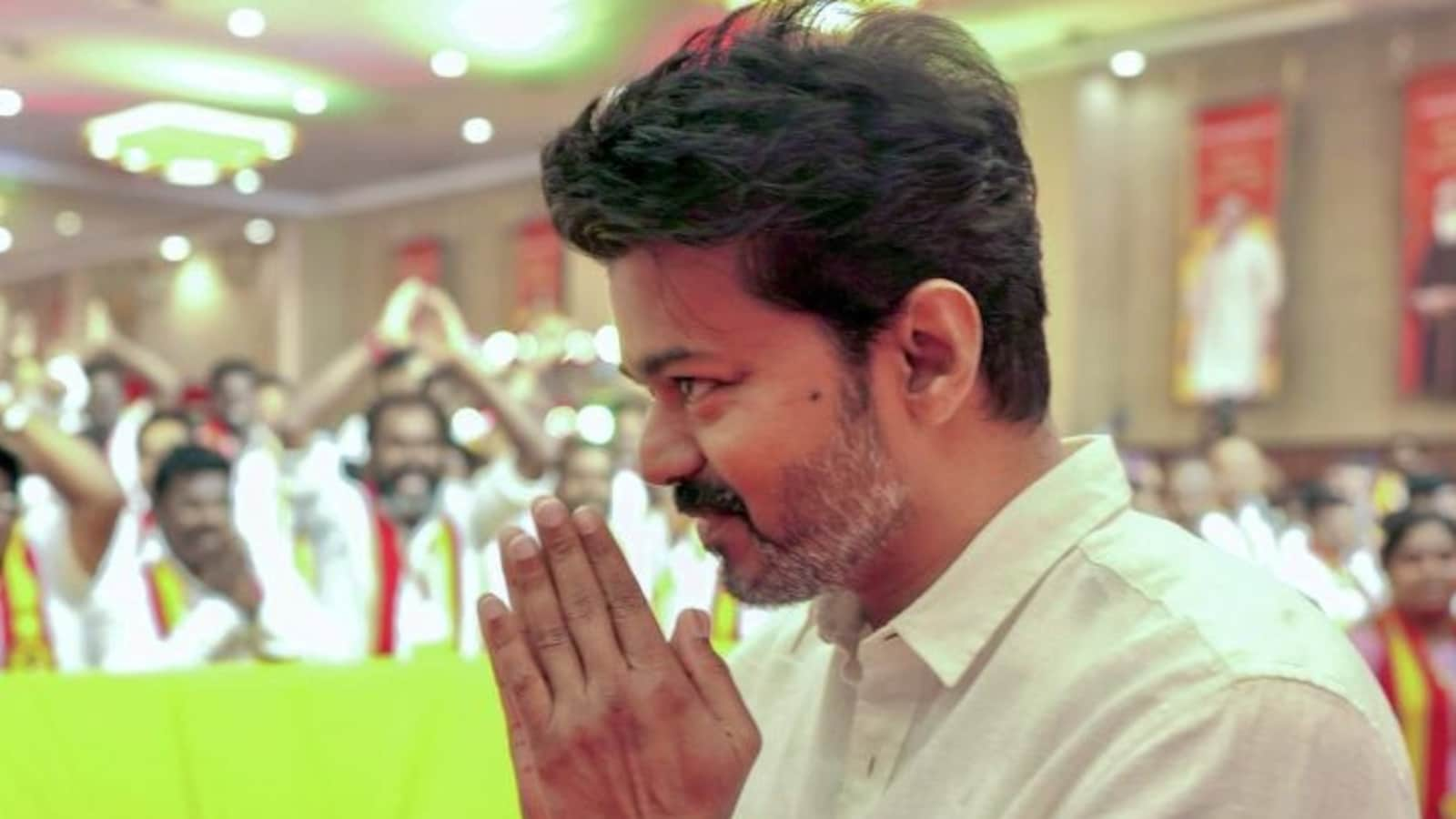
In ‘Sarkar', his 2018 Tamil political thriller, Chandrasekaran Joseph Vijay plays a man who flies home to Chennai to vote, finds someone has already cast his ballot, and goes to court to prove that a single vote can change who governs. Eight years after that film, Vijay is Tamil Nadu's chief minister. But he has zero MPs in the Lok Sabha. Yet, a chain reaction triggered by the victory of the actor-turned-politician in May appears to have revived the Narendra Modi government's plan to redraw India's electoral map. Vijay did not do this through anything he did for the BJP-led NDA, but through a breakup caused by his ‘vijay', his victory. Advertisement - Scroll to continue Seven months ago, his main rival DMK, then ruling Tamil Nadu, was among the loudest voices against delimitation. In April, MK Stalin, then chief minister, burned a copy of the delimitation bill at a rally in Namakkal. A day later, the Constitution (131st Amendment) Bill, 2026, fell in the Lok Sabha, the first such defeat for the Narendra Modi regime.As Parliament reconvenes on November 30 for a second attempt, the same party is in the pivotal position. What happened in between was a chain of events.The Move Of May 6When votes were counted in Tamil Nadu on May 4, Vijay's Tamilaga Vettri Kazhagam (Victory Party of the Land of Tamil) won 108 Assembly seats, 10 short of the 118 needed in the 234-member House. The incumbent DMK was a distant second, and the AIADMK, which had the BJP as a minor partner, was third. The Congress won just five seats as part of the DMK-led alliance. But it held the swing votes.Advertisement - Scroll to continueOn May 6, the Congress announced it would support the TVK and join the government. Its support was conditional on the TVK keeping out “communal forces”.Known much beyond Tamil Nadu by his fan-given moniker ‘Thalapathy' (Commander), Vijay was sworn in on May 10 with the backing of 120 MLAs, including those from the Congress, besides other parties that had backed the DMK earlier. He was the first chief minister from outside the DMK and the AIADMK since 1967. Rahul Gandhi attended the ceremony.Vijay taking a selfie with Leader of Opposition (Lok Sabha) Rahul Gandhi after being sworn in as chief minister of Tamil Nadu in May 2026.Photo: ANIRead | DMK To Join Hands With BJP? TVK's Big Claim Amid Delimitation BuzzVijay, a Christian by faith whose cinematic popularity transcended many boundaries and who has listed the BJP as his ideological enemy, said in his first speech after taking the oath that Sunday: “A new era of real, secular, social justice starts now.”The word “secular” was doing some heavy lifting as Vijay indicated where he stands in the binaries of national politics.That also meant the DMK's 22 Lok Sabha MPs were no longer bound to the Congress-led national-level Opposition's line on delimitation.From Chennai To DelhiThe DMK responded with the words "great betrayal" and a letter on May 7. In it, DMK's parliamentary party leader K Kanimozhi asked Lok Sabha Speaker Om Birla for separate seating for the party's MPs, “in view of the changed political circumstances and as our alliance with the Indian National Congress has come to an end”.Predictably, the DMK skipped the INDIA bloc meeting in Delhi in June. DMK leader TKS Elangovan told news agency ANI: “Three of our allies (Congress, IUML, VCK) are now part of the TVK government. We are not part of the INDIA bloc, so we did not attend the meeting.”MK Stalin's Dravida Munnetra Kazhagam (DMK) allied with the Bharatiya Janata Party (BJP)-led National Democratic Alliance (NDA) from 1999 to 2003 and held cabinet positions in Atal Bihari Vajpayee's government. This year, when the Congress left the DMK for Vijay's TVK, 22 Lok Sabha votes became potentially available to the BJP-led NDA. Those votes may help decide the fate of the next delimitation. Photos: ANI, Sansad TV, PTIWhen protests were held over paper leaks and the Special Intensive Revision of electoral rolls, the DMK did not back the Congress as such but supported other protesting groups against the Modi government.A nuanced change in the DMK's position on delimitation has been visible, though. On July 16, Stalin addressed a meeting of the party's MPs by video conference from London. The DMK would study the bill once it was tabled and decide on its merits, party sources told news agency PTI.50% A Key FigureA 50 per cent increase in Lok Sabha seats, with the existing proportion among states kept intact, is among the key points that could help passage of the bill.That “flat 50 per cent” offer was made by Home Minister Amit Shah in Parliament in April. But it was not in the writing of the bill at the time. Now the government may in fact put that clause in.In August, the DMK resisted the assertion that it had changed its position and was now backing the BJP on delimitation. “The DMK has always opposed delimitation. We will continue to oppose it in the future,” party boss MK Stalin's son Udhayanidhi Stalin, now Leader of the Opposition in the Tamil Nadu Assembly, said then.At one point, the DMK even accused Vijay of selling out when he argued that the Centre should give a legal assurance that no state would lose its proportionate share in Parliament. Udhayanidhi Stalin accused him in the Assembly of diluting Tamil Nadu's demand by leaving out the word “freeze” for its share. Then, TVK minister Aadhav Arjuna went ahead and rejected any delimitation whatsoever. "We are opposing the 50% increase in all states too," he said.Read | A 'Flat 50%' Offer At Centre Of Delimitation Question As Parliament To ReconveneSupriya Sule of the NCP(SP), which is part of the Congress-led INDIA bloc, is also likely to go with the BJP on delimitation. Photo: ANISome regional parties have been changing their position, such as Maharashtra's NCP(SP), which says it would back the bill if it has the clause that would keep the state's share as it is. For Tamil Nadu, for instance, Tamil Nadu's proportional share of Lok Sabha seats would stay at the current 7.2 per cent.Fear Starts With A ‘G'But a flat increase would settle only how many seats each state gets, not the actual boundaries of each constituency. That is where the rest of the Congress-led Opposition's objection lies. The bill, as introduced in April, would let the government decide with a simple majority when delimitation is done and which census it uses. The Congress has accused the government of introducing delimitation by deceit.A fresh delimitation is a prerequisite for implementing the 33 per cent women's quota that was passed as law with all-party support in 2023. The Congress says the BJP, by linking that quota with compulsory delimitation, actually wants to “gerrymander” constituencies, that is, redraw boundaries to decide in advance who wins. The government has denied that charge. It has argued that more constituencies are needed because the current ones have grown very large by population, so each MP represents too many people.In the not-too-distant past, the Congress and even the DMK have asked why the quota cannot be given within the current strength for now. One DMK MP even presented a draft for such a bill.The Modi government is confident it can put together a two-thirds Special Majority for its package of constitutional amendments, and avenge the defeat of its delimitation move in April. Photo: Sansad TV/ANIWhat Math In Delhi SaysWith political equations changing, the DMK's 22 votes in the Lok Sabha have an outsized value now. Back in April, when the NDA failed to gather a two-thirds majority for the delimitation and related bills, 528 members were present and voting. The government needed 352 but got 298. Had the DMK's 22 voted for the NDA, the count would have been 320 versus 208, still 32 short for the NDA.Since then, 20 of the Trinamool Congress's 28 MPs have joined a smaller party and backed the NDA. The Shiromani Akali Dal from Punjab has returned to the NDA; it has one MP.The NCP(SP)'s eight MPs, led in the Lok Sabha by Supriya Sule, have said they are open to a “flat 50 per cent” formula that would keep state-wise proportions intact.Add all these numbers to April's count and the government would be less than 10 votes short. That's almost a done deal with smaller parties like Andhra Pradesh's YSRCP also in play for the BJP.As for Vijay, he recently attended Sonia Gandhi's book release function in the national capital. Social media trends have emerged in between, calling Vijay the next PM of India. That ambition would ideally need some MPs of his own. He gifted the one Rajya Sabha seat that became vacant after he won Tamil Nadu to the Congress as a goodwill gesture. That could cost the Congress a lot six months on.P.S. In his 2018 film 'Sarkar', Vijay's character cites the 1999 collapse of Atal Bihari Vajpayee's BJP-led government by a single vote to argue how each vote can change a nation's history. During that trust vote, the DMK had surprisingly voted in favor of the BJP-led government. Yet the government fell as it did not have the required majority. This time, the DMK's votes could actually matter much more. While all votes are equal, some are more equal than others. (With inputs by PTI)
How 'Thalapathy' Vijay's Victory Set Off A Chain Reaction That Could Change India's Electoral Map Forever
Full Article
Original Source
Read the full article at Ndtv →KhanList aggregates and links to publicly available news content. We do not host full articles from third-party sources. Always verify important information with original sources.