
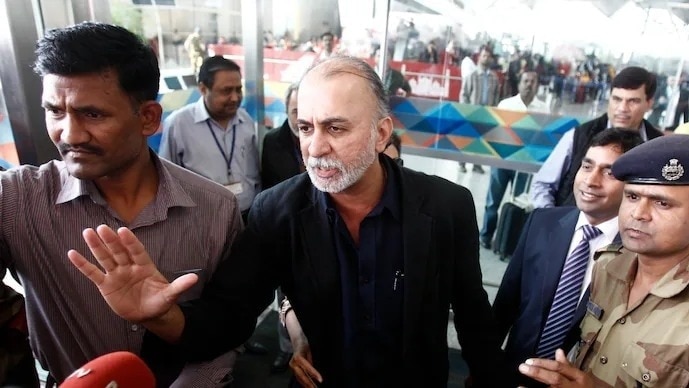
The Bombay High Court convicted Tarun Tejpal and overturned the trial court's acquittal in the 2013 rape case. The judgment says sexual assault cases must be decided on evidence, not stereotypes that put survivors on trial.Tarun Tejpal case verdict: Bombay High Court exposes trial court bias in rape case (File photo)The Bombay High Court's judgment convicting former Tehelka editor-in-chief Tarun Tejpal in the 2013 rape case is being seen as much more than a verdict in a single criminal trial. It is also a strong critique of how sexual assault cases should, and should not, be handled by the courts.The Goa bench of the Bombay High Court not only overturned the trial court's acquittal but also sharply criticised its reasoning, describing several findings as "perverse", biased and rooted in stereotypes about how a rape survivor is expected to behave.For those who closely follow the legal system, the judgment offers reassurance that higher courts continue to emphasise evidence over prejudice, and lived experience over outdated assumptions.TRIAL COURT CRITICISED FOR 'PERVERSE' FINDINGSThe judgment, authored by Justice Neela Gokhale and Justice Amit S Jamsandekar, comes days after the Supreme Court reiterated guidelines on the handling of sexual offence cases and directed courts, police and prosecutors to undergo sensitisation training. The Supreme Court had warned of a "broader and systemic concern" affecting the justice delivery system. The Bombay High Court's observations appear to echo that concern.Setting aside the acquittal, the High Court said the trial court's conclusions were "directly contrary to the evidence on record" and suffered from "multiple fatal flaws" caused by preconceived notions and reliance on irrelevant or inadmissible material. The judges observed that the trial court evaluated the survivor's testimony through the lens of stereotypes rather than evidence, ultimately resulting in a miscarriage of justice.'SURVIVOR PUT ON TRIAL'One of the strongest criticisms of the verdict concerns the manner in which the survivor was cross-examined. The High Court expressed surprise that the trial judge remained largely silent while the defence subjected the complainant to an extensive and deeply personal cross-examination.According to the judgment, nearly half of the almost 1,000-page cross-examination focused not on the allegations against Tejpal but on the survivor's private life, past relationships, social media posts and personal responses to trauma.The bench noted that repetitive and invasive questioning appeared designed to humiliate and discredit the survivor rather than test the evidence. Despite this, it found that the complainant remained consistent throughout and that no material contradictions emerged in her testimony.The court also observed that attempts were made to undermine her account of trauma but concluded that the evidence instead strengthened her credibility.REJECTING THE 'PERFECT VICTIM' MYTHPerhaps the most significant part of the judgment is its rejection of what it called the "perfect victim" stereotype. The High Court said the trial court wrongly assumed that a survivor of sexual assault must behave in a particular manner to be believed.It observed that expecting a woman to appear constantly distressed, passive or visibly broken ignores the reality that people process trauma differently. Credibility, the bench said, must be assessed on evidence rather than on whether a survivor fits a narrow social expectation.The court also rejected the trial court's reliance on the complainant's conduct after the incident, including the fact that she continued attending the THiNK Fest and carried on with her professional responsibilities.According to the bench, remaining at the venue or continuing to work does not diminish the reality of sexual assault or erase the trauma experienced by a survivor.COURT REJECTS 'EXTORTION' THEORYThe High Court also dismissed suggestions that the survivor's demand for a severance package and compensation amounted to an attempt to extort Tejpal.It noted that she had lost her job and source of income following the incident and was fully entitled to seek compensation from her employer. Such a demand, the judges said, could not be interpreted as evidence of extortion merely because she had initially expressed reluctance to pursue criminal proceedings.The judgment held that seeking financial compensation for professional loss was a legitimate legal right and not inconsistent with the survivor's allegations.A REMINDER OF LONG-STANDING LEGAL PRINCIPLESThe High Court's observations are not entirely new. In reaching its conclusions, the bench relied on several earlier Supreme Court judgments, including a 1991 ruling that made it clear that a woman's moral character has no bearing on the credibility of her testimony in a sexual assault case.More than three decades later, however, the High Court found it necessary to reiterate the same principle, pointing out that courts must focus on evidence rather than on assumptions about a survivor's behaviour, lifestyle or personal choices.The timing is significant. The judgment comes shortly after the Supreme Court once again acknowledged that insensitive police questioning and courtroom cross-examination can inflict "secondary trauma" on survivors and discourage them from pursuing justice.Seen together, the two rulings reinforce a common message: sexual assault cases must be decided on evidence, not stereotypes, and survivors must be treated with dignity throughout the legal process.- EndsPublished By: Priyanka KumariPublished On: Aug 6, 2026 22:02 IST
How Tarun Tejpal verdict exposes trial court's 'bias and errors' in rape case
Full Article
Original Source
Read the full article at Indiatoday →KhanList aggregates and links to publicly available news content. We do not host full articles from third-party sources. Always verify important information with original sources.