
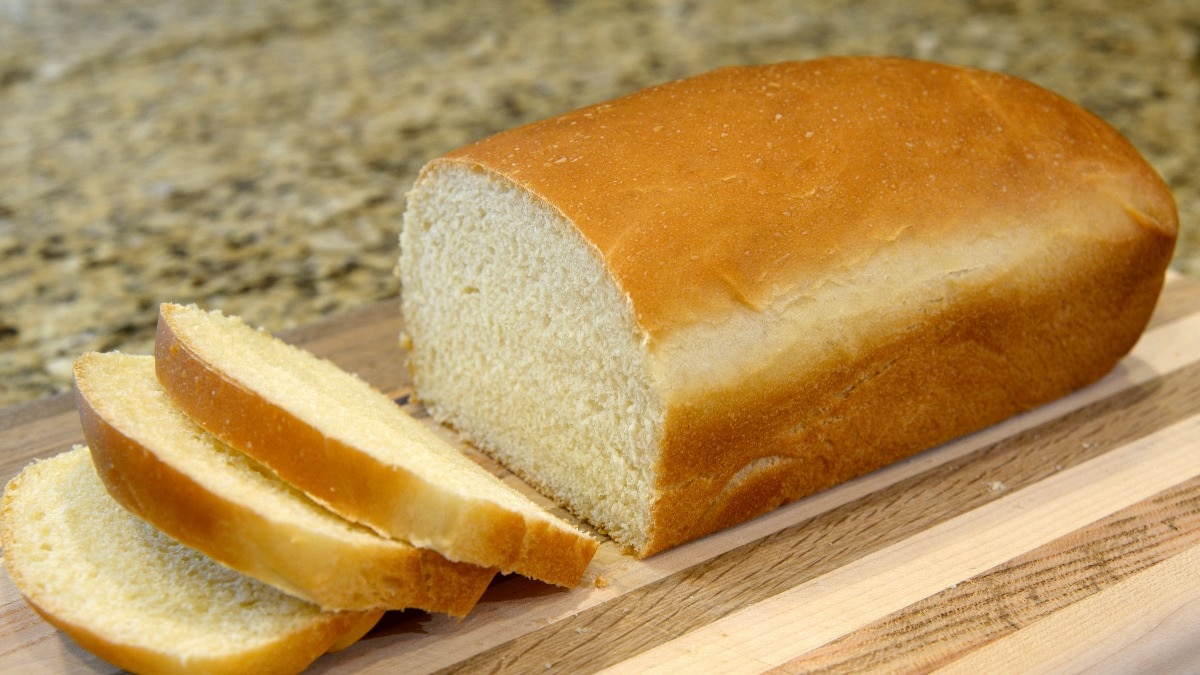
Food science shows sourdough fermentation can slow the process that makes bread go stale. The finding highlights why storage, temperature and reheating matter for keeping loaves softer for longer.Sourdough fermentation can slow bread staling, while proper storage and freezing help preserve its freshness. (Representative image)The particularly annoying thing about bread is that you buy a fresh loaf, enjoy a few slices and leave the rest for later. A day or two pass, and suddenly the same bread feels dry and firm, nothing like what you bought. You may blame the packaging, or the weather, or simply the fact that you did not finish the loaf quickly enough.But bread going stale is not just about losing moisture, since there is a bit of food science happening inside that loaf. In fact, one of the oldest methods of making bread may actually help slow it down.SO, WHY DOES BREAD GO STALE?Freshly baked bread is soft because heat and water change the structure of the starch in flour during baking, and that structure begins to change again once the bread starts cooling. Starch molecules gradually become more ordered, while water moves between different parts of the bread. This process is known as starch retrogradation. Research on bread staling has identified the recrystallisation of amylopectin, which is one of the major components of starch, as an important part of why the crumb becomes firmer over time. So that slice becoming hard is not simply the bread "drying out", since moisture movement is involved, but the starch itself is changing too.Another problem is that cooler temperatures can actually speed up this particular process, which is why keeping ordinary bread in the refrigerator is generally not the best way to preserve its softness. Freezing is different because it slows the molecular changes considerably, but what about bread that you want to keep at room temperature? THE ANCIENT TRICK WAS ALREADY IN THE DOUGHPeople used fermented dough to make bread way before commercial baker's yeast became the standard for many modern loaves. Sourdough works through a community of yeasts and lactic-acid bacteria which ferment the dough and produce acids and other compounds that change its chemistry. People did not need to know about starch polymers or amylopectin to use the method since they simply kept part of an older dough and used it to start the next loaf.A 2024 study published in Food Bioscience compared sourdough bread with regular bread during seven days of storage, and the researchers found that the sourdough bread was staling more slowly and had lower levels of starch crystallisation. Their experiments indicated that the acidic conditions created during sourdough fermentation helped inhibit amylopectin recrystallisation; in other words, fermentation can affect one of the molecular processes that makes bread firm.BUT SOURDOUGH IS NOT A MAGIC SHIELD This is where things get a little more complicated, since sourdough can slow staling, but it does not make bread immune to it. How quickly bread deteriorates also depends on the recipe, moisture content, storage temperature, packaging and other properties of the loaf. Researchers describe bread staling as a complex process involving several physical and chemical changes, rather than one single reaction.The difference between staling and spoilage is that a loaf can become hard and unpleasant while still being free of visible mould, while on the other hand, excess moisture and poor storage can encourage microbial growth. Studies of bread storage have found that temperature and humidity can influence both staling and fungal growth, so simply trapping as much moisture as possible is not necessarily the answer. That is why putting bread into an airtight environment without considering condensation can create a different problem.SO, WHAT CAN YOU ACTUALLY DO AT HOME?Using a sourdough starter is one option if you bake your own bread, since its fermentation can contribute to a slower staling rate, although the result depends on the bread and fermentation process. For ordinary store-bought bread, the answer is storage. If you expect to eat the loaf within a few days, keep it well sealed at room temperature and away from excessive heat and moisture. If you know you will not finish it soon, freezing individual portions is usually a better option than refrigerating them, since refrigeration temperatures can accelerate starch retrogradation.And if the bread has already gone stale? That does not necessarily mean it belongs in the bin since heating can soften stale bread again because some of the starch structures formed during staling can be disrupted by heat. That is why a stale loaf can sometimes be brought back to life in an oven or turned into toast, croutons, breadcrumbs or other dishes.The old sourdough method, then, was pretty much about changing the bread before it ever reached the shelf. Centuries later, food scientists studying starch under microscopes are finding that the fermentation process can alter some of the same molecular changes that determine how quickly a loaf loses its softness.- EndsPublished On: Sep 3, 2026 22:07 IST
How sourdough science can help slow your bread from going stale
Full Article
Original Source
Read the full article at Indiatoday →KhanList aggregates and links to publicly available news content. We do not host full articles from third-party sources. Always verify important information with original sources.