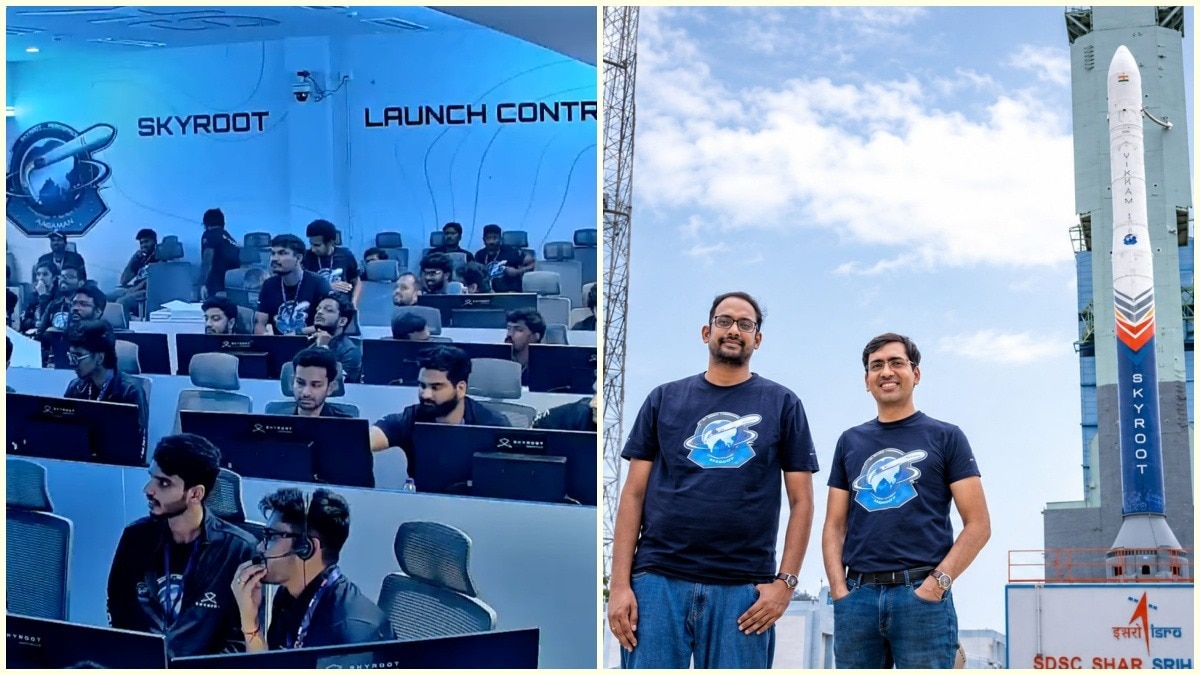
Skyroot Aerospace successfully launched Vikram-1 from Sriharikota in its maiden orbital-class mission. The mission highlighted how young private teams are extending Isro's legacy with a new public-facing approach.A young team was behind the success of Vikram-1 mission. (Photo: Skyroot)The successful maiden launch of Skyroot Aerospace's Vikram-1 is more than the arrival of India's first privately developed orbital-class rocket. It represents a generational shift in how India builds, launches and communicates its ambitions in space.As Vikram-1 thundered into the skies from the Satish Dhawan Space Centre (SDSC-SHAR) in Sriharikota, it marked the beginning of a new chapter where startups are no longer supporting India's space programme from the sidelines, they are becoming its driving force.The contrast with traditional space missions was impossible to miss.Instead of a control room dominated by veteran scientists with decades of experience, Skyroot's Mission Aagaman showcased a room filled with young engineers in their twenties and thirties, many of whom had spent the last several years building India's newest rocket from scratch. At the centre of the operation stood a young flight director, leading the countdown and launch operations with confidence, reflecting the rapid rise of a new generation of Indian space professionals.Founded just eight years ago by former Isro scientists Pawan Kumar Chandana and Naga Bharath Daka, Skyroot has demonstrated how India's space reforms are beginning to bear fruit. The company built Vikram-1 using indigenous technologies, including 3D-printed rocket engines, carbon composite structures and in-house propulsion systems, proving that cutting-edge launch vehicles can now emerge from India's private sector. A young team led the Vikram-1 launch. (Photo: Skyroot) The achievement also highlights the role played by Isro, whose decades of investment in launch vehicle technology, infrastructure and human capital laid the foundation for startups like Skyroot to flourish.The launch from Sriharikota points to the fact that India's private space revolution is not replacing Isro, it is being enabled by it.Beyond the rocket itself, Mission Aagaman also introduced a fresh approach to how India presents space missions to the public.The live broadcast featured modern graphics, cinematic visuals, behind-the-scenes storytelling and extensive interaction with engineers and mission leaders. The presentation moved beyond technical updates to tell the human story behind the mission, making complex space technology more accessible to millions of viewers. Skyroot founders speaking to PM Modi on a call after the launch. (Photo: Skyroot) This marked a noticeable departure from the traditionally restrained communication style associated with government missions.That shift is significant because public engagement has become an essential part of the global space economy.Companies like SpaceX have demonstrated that storytelling, transparency and real-time communication can inspire public confidence while attracting talent and investment. Skyroot's launch reflected many of those principles while retaining an unmistakably Indian identity.Vikram-1's successful flight is therefore more than a technological achievement. It signals the emergence of a confident new generation of Indian space entrepreneurs, engineers and mission leaders who are prepared to compete on the global stage.Backed by Isro's legacy and powered by private innovation, India is entering a new era where the future of space exploration will increasingly be shaped by collaboration between government institutions and agile startups, bringing fresh ideas, faster execution and renewed excitement to the country's journey beyond Earth.- EndsPublished By: Sibu Kumar TripathiPublished On: Jul 18, 2026 13:04 IST
How Skyroot's Vikram-1 success is a generational leap for Indian space program
Full Article
📰 Original Source
Read full article at Indiatoday →KhanList aggregates and links to publicly available news content. We do not host full articles from third-party sources. Always verify important information with original sources.