
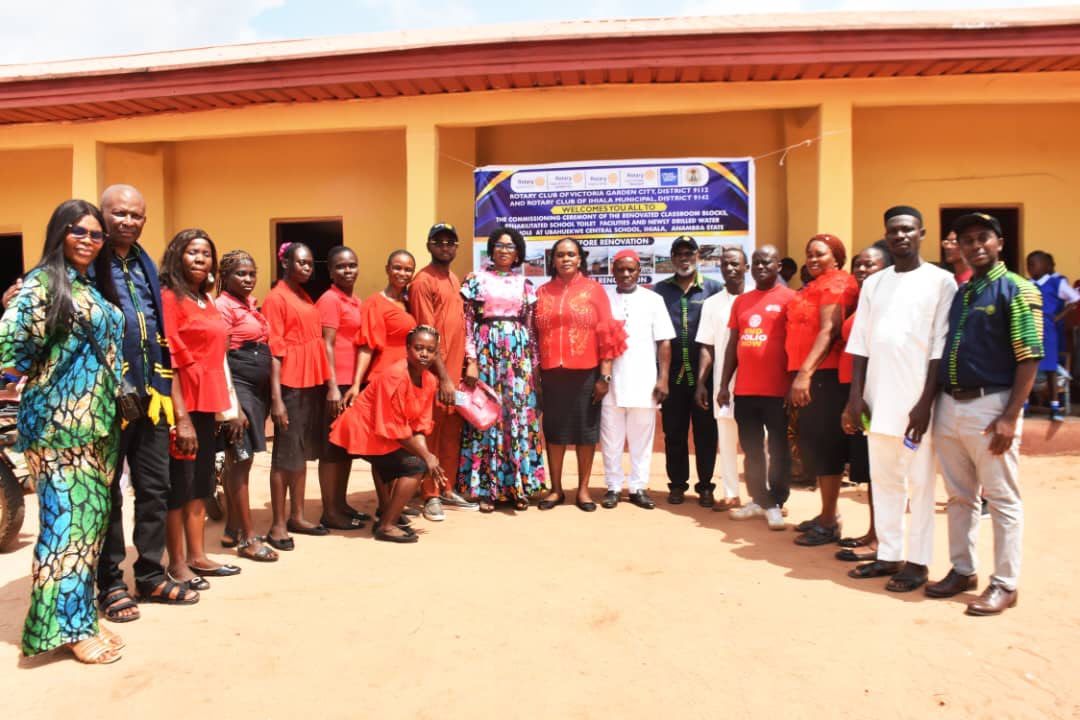
Follow THISDAYLIVE on GoogleAdd us as a preferred source to see more of our stories in Google Follow us on Google Royce Okolie Across the world, the story of humanitarian service is often told through the lives of individuals and organisations that have chosen to make a difference beyond their immediate environments. From providing access to clean water and supporting healthcare initiatives to promoting education, empowering vulnerable communities and responding to humanitarian emergencies, these interventions demonstrate that meaningful development is not achieved by government alone. It also requires the commitment of individuals, organisations and institutions willing to invest their resources, time and influence in improving the lives of others. One organisation that has consistently championed this philosophy is Rotary International, a global humanitarian service organisation whose activities are driven by the belief that service to humanity remains one of the most rewarding responsibilities of leadership. For generations, Rotary has distinguished itself through humanitarian projects and community-based interventions designed to address some of society’s most pressing challenges. Its philosophy of service extends beyond charity and occasional acts of generosity to creating sustainable solutions that improve living conditions, strengthen communities and provide opportunities for future generations. Through its network of clubs and dedicated volunteers across different countries, Rotary has continued to make significant contributions in areas such as disease prevention, maternal and child health, water, sanitation and hygiene, basic education, economic development, environmental protection and peacebuilding. Perhaps one of the most remarkable illustrations of Rotary’s humanitarian philosophy is its longstanding commitment to eradicating polio, a global initiative that has brought together governments, international organisations, health professionals and volunteers in a sustained campaign to protect children from a preventable disease. However, beyond its internationally recognised programmes, the real strength of Rotary is also reflected in the countless local interventions undertaken by individual clubs in communities where assistance is needed. In Nigeria, Rotary clubs have continued to contribute to community development through projects that address local challenges, particularly in education, healthcare, access to potable water and the welfare of disadvantaged populations. It is within this broader humanitarian vision that the activities of the Rotary Club of Victoria Garden City, Lagos, under the leadership of its President, Rotarian Emeka Ken Nsolibe, deserve attention. A HUMANITARIAN VISION THAT BEGINS AT THE GRASSROOTS For Rotarian Emeka Ken Nsolibe, the responsibility of leadership is closely connected to the opportunity to serve and positively influence society. His approach to humanitarian service finds expression in the activities of the Rotary Club of Victoria Garden City, which continues to demonstrate the importance of translating Rotary’s ideals into practical interventions that address the needs of communities. A particularly remarkable example is the club’s intervention at Ubahuekwе Central School, Ihiala, Anambra State, where renovated educational facilities were commissioned on Saturday, October 31, 2026. The project, which attracted community leaders, government representatives, religious figures and other distinguished personalities, featured the renovation of classroom blocks, rehabilitation of toilet facilities and the drilling of a new water borehole. For pupils who previously had to contend with inadequate facilities, the renovated classrooms represent an improved environment in which to learn, develop their abilities and pursue their educational ambitions. The rehabilitation of the toilet facilities addresses an important aspect of school hygiene and sanitation, while the provision of a water borehole offers an essential resource for maintaining cleanliness and improving the general welfare of pupils and teachers. These are fundamental requirements for a functional learning environment, yet they remain challenges in several communities across the country. By addressing these needs, the Rotary Club of Victoria Garden City has demonstrated that humanitarian service does not always have to begin with large-scale interventions. Sometimes, its greatest impact is achieved by identifying a specific community need and providing a practical solution. REMEMBERING HIS ROOTS, INVESTING IN THE FUTURE Beyond the institutional commitment of the Rotary Club, the Ubahuekwе Central School project also reflects the importance of individual philanthropy and the responsibility of successful individuals to contribute to the development of their communities. The intervention attracted particular appreciation from community leaders, who described it as unprecedented since the establishment of the school. They commended Nsolibe for remembering his roots and making a meaningful investment in the education and welfare of the younger generation. Among the dignitaries who witnessed the commissioning were Ebuka Nwabueze, President-General of Ihiala Town; Ichie Collins Agbasiere, who represented the Anambra State Commissioner for Local Government and Chieftaincy Affairs; Rev. Father Anozie, Education Director, Nnewi Catholic Diocese; and Ogbuehi Ubahuekwem, who represented the Oluoha of Ihiala. Representatives of the Anambra State Universal Basic Education Board (ASUBEB) and the Ministry of Education were also present. Their presence underscored the importance of collaboration between humanitarian organisations, community institutions and government agencies in addressing developmental challenges. Community leaders expressed gratitude for the intervention and appealed for similar projects in other schools across the community, recognising that improved educational infrastructure is essential to giving children a better opportunity to succeed. Their appeal also highlights a broader national concern: the need for sustained investment in basic education, particularly at the grassroots level, where infrastructure deficiencies can affect the quality of learning and the overall educational experience of children. ROTARY AND THE POWER OF COMMUNITY SERVICE The Ubahuekwе Central School project is a reflection of Rotary’s broader humanitarian philosophy, which recognises that lasting community development begins with understanding the needs of the people. Education remains one of the most powerful instruments for transforming society. It provides individuals with the knowledge, confidence and skills required to participate meaningfully in economic and social development. However, the quality of education is influenced by several factors, including the availability of functional classrooms, adequate sanitation, access to clean water and a safe learning environment. When these basic facilities are lacking, pupils and teachers are often forced to work under difficult conditions. This explains why interventions such as the one undertaken at Ubahuekwе Central School deserve recognition. They address practical challenges that directly affect the educational experience of children. Rotary’s approach to humanitarian service places considerable emphasis on identifying such needs and mobilising resources, expertise and partnerships to address them. The organisation’s activities demonstrate that community development is a collective responsibility. While governments have a primary responsibility to provide essential public infrastructure, private individuals, corporate organisations, civil society groups and humanitarian institutions also have important roles to play.
How Rotary is Changing Lives Through Grassroots Humanitarian Projects
Full Article
Original Source
Read the full article at Thisdaylive →KhanList aggregates and links to publicly available news content. We do not host full articles from third-party sources. Always verify important information with original sources.