
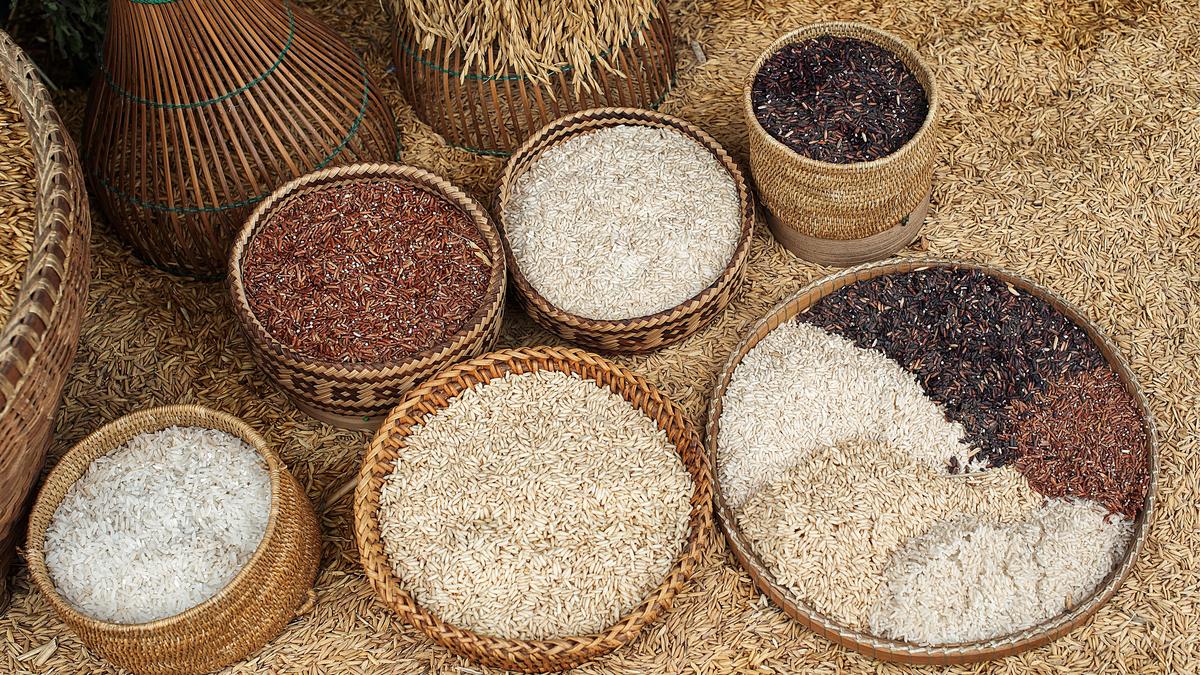
Some of the many varieties of rice | Photo Credit: Getty Images/iStockPhoto From the Spanish paella and Italian risotto to the Indian biryani and the Japanese sushi, rice shows up on tables around the world in delectable ways. Not surprisingly, it is a staple food for over half the world’s population. But, thousands of years ago, it was just another wild grass growing in the wetlands of Asia … until humans recognised its “food-worthiness” and began cultivating it. Centuries passed as they perfected the art of growing and cooking rice, and took it from place to place. The crop became so embedded in different Asian cultures that, even today, countries argue over who grew and ate it first.Countless varietiesWhen thinking of rice, the first image is of a tiny white grain. This is usually a highly processed grain stripped of the many layers coating it at the time of harvesting. While this makes the grain last longer (the outer layers spoil more easily) and cook faster, it reduces nutrients. Nevertheless, if you look closely at the different white grains of rice sold in a store, you will notice that they are not all alike. Some are long, others are short. Some are thin, others are stout. Some turn fluffy when cooked, others are sticky.It is not surprising that a plant which humans have grown for centuries has countless varieties. Experts, though, have whittled down the vast variety of cultivated rice into two main types: Oryza sativa, the older and more popular type, which is grown all over Asia, and Oryza glaberrima, which emerged in West Africa more than 2,000 years ago. Transplanting the germinating seedlings | Photo Credit: Freepik Despite such mind-boggling variety, what is common is the way rice is grown. A majority of the world’s rice grows in wet paddy fields. The seedlings are germinated in nurseries before being transplanted into the flooded fields, where they take a few months to grow. The stagnant water keeps the thirsty crop quenched and prevents sneaky weeds from taking root.However, this method of cultivation that is believed to have originated over 4,000 years ago in the lowlands and marshy river valleys of Asia has increasingly come under fire for using up thousands of litres of water to grow just one kilo of the crop. Moreover, critics claim that the bacteria that thrive in flooded paddy fields emit vast quantities of methane, a gas that contributes to global warming. Can it conquer the challenge of climate change? | Photo Credit: Freepik The wild grass that humans first began to grow centuries ago has come a long way. But, perhaps, the greatest test of its reign is yet to come. Can this ancient crop, which has conquered cultures across time, also conquer the challenges posed by climate change? Published - August 28, 2026 10:00 am IST
How rice became a universal grain
Full Article
Original Source
Read the full article at Thehindu →KhanList aggregates and links to publicly available news content. We do not host full articles from third-party sources. Always verify important information with original sources.