
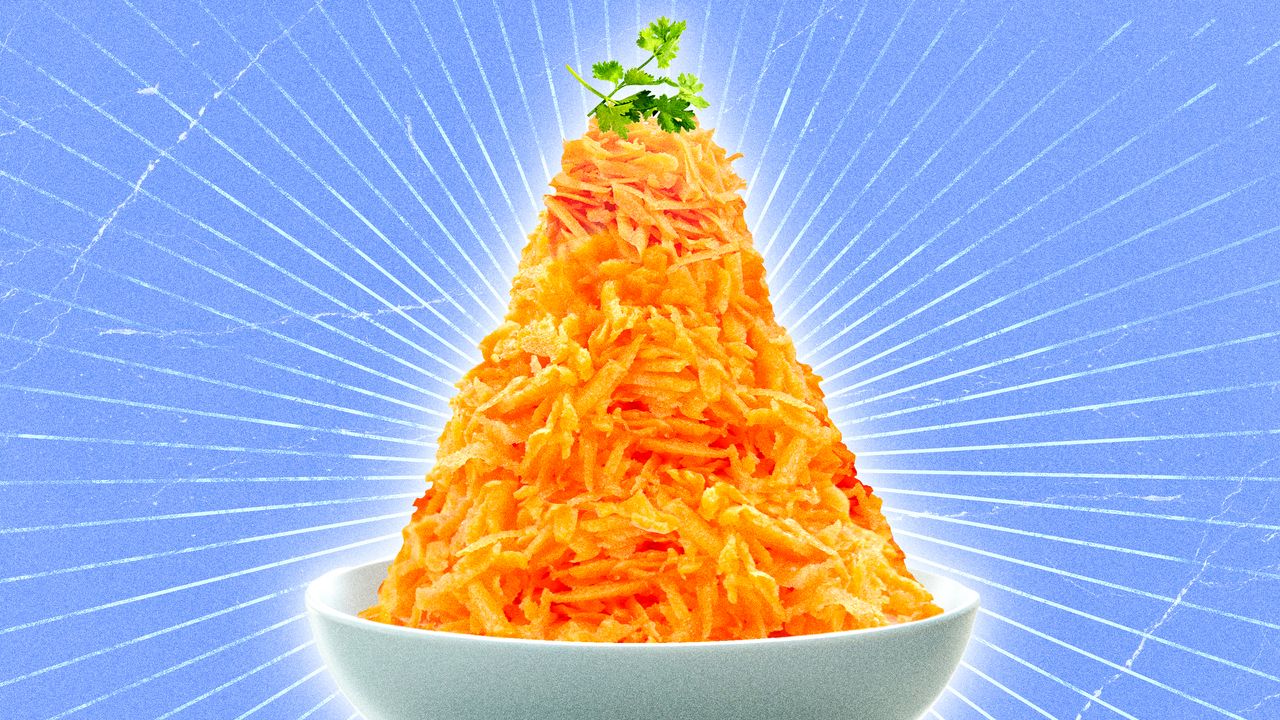
The late biologist Ray Peat once warned of seed oils and cortisol spikes on his obscure blog. He’s since become a cult-reference for a growing subculture of alternative health obsessives.Kelsey Niziolek; Getty ImagesFor the past decade, Hope Robertson, 21, has had problems with her hair. It was frizzy, hard to tame, prone to breakage, and “felt like hay.” Also, her skin was dry and her nails grew slowly, often breaking into hangnails. In 2022, after some Internet self-diagnosis, she began to suspect she had hypothyroidism, which was later confirmed by her ob-gyn. She was prescribed medication but never took it. “I just assumed that it wouldn't do anything because I was just so hopeless,” Robertson says.Robertson continued to look for an alternative solution. In 2024 she found one, in a corner of X (formerly Twitter) devoted to the work of an obscure biologist named Ray Peat. Robertson constantly read “Peat Twitter,” particularly a Peat-inspired poster named Veronica Hoffman, who frequently discussed thyroid problems. Based on Peat’s teachings, Robertson started taking thyroid supplements and drinking a daily eggnog made from raw eggs from her family’s chickens, sugar, and whipping cream. “That’s my main Peaty thing,” Robertson says.Her hair, skin, and nails improved, just like the X posters said they would. Robertson has been a devotee of Peat ever since. “Any time I would tell someone, they just looked at me and treated me like I was crazy,” she says. “I was met with that every single time I complained about my symptoms. But Ray Peat was talking about it.”In the latter half of the 20th century, Ray Peat worked in relative obscurity, writing dense blog posts and four self-published books read by a tiny community of acolytes. But following Peat’s death in 2022, his ideas gained popularity on X, where they have spread and taken on new life. Today, he remains surprisingly influential in the increasingly crowded world of antiestablishment health advice. Long before TikTokers were talking about seed oils and cortisol and thyroid levels, Ray Peat was posting about them. Today, Peat enjoys a kind of double legacy: beloved by online biohackers but unknown to the rest of the world, lacking even a Wikipedia page. “He’s like the Satoshi Nakamoto of the alternative health space,” says Justin Mares, cofounder of HSA marketplace TrueMed and bone broth company Kettle & Fire.Like the anonymous creator of Bitcoin, verifiable details of Peat’s life are fairly sparse. Peat earned a PhD in biology from the University of Oregon in 1972 (hence why many call him “Dr. Peat”) and taught at several small colleges. He believed that “energy and structure are interdependent, at every level,” and described his life’s work as a continuation of that thesis. Peat also studied the 18th century poet William Blake, and one of his most cited blog posts, “Can art instruct science?,” draws on Blake to posit his own theory of scientific progress based on observation and self-experimentation. Among fans of his work— self-described “Peaters”—this approach is quoted like a mantra: “Perceive, Think, Act.”Much of Peat’s writing explores the relationship between hormones, metabolism, and energy. He also put particular emphasis on boosting thyroid activity to counter what he describes as the damaging effects of the stress hormone cortisol. Today, many of these ideas are commonplace, at least in some form. Google search interest in “thyroid” and “cortisol” reached all-time highs in 2026. Avoiding a “cortisol spike” is an essential part of life for both women wanting a “snatched” jawline and looksmaxxers alike. (The most popular looksmaxxing forum is riddled with threads about Ray Peat’s theories.) While writing this story, I got a targeted Instagram ad for Function, a biomarker testing service, that read: “the friend whos been ‘just tired’ for 3 years and hasn’t checked their cortisol, thyroid, or iron once” over a photo of a sleepy Chihuahua.To his fans, one of Peat’s biggest impacts was questioning the medical consensus on “healthy fat” and warning of the supposed danger of seed oils. One of Peat’s best-known ideas was that polyunsaturated fatty acids (PUFAs)—the kind found in seed oils, oily fish, and nuts—are toxic. This is the opposite of medical consensus: Doctors consider PUFAs to be “good fats” and the American Heart Association recommends consuming them. But Peaters appreciate his heterodoxy. One right-wing influencer says he discovered the “evil of seed oils” from Ray Peat. Paul Saladino, who many say initiated the Internet seed oil conversation with his 2020 appearance on The Joe Rogan Experience, has dedicated at least one episode of his podcast to a discussion of Peat’s work. “ I think Ray Peat was the first one to point out that industrial oils aren't heart-healthy,”, says Veronica Hoffman, the poster who introduced Robertson to Peat.According to his website, Peat worked at various small colleges, self-published three books in a four-year span in the ’90s, then started a personal blog in 2005. He also kept a Chomsky-esque email correspondence with readers and participated in hundreds of interviews, all of which was obsessively cataloged by fans on the Ray Peat Forum. According to Georgi Dinkov, a prominent Peat-adjacent researcher and founder of a Peat-inspired supplement company, the forum had less than 100 registered users when he discovered it around 2012. Over the next decade, that small fan base slowly spread Peat’s ideas around the Internet.To some extent, Peat’s popularity might represent the success of what misinformation experts call “The Fake Expert” strategy, according to Sander van der Linden, PhD, professor of social pychology in society at the University of Cambridge and director of the Cambridge Social Decision-Making Lab. Van der Linden first became aware of Peat while editing papers on diet misinformation. “Somebody who has a PhD in history who puts on a doctor coat and starts giving people medical advice, people get that that's a fake expert,” he says. “But if you have a PhD in biology research and then start dishing out nutritional advice to people without ever having done a clinical trial on diet, people don't get that sort of distinction.”Around 2017, the influential alt-right figure who goes by the name of Bronze Age Pervert began tweeting about Ray Peat. He also referenced him in his 2018 book, Bronze Age Mindset, calling Peat “a man blessed by a grand and alien understanding” who had “tried to decipher the secret language” of hormones.” Despite being a largely apolitical writer (beyond opposing corporate influence on science and the industrialization of the food supply), Peat became associated with a strain of "Nietzschean vitalist” X accounts focused on bodybuilding, fertility, and, oftentimes, race, says Irene Goyeneche, 21, who first discovered Peat on X in 2023. Today, she says many Peat promoters are “ attached to MAGA or another sort of right-leaning ideology.”Peat’s emphasis on the negative effects of estrogen aligns with alpha males who associate high testosterone with masculinity, says van der Linden. “It fits well with the manosphere in terms of identity, because it embraces all of these core identity components,” he says. Similarly, van der Linden says the antiestablishment notion that seed oils and environmental factors are toxic can easily overlap with the argument that people are being “feminized” by their diet and lifestyles: “He sort of said, I'm this scientist, I'm this genius. Nobody's listening to me. The mainstream doesn't know.”In 2022, Peat died at the age of 86. Around that time, his influence exploded on X. In many ways, 2022 was extremely fertile ground for Peat’s ideas. Pandemic-driven medical skepticism was rampant. Elon Musk completed his purchase of Twitter (now X) in October of that year and began firing the platform’s content moderation staff. A 2023 study sponsored by the European Commission found that X had the highest discoverability of misinformation of all social media platforms. Robert F. Kennedy Jr. was running for president, promoting the Make America Healthy Again movement and his own Peat-adjacent skepticism of seed oils, industrialized food, and the medical establishment. “ Something about it feels like a compelling narrative to people,” says @coldhealing, a well-known X personality and on-and-off Peater. “I think that the fact that it algorithmically caught on might be more important than the actual, original roots.”Van der Linden adds that Peat’s skepticism of our food systems made his ideas palatable to the MAHA movement. “MAHA is ideologically diverse. You have the fitness bros, and then you have the manosphere guys, and then you have the anti-vax people, and then the natural homeopathic medicine people,” says van der Linden. “[Peat] could fit in the MAHA movement [as] anti-corporate and highly suspicious of industry.”There is a sense that Peat’s personal beliefs might not align with those of the community that embraced him. “Everybody on Twitter is like a right-wing health optimizer and that's what the Twitter space has grown into. So it’s somewhat of a departure actually from Ray Peat,” says RJ Tevonian, who runs the popular Peat X account @anabology (which has approximately 60,000 followers) and sells a Peat-inspired Vitamin E supplement.Tevonian first discovered Peat after joining X in grad school. He was impressed to find that Peat had quoted an obscure Dutch chemist, H.G. Bungenberg de Jong, whose research Tevonian had also studied. “ Probably 10 people on the planet have heard of [de Jong], and he's this foundational figure in this thing that I was researching,” says Tevonian. “I was like, ‘Wow, this guy is serious.’ He's not just some health grifter.”At first, Tevonian was skeptical of Peat’s ideas, but he was intrigued by his suggestion that sugar is not harmful. He began experimenting with “sugarmaxxing.” Even though Peat advocated for balanced eating, according to Tevonian, he abandoned his carnivore diet and adopted a new one consisting of a half-pound of dates and a pound of honey for breakfast, then a pound of beef for dinner. He was shocked to find that he lost weight and his chronic migraines improved. “ Maybe my thyroid function went up, which is what people in the Peat space would say,” he says. “But the results spoke for themselves.”That is, according to doctors, probably not what happened. “ There are really no dietary things that can change how your thyroid functions,” says. Salila Kurra, MD, clinical chief in endocrinology and associate professor of medicine at Columbia University Irving Medical Center. “The treatment for these things are usually surgical for cortisol dysfunction, and hormone therapy for thyroid dysfunction. There are not diets that change this.”After using thyroid hormone for eight months, Tevonian believes he gave himself hyperthyroidism, resulting in overstimulation while driving, muscle tension in his neck, and heart palpitations. “ Ray Peat might have recommended, say, a couple micrograms of thyroid hormone, but then I would take 60 micrograms of thyroid hormone just to see how fast I could make my metabolism go,” he says. But to Tevonian, figuring out what works for you personally through self-experimentation is the essence of the Peatism “Perceive, Think, Act.”According to Dr. Kurra, most people do not need to boost their thyroid function at all. “Most people don't have a dysfunction of cortisol production or a dysfunction of thyroid hormone production,” she says. In fact, excessive or unneeded supplementation can be exceedingly dangerous. Dr. Kurra notes that overactive thyroid can lead to muscle breakdown, bone weakness, and dangerous heartbeat arrhythmias.As so-called Peat Twitter grew, it evolved. Peaters were no longer just “ science-obsessed, N-1 experiment men,” but also “girls from, like, Beverly Hills who are supposed to be doing their salads,” says Veronica Hoffman, whose account, @celestialbe1ng, introduced Robertson to Peat in 2024. “They're sending me pictures [saying], ‘Look, this is my oxtail soup. I just cooked gelatin. I'm having orange juice and my hormones are improving.’”Hoffman and other posters have been successful at adapting Peat’s dense writing into digestible lifestyle advice and marketable products. Last February, Hoffman was mocked online for having lip fillers, which she did not have at the time. (She has since gotten them.) She replied, “You’re trying to spike my cortisol and make me less beautiful,” a phrase that quickly went viral. Hoffman’s skin care company now sells hats emblazoned with it.Hoffman says she became interested in Peat after battling complications of an eating disorder. She claims that a Peat-inspired diet based on milky coffee, orange juice, gelatin, cheesecake, oysters, and liver helped restore her normal period, fix her memory, and reduce chronic fatigue. (I could find no medical advice recommending such a diet for any symptom, particularly because it is devoid of vegetables.) Hoffman has noticed that many in the community similarly discovered Peat after dealing with severe health issues. In my conversations with nine Peaters, I heard many similar stories. Hoffman theorizes that it requires a certain amount of desperation for a person to dig deep enough to find Peat. Van der Linden concurs. “ There's a segment of the population that is exploited because they usually have some sort of chronic condition. They have a health problem and traditional medicine isn't fixing it, so they're Googling for alternative diets,” he says, noting that they are particularly likely to fall for anecdotal stories of healing.The notion of a “Ray Peat diet,” while popular, might be a misnomer. The closest thing Peat ever published to an explicit diet plan is his belief that most health problems can be treated by “various life-supporting substances”: pregnenolone, progesterone, and thyroid hormone, as well as coconut oil. Another of Peat’s most ubiquitous beliefs is that sugar, particularly fructose, protects the body from stress and can even reverse degenerative conditions. Some hard-core Peaters drink Mexican Coke specifically to get extra sugar into their diet.But in practice, there is weak consensus on what Peaters eat. According to Dinkov, the researcher, an ideal Peat diet would contain lots of saturated fat, sucrose, gelatin protein, and ruminant animal meat (like beef and lamb), plus a low-stress lifestyle. Mares the TrueMed cofounder, describes the Peat diet as one rich in fructose-heavy carbohydrates like fruit and honey, full of micronutrient-dense foods such as oysters, shellfish, eggs, organ meats, and dairy, and devoid of polyunsaturated fatty acids, or PUFAs. Many Peat followers focus on maintaining a high metabolism, and measure their body temperature as a proxy.“ What's considered ‘the Peat diet’ is based equally on his writing as it is on his interview appearances, or what have you,” says Sami Reiss, author of the Substack Snake Super Health. “There's almost a Talmudic element of it, where you can find an argument for a lot of different dietary variations under the sun.”Dr. Kurra stresses that she would never recommend a diet rich in saturated fat over polyunsaturated fats. “ Especially when they replace saturated fat, [PUFAs have] been known to decrease heart attacks and stroke,” she says, adding that choosing polyunsaturated fats reduces your dangerous LDL cholesterol and atherosclerosis, which causes heart attacks.On X “the Peat diet” often looks more like cultural signaling than a meal plan. The dominant symbol is the carrot salad, described by Peat in a blog post about epilepsy, consisting of shaved raw carrots with vinegar, coconut oil, and olive oil. Morning cups of orange juice and milk, as well as specific progesterone and thyroid supplements, are other common in-group signifiers. Simply captioning your lunch “Ray Peat” is commonplace. “The meme about Peat-ing is that nobody has actually read any of his books,” says Goyeneche. “The majority of Peaters I've ever spoken to have never read a single thing of his, and they just pull it from tweets.”With the growth of the X community, Peat’s fan base turned from a “very niche group of people dedicated and obsessed with science, with understanding biology precisely,” to the “average modern person who just wants a protocol,” says Hoffman.Online, Ray Peat is used to justify a huge range of lifestyle choices. One X poster announced they were “new to Ray Peat Twitter” and asked if their meal of chocolate milk, honey, and salt constituted an “optimal breakfast.” A Reddit poster, meanwhile, said that their daily coffee and pain au chocolat “makes me feel amazing so I’m calling it Peaty lol.” The more I researched this story, the Peat-ier my algorithm became, and I began to see all manner of bizarre Peat-inspired ideas with no scientific backing: Vitamin K deficiency causes foot fetishes. Eating disorders are a manifestation of the desire for clean bowel movements. Surreptitiously feeding progesterone-spiked cookies to a neurotic person makes them calmer.“ Peat Twitter has been going on for at least five, six years,” says Reiss. “You can't just keep repeating the line: ‘Hey, it's good to drink orange juice, or coffee is great with sugar and milk, and we should stay away from fatty fish, and scallops are excellent, and we like root vegetables.”Van der Linden describes this phenomenon as “escalation of commitment.” “Once you've started the diet, you can't go and say, ‘This doesn't work for me.’ You can't go against the rest of the group,” he says. “So now you have this sort of fallacy that you're already committed and you have to keep pretending that it works.”Today, the newest iteration of the forum has nearly 5,000 members and the r/RayPeat subreddit has 13,000 weekly visitors. (For controversial reasons—many say it was hijacked by a disgruntled former Peat-er—the original forum is no longer widely used.) Beyond that, Peat has essentially no mainstream recognition. Even his Wikipedia article was deleted in 2024 for lack of notability, with editors citing that he is known only in “niche online communities.” This has been a source of frustration for Peat-ers. “ I do talk to my family about it, but a lot of them will Google him, and the first thing that pops up is the fact that he's a conspiracy theorist, and so they completely disregard it,” says Hope Robertson.Nonetheless, Peat-inspired eating continues to attract people for its leniency and openness. “ There's something quote-unquote empathetic and kind of special about it,” Reiss says. “It's almost a feel-good diet that has less to do with abs than it does with not dragging during the day, having decent skin, having good hair.”Peat’s underground popularity is evidence that many people are unsatisfied with establishment medical health care, and increasingly comfortable getting advice from other sources. As one poster put it: “I'm high-key kind of pissed off that I had to arrive at a life-changing, life-giving intervention through a hyper-niche community of weirdos on twitter.”“There's a vacuum around health and nutrition in this country,” says Reiss. “The same reason why Peat became sought out and popular is the same reason why there are health influencers. It's not so much based on authority, although I'd argue that Peat has authority in the sense that he's an academic and he's reading research papers and is a creative thinker.”Dr. Kurra stresses that people should get medical advice from doctors, not Ray Peat or other individuals online. “ Hopefully people will seek out medical attention if they're not feeling well,” she says. “There's just a lot on [the Internet], and some of it's helpful, and a lot of it is not.”This story has been updated.Not a subscriber? Join GQ to receive full access to GQ.com.Charlie Sosnick is a freelance writer based in New York, covering internet subcultures, men’s health, and food. He has self-published three books and written three short films. ... Read More
How Ray Peat Became the Satoshi Nakamoto of the Alt Health World
Full Article
Original Source
Read the full article at Gq →KhanList aggregates and links to publicly available news content. We do not host full articles from third-party sources. Always verify important information with original sources.