
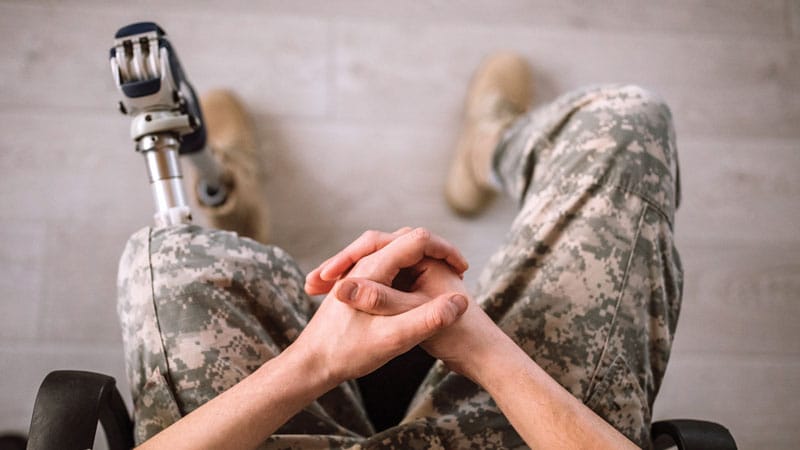
Background: The Office of Management and Budget (OMB) has proposed changes affecting federally-funded science that threaten to undermine the integrity of federally-supported research regarding military populations (ie, active-duty service members, veterans, and their families). This shift toward political review could reduce the scope of research, drain the pool of qualified researchers, reduce the quality of care, and ultimately erode trust in Veterans Health Administration (VHA) and US Department of Defense (DoD) health care practitioners and systems. As investigators and clinicians with significant experience conducting federally-funded research centered on military populations, we reflect on the likely damage these changes could cause based on our personal clinical and research perspectives.Observations: Independently peer-reviewed and federally-funded research has generated foundational knowledge that drives health care for military populations. This research has revealed uncomfortable truths about the prevalence and extent of posttraumatic stress disorder, traumatic brain injury, military sexual trauma, opioid use disorder, suicide, and homelessness. Health services research has documented and quantified the health needs of various military populations, including those with disabilities, and those living in rural areas, women, and members of racial and ethnic minorities, revealing disparities in access to and quality of care. The knowledge gained from these endeavors has sparked and shaped significant improvements in VHA and DoD care. The intent of this research is to extend access and provide equitable care despite geography or culture; however, such work may violate the OMB sanction against diversity, equity, inclusion, and accessibility or be classified as misaligned with the executive branch’s priorities. If OMB’s revision had been in place, such research might have gone unfunded or been abruptly canceled. Conclusions: Federal practitioners depend on unbiased research to provide evidence-based care. The history of VHA and DoD research demonstrates that studies subject to peer and expert review and shielded from overt ideological or political considerations have produced consequential improvements for military populations. The proposed OMB rule, if finalized, would formally subordinate peer and expert evaluation to political review. This action would diminish the evidence base for generations of practitioners and patients while increasing the risk of preventable harm to military populations and the scientific and clinical communities that develop and deliver their care. A proposed revision to the Office of Management and Budget (OMB) Uniform Guidance for Federal Financial Assistance is the most recent in a series of proposed changes affecting federally funded science.[1] The proposed revision consists of 3 major elements: (1) changes to the administration and processing of awards to only fund topics that align with the administration’s ideological and political agendas; (2) reduced support for conventional scientific practices; and (3) a prohibition on funding for research that could fall under the topic of diversity, equity, inclusion, and accessibility (DEIA). The potential harms of this proposal extend beyond the scope of this commentary and have been documented elsewhere (Table).[2,3,4]We are a group of researchers and clinicians with a wide range of experience and roles, including new trainees, fellows, independent investigators, senior investigators, department chiefs, and both mentors and mentees. We have served as peer reviewers, directed Veterans Health Administration (VHA) Centers of Excellence and Centers of Innovation, and testified before Congress. Our collective work with military populations spans women’s health; health disparities; military sexual trauma (MST); traumatic brain injury (TBI); posttraumatic stress disorder (PTSD); the care of individuals with amputations, polytrauma, chronic pain, disability, rehabilitation; and health services research.[5,6,7,8,9,10,11,12,13,14,15,16,17,18,19,20,21,22,23,24,25,26,27,28,29,30,31,32,33,34,35,36,37,38] We care deeply about the welfare of military populations and maintaining the integrity of the research that informs their care.The VHA Research LegacyHistorically, VHA’s merit-based peer review system (as opposed to political/ideological review) has fostered successful, long-standing collaborations between the VHA and academic institutions, yielding critical clinical and informatics advancements, including the nicotine patch, the first nationwide electronic health record system, and a wide array of diagnostic and practice guidelines.[39,40] This tried-and-true method is specifically designed to allow a competition of ideas, rewarding the most promising proposals. Careful scientific scrutiny of proposals not only drives funding decisions in a particular cycle but also gives feedback to the applicants to strengthen their resubmissions, often resulting in sharper and more worthy proposals that do get funded in future grant cycles.Military Sexual Trauma. MST research offers a clear illustration of the value of independent, peer-reviewed science in uncovering a previously hidden and taboo phenomenon of great importance. Despite the sensitivity of the topic, the research proceeded, ultimately informing the screening protocols, treatment programs, and clinical infrastructure that now support hundreds of thousands of veterans (men and women) traumatized by sexual violence during military service. Specifically, in 2004, Public Law 108-422 mandated MST treatment as a permanent benefit and required each VHA hospital to designate a coordinator to oversee MST screening and treatment.[41] Supporting veterans and active-duty service members in recognizing, disclosing, and seeking treatment for MST and its comorbidities has required decades of scientific inquiry and the development of gender-sensitive approaches to care. More broadly, work focused on gender ideology has demonstrated how patient-centered approaches that address identity, stigma, and treatment engagement have real-world implications for veterans’ health.[42]Women’s Health. The transformation of women’s health care in military populations over the past 3 decades has been driven by research documenting sex and gender disparities and critical gaps in the provision of health care for women veterans.[43,44] Women veterans are the fastest-growing veteran population. Sustained scientific investment, including the establishment of dedicated Centers of Innovation in women’s health, such as the Women’s Health Research Network, changed what care looks like for this growing population. As the population of women veterans ages, continued research addressing gender-specific conditions is warranted (eg, menopause, cognitive decline, and chronic illness due to exposure).[43] Under the proposed rule, restrictions on gender-related research could create administrative grounds for the preissuance exclusion of precisely these kinds of inquiries.Independent Research and Advocacy Because of possible institutional reluctance to recognize the adverse effects of participation in military operations, reliable, independent research data collection and analysis are essential to protect the health of military populations. Advocacy and federally funded independent research contributed to the recognition of PTSD as a diagnosis in 1980, 7 years after the Vietnam War ended. The combination of advocacy and independent research that began in the 1970s led to the recognition of the toxic effects of Agent Orange exposure in 1991. Advocacy and research also led to VHA compensation in 2022 for the damage inflicted by toxic burn pits during the Persian Gulf War. In the early 2000s, TBI was recognized as the signature injury of the Iraq and Afghanistan wars. VHA comprehensive screening, diagnostic, and treatment protocols for mild TBI (mTBI) were rolled out by 2007.[45,46] VHA researchers demonstrated a higher prevalence of PTSD, depressive disorders, substance use disorders, and anxiety disorders among veterans with a history of mTBI compared with those without TBI exposure.[47] The burden of these conditions is not distributed equally. VHA research has further documented that Hispanic veterans with clinically diagnosed TBI have about 60% higher adjusted mortality rates compared with non-Hispanic White counterparts, despite the latter’s lower use of neurology and rehabilitation services.[48] This research sits at the intersection of ethnicity and disability and is essential to ensuring that all veterans and active-duty personnel receive appropriate treatment. It appears unlikely that the list of research mentioned would have been approved if the OMB revision was in place, especially concerning minority populations.Disability, Accessibility, and Home Modification As a direct result of military service, active-duty service members disproportionately acquire traumatic amputations and physical disabilities. VHA clinical priorities have long included the care of individuals with spinal cord injuries, amputations, mobility impairments requiring wheeled mobility, and prosthetic and orthotic care. Further, VHA has explicitly prioritized hiring veterans, including those with disabilities. Research on home modification, assistive technology, accessible rehabilitation, and community reintegration has materially improved the functional independence of veterans with service-connected disabilities.[36,49-52]Advances in prosthetics and orthotics and the care of individuals with amputations have been accelerated by federal funding. This research has also challenged assumptions that equate disability with weakness or diminished capability. Many active-duty personnel and veterans who rely on assistive technologies possess valuable skills and can meaningfully participate in their communities and, in some cases, reclaim mission-critical roles. Research has helped shift the focus from limitations to capabilities, demonstrating that disability need not be an insurmountable barrier to participation, independence, employment, or continued service.[36,53,54]The proposed OMB revisions extend the prohibition of research into diversity, equity, and inclusion (DEI) to DEIA. The stated goal is to prohibit funding initiatives that are “inappropriately concentrated among a narrow set of recipients.” A comparable pattern has already been documented elsewhere in the federal government: Department of Government Efficiency staff used AI-assisted keyword screening to flag existing approved National Endowment for the Humanities grants as DEI-related and then canceled 1400 of them, a process a federal court later found violated constitutional equal-protection guarantees.[55,56,57] If the proposed rulemaking is adopted, critical research regarding accessibility and disability may be canceled to the detriment of military populations.Veterans at the Margins of Health CareMany veterans live at the margins of the health care system, where their medical needs frequently go unrecognized by conventional service delivery. Veterans experiencing homelessness; veterans involved with the justice system; veterans who are lesbian, gay, bisexual, trans, queer, or plus (LGBTQ+); and veterans living in rural communities, as well as their families and caregivers, have greatly benefited from federally-funded research that has had the insight to recognize these overlooked populations and devise and test solutions.[36,58,59,60,61,62,63] A randomized trial of supported housing provided the evidence base for the expansion of the US Department of Housing and Urban Development–Veterans Affairs Supportive Housing program.[64] National studies of veterans involved in the justice system have informed the development of Veterans Treatment Courts and the Veterans Justice Outreach Program.[65] Research related to mental and physical health shows significant disparities among transgender veterans that have informed VHA clinical policy and health care coordination.[66] Studies of access barriers among veterans living in rural communities have supported the expansion of telehealth and community-based services.[36] Research quantifying the burden carried by an estimated 5.5 million military and veteran caregivers has contributed to the development of caregiver support programs, including culturally tailored interventions for Spanish-speaking caregivers of veterans.[67,68,69,70,71,72,73] Each of these populations could be characterized as a “narrow set of recipients” under the proposed rule. Research addressing their needs—the very inquiry that made these veterans visible to the health care system—is precisely what the proposed revisions could jeopardize.Immigration-involved veterans offer the most recent illustration. Federal data covering January 20, 2025, through January 26, 2026, reveal that 125 former service members were arrested for immigration violations, nearly two-thirds without an active criminal warrant. Thirty-four were placed into deportation proceedings, in addition to 248 relatives of veterans.[74,75] The preissuance review process under the proposed rule prohibits discretionary awards from being used to fund, promote, or facilitate research related to “illegal immigration.”[76] The same logic that excludes immigration-related inquiry could readily extend to research on any of the populations previously outlined, leaving those already least visible to the health care system the least studied and least served.The Consequence for PractitionersHistory offers cautionary examples of what happens when ideology trumps scientific inquiry. The New England Journal of Medicine editorial board recently compared the OMB proposal’s grant-review provisions to Lysenkoism, the Soviet-era subordination of genetics research to political ideology, warning that the proposal risks allowing political priorities to shape scientific inquiry.[77] When institutions with an interest in research outcomes control the questions researchers are permitted to ask, the resulting literature reflects institutional priorities rather than clinical reality. Federal practitioners who treat military populations with PTSD, TBI, MST, service-connected disabilities, and the long-term consequences of toxic exposures depend on literature that accurately represents those realities.Without a functioning research pipeline, clinicians lose 4 important capacities. First, they lose the ability to know the true scope of the conditions they are treating; the prevalence data that tell a clinician “this is a common problem” is itself a research product, not a given. Second, they lose the evidence base needed to implement effective treatments, rather than treatments selected for institutional convenience or political preference. Third, they lose standing to effectively advocate for patients, because that advocacy depends on being able to point to peer-reviewed findings rather than anecdotal evidence. Finally, they lose the trust of the patients and their families by delivering care more aligned with institutional priorities than with patients’ needs. Call to ActionInstitutional degradation brewing in the proposed revision extends far beyond what has been highlighted in this article. Federal health care practitioners are in a unique position to appreciate the gravity of the moment and sound the alarm. We encourage readers to review the proposed revisions and express their concerns to their federal legislators. Although the public comment period for OMB revisions to 2 CFR § 200 closed on July 13, 2026, the National Science Foundation, whose independent oversight board was dismissed by the president earlier this year, has since released draft guidance, open for public comment through August 24, 2026.[78,79] The guidance proposes similar revisions to its financial assistance policies to bring them into compliance with OMB’s proposed revisions to 2 CFR § 200. Comments grounded in clinical, research, personal, and programmatic experience, particularly knowledge of what the VA and US Department of Defense (DoD) research enterprises have produced and what restrictions on that research could cost, can inform the administrative record.ConclusionsIn our experience, many members of the military populations we serve arrive with suspicions of DoD and VHA health care. Clinicians must earn trust by placing patients’ needs as primary. The research underlying their care must be reliable and unimpeachable. OMB’s call to revise the Guidance for Federal Financial Assistance is a direct threat to the research that serves military populations. Federal practitioners and their like-minded colleagues are encouraged to learn about the proposed revision and raise their voices in defense of evidence-based practice, scientific integrity, and military populations.
How Proposed OMB Funding Restrictions May Reshape Research
Full Article
Original Source
Read the full article at Medscape →KhanList aggregates and links to publicly available news content. We do not host full articles from third-party sources. Always verify important information with original sources.