
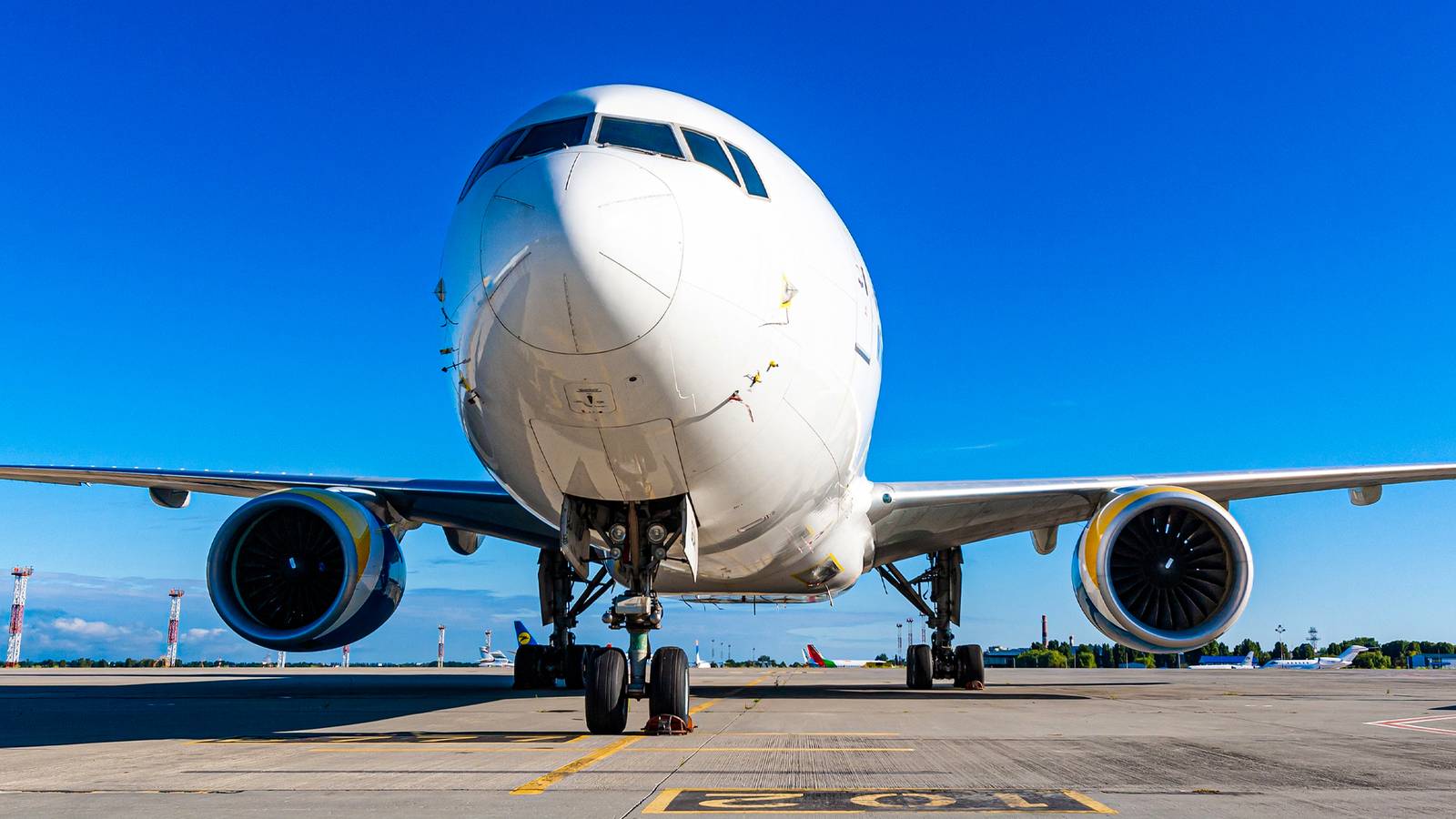
Did you know that the two aviators sitting at the primary controls of a Boeing 777-300ER may not be the same crew members who performed the takeoff hours earlier? Suspended directly above paying passengers in the forward cabin ceiling, off-duty pilots sleep in complete darkness inside an isolated loft module. This hidden space lets commercial airlines stretch twin-engine range across vast oceanic voids, but managing human fatigue at six miles (9.7 kilometers) above the earth is far more complicated than pulling down a window shade. Resolving the limit of pilot endurance led Boeing engineers and Federal Aviation Administration regulators to reconsider how narrow structural spaces inside a pressurized widebody airframe are actually used. Designing a secure, fully isolated sleeping facility meant creating a functional space within the airframe crown without sacrificing profitable main-deck cabin space or compromising flight deck communications. How this overhead suite balances strict regulatory sleep requirements against the harsh acoustic environment of two massive GE90 engines is easily one of the most clever spatial engineering achievements in modern long-haul transport. A Secret Space Above The 777-300ER Cabin On long-haul 777-300ER routes, off-duty flight deck crews rest in an Overhead Flight Crew Rest module located in the upper fuselage crown directly above the forward passenger cabin. Access to this elevated sanctuary is intentionally discreet, situated behind an armored security door near the forward galley that requires a keypad code to unlock. Behind this entrance lies a steep, ladder-like staircase leading upward into the ceiling structure, completely isolating resting aviators from the passenger aisle below. However, stepping beyond that security door reveals a design compromise between spatial efficiency and regulatory mandates. According to Boeing technical documentation for the 777 series, the forward overhead installation occupies the unused crown area between Door 1 and the forward passenger cabin frame. Instead of converting valuable main-deck floor space that could otherwise house four to six revenue-generating business class suites, engineers moved the module into the upper contour of the fuselage. The exact internal layout varies depending on individual airline specifications, with carriers choosing between two reclining business class seats paired with two lie-flat bunks, or specialized configurations incorporating additional storage and workstation amenities. Maintaining structural integrity and sound dampening within a module measuring less than six feet (1.8 meters) in height is by no means easy, so the aircraft is fitted with insulation materials to isolate resting pilots from ambient cabin noise. Carving out an overhead attic space solves the immediate problem of finding physical room for off-duty flight crews without sacrificing ticket revenue. However, simply providing a secluded loft inside the ceiling of a twinjet does not automatically make it a legally compliant sleeping environment for transoceanic operations. What Are The Legal Requirements? To legally qualify as a Class 1 Rest Facility under Federal Aviation Administration guidelines, an onboard rest compartment must provide a fully enclosed sleeping environment featuring independent climate controls, adjustable lighting, and lie-flat bunks that allow horizontal sleep. Bunks must be structurally isolated from both flight deck and passenger cabin noise, maintaining ambient sound levels low enough to enable restorative sleep. FAA regulations require the area to allow an aviator to lie completely flat on a mattress at least 78 inches (198 centimeters) long and 30 inches (76 centimeters) wide, surrounded by sound-dampening curtains and fire-resistant materials. Structural isolation alone is insufficient; the compartment must be equipped with dedicated environmental systems and emergency hardware equal to the main flight deck. Similarly to how cabin crew can control cabin temperature, Boeing builds independent temperature controls into the 777-300ER overhead rest module, allowing off-duty aviators to adjust airflow without altering passenger cabin settings. Each bunk contains individual emergency oxygen masks connected to an independent oxygen supply within the compartment, alongside full-body seatbelt harnesses designed to keep sleeping pilots secured during severe clear-air turbulence. Furthermore, dedicated interphone handsets and smoke detection systems link the overhead suite to the active flight deck and cabin crew stations, providing immediate communication if an operational emergency arises. Operating a fully certified Class 1 facility satisfies regulatory safety thresholds, but an exceptional resting space gives little benefit if a flight crew cannot structure their sleep effectively. On ultra-long-haul sectors pushing 15 hours or more, balancing circadian rhythms against operational flight phases becomes a complex physiological equation. Therefore, airlines need to be able to manage strict shift rotations across multiple crew members to guarantee that two fully alert aviators are always at the controls during critical flight phases. Two Sets Of Crew? When long-haul sectors exceed ten to 12 hours, standard two-pilot flight deck complements are replaced by augmented crews to meet strict fatigue risk management standards. Depending on total flight length and specific operator regulations, routes spanning 12 to 14 hours use a three-pilot crew consisting of one captain and two first officers, or two captains and one first officer, as noted in Simple Flying coverage. For ultra-long-haul sectors exceeding 14 hours, airlines will use a four-pilot heavy crew, effectively creating two complete flight teams that rotate between active flight deck duty and protected rest periods in the overhead suite. On a 15-hour transoceanic flight, flight dispatchers structure the cruise phase into multi-hour rest blocks designed to align with natural human sleep cycles. To maintain an undisturbed environment inside the overhead module, strict cabin protocols prohibit audible phone alarms, requiring resting aviators to rely on silent vibrating wrist devices or quiet interphone calls from active flight deck personnel. Scheduling shifts so each pilot gets at least one full 90-minute sleep cycle helps preserve cognitive acuity and reaction times when navigating complex arrivals across multiple time zones, as The Stork Life notes. Regulating rest periods across long oceanic sectors is what keeps flight deck personnel alert throughout the journey. That is the nature of an airline flight deck: pilots need to perform at their best during their assigned period of command. What can often be a challenge is transitioning an aviator from deep slumber in a dark overhead bunk back to active control of a complex widebody jet. When a pilot finally wakes up and heads to the cockpit, this can be a point of risk. The Risks After Waking Up The biggest physiological hazard associated with inflight crew rest is sleep inertia, a state of temporary cognitive disorientation, grogginess, and delayed reaction speed experienced immediately after waking from slow-wave sleep. If an off-duty aviator is summoned to the cockpit during an unexpected system issue or severe weather encounter, their decision-making ability can be impaired for up to 20 minutes. Operating a heavy aircraft while experiencing sleep inertia poses a significant safety risk if operational safeguards are not strictly enforced. To mitigate this hazard, safety guidelines such as the UK CAA's CAP 317 document mandate a minimum 30-minute recovery buffer between leaving the overhead bunk and assuming active flight control duties. During this transition window, returning pilots review flight management computer data, hydrate, and receive a formal operational briefing from the relieving crew. Should an onboard emergency require immediate evacuation of the overhead suite, Boeing engineered secondary escape hatches directly into the floor of the rest compartment, allowing resting aviators to drop straight into the forward passenger cabin if the main access staircase is blocked by smoke or structural damage. Managing human physiology with mandatory recovery buffers and emergency egress paths helps ensure flight safety on long stages. Alongside this, behind these safety protocols lies an economic calculation that shaped the interior architecture of the aircraft itself. In actuality, moving pilot rest facilities into the upper ceiling contour delivers tangible financial returns for airlines operating global networks. An Economic Benefit For Airlines? Prior to the introduction of overhead rest compartments, long-haul carriers had to sacrifice revenue space to accommodate augmented flight crews. Early twin-aisle jets housed crew rest facilities in partitioned sections of the main passenger deck or inside containers positioned in the forward cargo hold, as noted in Simple Flying analysis. Locating rest quarters on the main deck directly reduced the count of premium passenger seats, while lower-deck cargo installations consumed valuable freight capacity. So, by engineering the Overhead Flight Crew Rest suite into the unused crown area above the ceiling line, Boeing reclaimed this space entirely. On a Boeing 777-300ER, removing main-deck crew bunks opens up enough floor plan area to install four to six additional business class lie-flat suites. Given that a single long-haul business class ticket on transpacific or transatlantic routes can be incredibly expensive, those extra seats generate millions of dollars in incremental revenue per airframe each year. Across a fleet of 30 or 40 widebody aircraft operating high-density international networks, overhead crew rest technology is a massive commercial advantage that directly boosts passenger yield. Relocating rest suites into the upper fuselage crown proved to be an economic stroke of genius for the 777-300ER, increasing seat density without compromising regulatory sleep standards. However, now that international travel is pushing past traditional range limits, the flight duty equations that governed twin-engine widebodies for two decades are facing new stress tests. Into A New Frontier Of Range The evolution of the overhead flight crew rest compartment demonstrates how spatial engineering can convert human physiological constraints into a repeatable, revenue-positive operational routine. The 777-300ER is one of the key aircraft that proved long-haul safety standards and commercial profitability do not need to be mutually exclusive. The success of ultra-long-haul flying, after all, does not just rest solely on engine efficiency or fuel capacity, but on the ability to provide certified, restorative sleep quarters for the aviators managing the flight. Airlines are preparing to launch nonstop sectors exceeding 19 hours on next-generation airframes like the Boeing 777X and Airbus A350-1000ULR, and so, the demands placed on overhead rest areas will reach new heights. Regulatory agencies are actively evaluating whether extended duty cycles on extreme long-range routes will require enhanced sound insulation, expanded crew capacity, or updated circadian lighting environments inside crown modules. Whatever the decision, we have the 777-300ER to thank for laying the groundwork for the future.
How Pilots Rest & Sleep On The Boeing 777-300ER
Full Article
Original Source
Read the full article at Simpleflying →KhanList aggregates and links to publicly available news content. We do not host full articles from third-party sources. Always verify important information with original sources.