
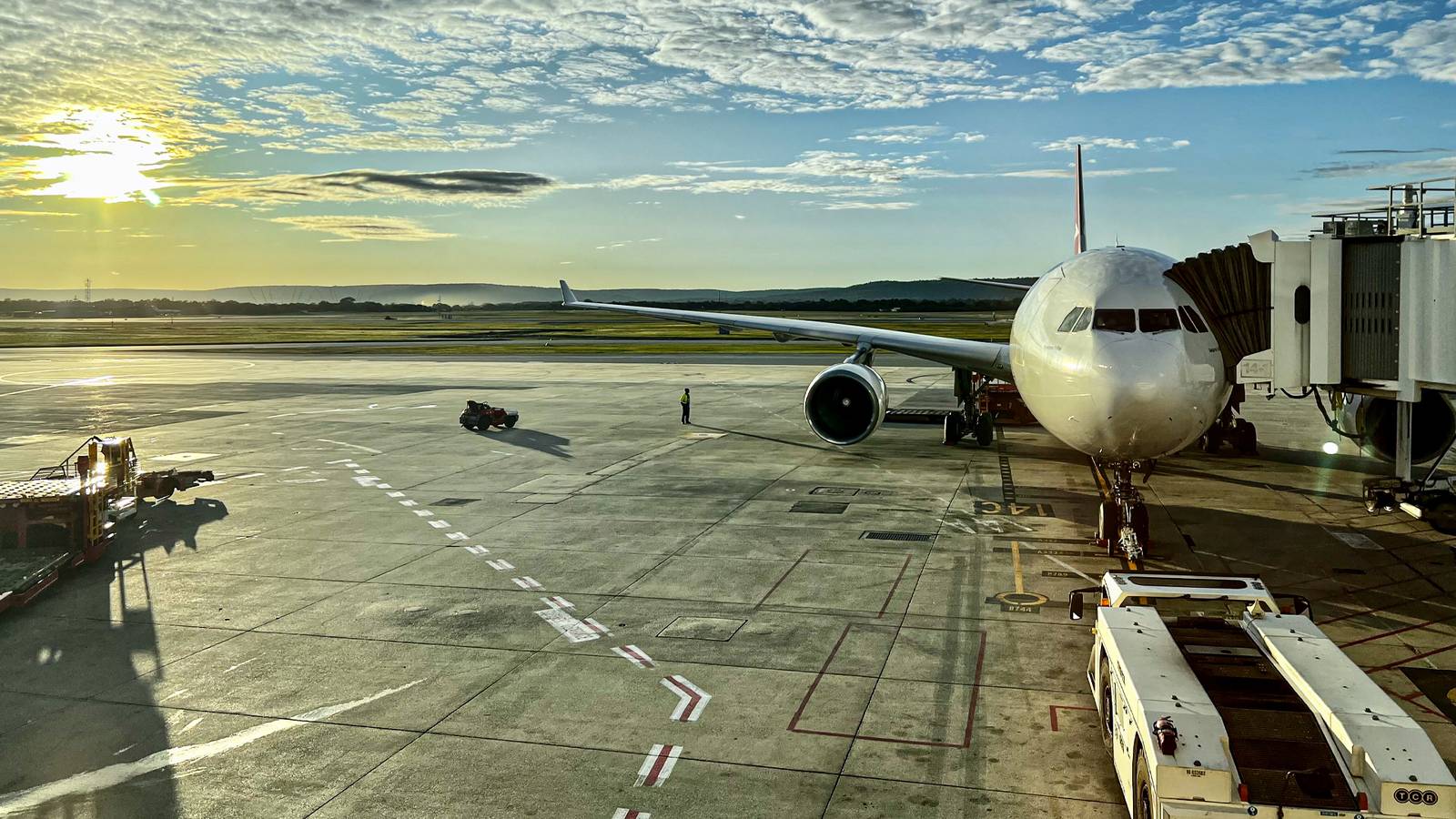
Australian travelers bound for Europe have always had to face a two-stage journey, with a domestic transcontinental flight to an east-coast hub, followed by a long-haul connection through the Middle East or Southeast Asia. There is one location that bucks this trend, that being Perth. Sitting nearly 2,000 miles (3,218 km) closer to London than Sydney, quietly positioned Western Australia as the nation's natural international springboard, the Western Australian city has become the main entry point for non-stop flights to continental Europe. That transformation did not happen by accident; it came as a result of a fundamental realignment of airline fleet strategies, airport infrastructure investments, and international route rights. Using advanced long-range twin-engine aircraft, Qantas turned Perth International Airport (PER) into a high-yield international hub. But as airspace disruptions and competing long-haul technologies emerge, how long can Western Australia maintain its exclusive hold as Australia's direct bridge to Europe? Sitting Right On The Edge Of Range Limits Perth became Australia’s gateway to Europe due to its location, as the vast distance between the southern continent and European airspace is within the maximum range limits of modern twin-engine airliners. In March 2018, Qantas launched its historic 9,010-mile (14,499 km) Perth to London Heathrow Airport(LHR) route using a 236-seat Boeing 787-9, as covered by Fortune. Flying directly out of Western Australia cuts three to four hours off the total travel time compared to departing from Sydney or Melbourne Airport(MEL), which therefore removes the traditional intermediate stopover in Singapore Changi Airport (SIN), Dubai International Airport(DXB), or Doha Hamad International Airport(DOH). According to reporting from The Points Guy, that single route showed that non-stop ultra-long-haul flights between Australia and Europe were not only technically feasible, but exceptionally profitable. The success of the London service encouraged Qantas and local state planners to expand the Perth hub, eventually leading to the launch of Perth– Rome Fiumicino Airport(FCO) in June 2022, the first direct flight connecting Australia with continental Europe, and a subsequent seasonal non-stop service to Paris Charles De Gaulle Airport(CDG). As highlighted in Travel Weekly, Qantas confirmed that 2026 would be its biggest year yet for Western Australia, adding nearly 300,000 seats between Perth and London, Paris, and Rome. In fact, the Perth–Rome route alone gained 44 extra flights and close to 10,000 more inbound seats between May and October 2026, as per the Government Of Western Australia. This massive expansion reinforced Western Australia's unique status as the only Australian state offering direct, non-stop passenger services into the European continent. Making The Airport Suitable For These New Connections Supporting high-yield international transit traffic meant Perth Airport and Qantas had to overcome the separation between domestic and international terminals. Traditionally, passengers connecting from Melbourne, Sydney, or Brisbane had to land at the domestic terminal precinct and transfer across the airfield to the international terminal, creating a friction-filled connection experience. To resolve this, Qantas negotiated a custom arrangement to process international customs and immigration directly within its domestic Terminal 3 and 4 wing, as reported by MTA Travel. The temporary operational fix laid the groundwork for Perth Airport’s massive "One Airport" consolidation program. According to an official media statement from the Government of Western Australia, WA Premier Roger Cook stated that these expanded international connections "cement WA's status as the gateway to Australia from Europe", noting that over 20 non-stop international routes now operate out of Perth. This multi-billion-dollar infrastructure effort aims to consolidate all domestic and international flights into a unified central terminal precinct, drastically reducing transfer friction for connecting passengers. As well as the European routes, Qantas expanded Perth's network horizon even further by adding non-stop flights from Perth to Johannesburg Airport(JNB) and Auckland Airport(AKL) starting in December 2025. Connecting trans-Tasman, African, and European corridors through a single hub meant that Perth Airport could change its identity from a regional destination into a major global transit nexus. However, just as Perth was solidifying its status as an unshakeable aviation crossroads, major geopolitical shifts halfway across the globe put its route network to a tough operational test. Long Routes Can Be Highly Fragile Geopolitical conflicts across the Middle East have caused major challenges for global air corridors, forcing international airlines to navigate closed or restricted airspace over Iran, Iraq, and the Levant region. For traditional Gulf mega-carriers operating out of hubs like Dubai, Doha, and Abu Dhabi, flight paths faced rerouting or temporary operational halts. As reported by Aerospace Global News, this systemic disruption created an unprecedented surge in demand for alternative routes linking Australia directly to Europe. Travelers who previously opted for a Middle East transfer sought out Qantas's direct services out of Western Australia to avoid the volatile airspace altogether. However, the unforgiving flight-planning realities of ultra-long-haul aviation meant that Qantas faced its own operational complications. As highlighted in coverage by Simple Flying, westbound headwinds combined with strict airspace avoidance protocols forced Qantas to adjust its flagship outbound flights. Outbound services from Perth to London and Sydney to Paris via Perth were rerouted through Singapore Changi for technical refueling stops, though the inbound flights from London and Paris back to Perth continued to operate non-stop. During these operational changes, Perth–Rome stood out as a critical non-stop survivor. In order to capture redirected European demand, Qantas boosted Perth–Rome services from four weekly flights to daily operations, adding over 1,400 seats per week to the continent during peak seasons. Such tactical network shifts brought to center stage both the strategic resilience and the delicate operational vulnerability of running ultra-long-haul corridors out of Western Australia. A Special Aircraft For The Job Operating commercial non-stop sectors exceeding 8,000 miles (12,874 km) is exactly where operational factors need to be monitored closely. Payload capacity, fuel burn, and takeoff weight limits massively affect the viability of the flight, and so a balance needs to be achieved. The 787-9 aircraft assigned to Qantas’s long-haul Perth operations feature a custom passenger configuration of just 236 seats, significantly lower than the standard high-density layouts deployed by international competitors. Restricting cabin capacity reduces total payload weight, allowing the twin-engine widebody to carry the massive fuel load required for a 17-hour block time. Every additional seat, cargo pallet, or gallon of jet fuel alters the aircraft's takeoff performance, particularly during warm Australian summer months. When strong winter jet streams push against westbound aircraft over the Indian Ocean, flight planning managers rigorously weigh passenger counts against fuel reserves. If headwind components exceed baseline estimates, the aircraft risks exceeding its Maximum Takeoff Weight (MTOW) or infringing strict Extended-range Twin-engine Operational Performance Standards (ETOPS) margins. The constraints here explain why Qantas relies on premium-heavy cabin configurations and elevated ticket yields to make these non-stop routes viable. Despite this, as airframe technologies advance, Perth's hard-won geographic monopoly faces a threat from within Qantas’s own future fleet commitments. What Does Project Sunrise Mean For Perth? The long-term outlook for Perth as Australia's main European gateway faces a major test from Qantas's flagship ultra-long-haul initiative, Project Sunrise. Designed to connect Sydney and Melbourne directly to London Heathrow and New York non-stop using ultra-long-range Airbus A350-1000ULR aircraft, Project Sunrise will completely remove the need for an intermediate domestic transit stop in Western Australia. Once direct non-stop flights from the East Coast launch, a significant portion of high-yield corporate travelers who currently route through Perth will opt for point-to-point non-stop services from Sydney or Melbourne. According to reporting by The Points Guy, Project Sunrise specifically targets high-yield travelers on Australia's busiest transcontinental corridors, potentially diverting transit traffic away from Western Australia’s hub. Replacing Perth is not quite the plan, as Qantas plans to position the two operations as complementary long-haul networks. While Project Sunrise caters to premium demand from Australia's largest financial centers on the east coast, Perth will continue serving as a regional springboard, capturing origin-and-destination demand across Western Australia, trans-Tasman feeder traffic, and routes to Southern Africa. An Overlooked Airport? Perth's transformation into Australia's primary direct gateway to Europe is really something special, something that quite often gets overlooked in the global aviation world. Non-stop ultra-long-haul routes could succeed using fuel-efficient twin-engine widebodies, so Qantas and Perth Airport were able to jointly morph international travel patterns across the Southern Hemisphere. The long-term test for Western Australia will be maintaining its route volume as Project Sunrise aircraft enter service and direct east-coast routes come online. Continued investment in terminal consolidation under Perth Airport’s "One Airport" masterplan, combined with scheduled route restorations, including Qantas returning the Perth–London sector to a full non-stop rotation, are really what will determine whether Perth retains its dominance as a transit hub. Airspace restrictions and jet fuel economics are still highly volatile, but Western Australia's geographic location is an unshakable natural asset. Perth was able to make direct connections from Australia to the other side of the world possible, so even if Project Sunrise takes away its lead, we still have Perth to thank for opening up one of the longest direct route selections in the world.
How Perth Easily Became Australia's Gateway To Europe
Full Article
Original Source
Read the full article at Simpleflying →KhanList aggregates and links to publicly available news content. We do not host full articles from third-party sources. Always verify important information with original sources.