
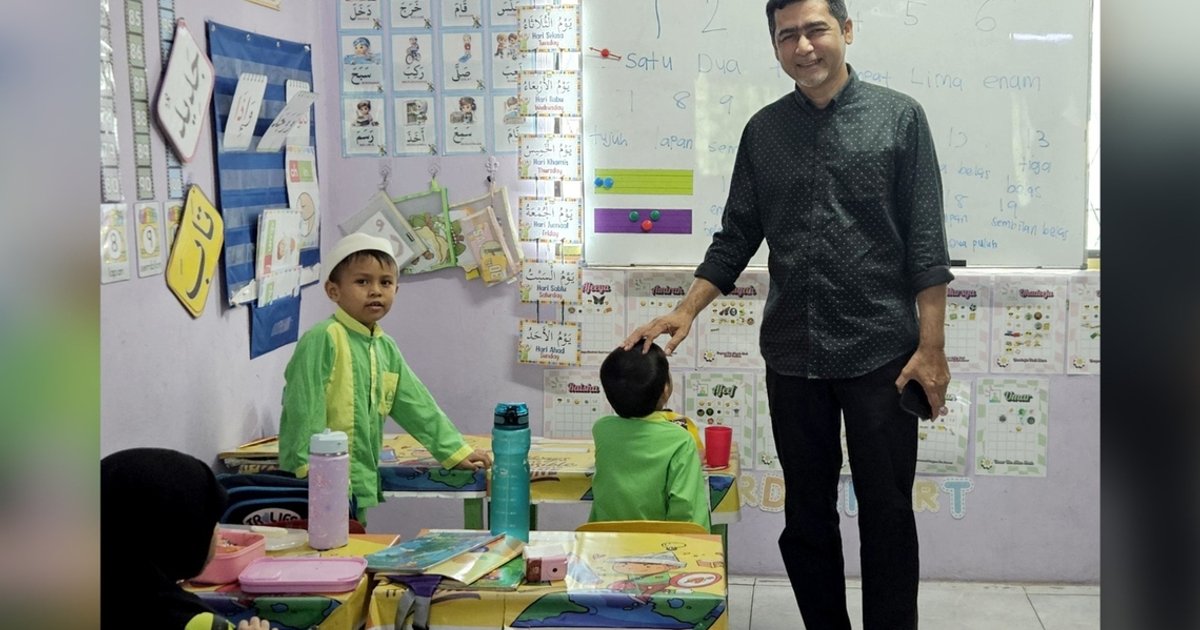
KOTA KINABALU, Sabah – During breakfast at a kindergarten, more than 60 pre-schoolers – dressed in traditional Islamic green – chatted happily as they greeted Aliakbar Gulasan and his entourage from Parti Islam Se-Malaysia, who were there for a visit.Located in a two-storey terraced house, this Islamic Early Childhood Education Centre (PASTI) is run by the party’s youth wing and part of a network of 123 PAS kindergartens across the state, which has a population of about 3.7 million.These centres helped Aliakbar, 55, become the first PAS candidate to win in a state election in East Malaysia. He triumphed in a 11-cornered fight in the ethnically mixed constituency of Karambunai at the Sabah state polls in November 2025.Analysts tell The Straits Times that the party’s breakthrough offers lessons to its competitors and also has ramifications for Malaysia politics on a national level.One lesson has to do with the strength of the party’s extensive network of pre-schools.The eastern Malaysian states of Sabah and Sarawak largely reject Islamist politics. But PAS, an Islamist party, has built up strength in Sabah with the same playbook it has used across West Malaysia – strong grassroots connections and charitable works, including heavily subsidised kindergartens.Political analyst Kamles Kumar said that besides pre-school education, PASTI provides a platform for party activists to connect with communities: engaging children, parents, teachers and extended families. Children are introduced to PAS’s Islamic worldview during their formative years, he said. Over time, a broader ecosystem develops, naturally integrating alumni of PAS’ pre-schools into the party’s network—a model similar to Western youth or faith-based groups, Kamles, the Malaysia country lead at Asia Group Advisors, told The Straits Times.The pre-schools have helped PAS maintain a presence outside its strongholds.“Even in states like Selangor and Penang, where PAS has traditionally been less dominant, these networks provide an organisational foothold that other parties should not underestimate, even if they do not immediately translate into votes,” said Kamles.Selangor and Penang are among the states that PAS, which controls Kelantan, Terengganu, Kedah and co-governs Perlis and Negeri Sembilan, aims to expand its influence in.PAS hopes to win over control of Selangor, Malaysia’s richest state, which has been governed by the multicultural Pakatan Harapan (PH) coalition for 18 years. It also seeks to win more seats in Penang—a key global semiconductor hub led since 2008 by the Chinese-majority Democratic Action Party (DAP), a core PH component party. PAS currently has 10 seats in Selangor and seven in Penang.Extensive pre-school networkThe pre-schools run by PAS are popular with parents as they charge relatively low fees.In Sabah, which is Malaysia’s poorest state, the PAS pre-schools charge fees as low as RM150 (S$47) per month in urban areas – about half the cost of commercial childcare centres. In rural areas, the PAS pre-schools charge about RM60 in fees per month.In 2026, 7,254 children aged four to six are enrolled in Sabah’s 123 centres.“Back in the 2010s, our state youth wing opened pre-schools to engage parents and organise sports activities. In addition to basic reading, writing and arithmetic, the children learn Islamic knowledge, including memorising Al-Quran. We even have non-Muslim students who opt out of Islamic religious classes but take the basic curriculum,” Aliakbar told ST in an interview on Oct 13.Founded by the PAS youth wing in Kelantan and Terengganu in the late 1980s as an alternative Islamic pre-school to government ones, the PASTI network has grown to nearly 2,500 centres with 10,000 teachers and over 125,000 students across east and west Malaysia as of 2024. In comparison, neither UMNO nor the DAP run their own pre-schools.Nafisah Matli, 35, a PAS activist who holds a diploma in early childhood education, has taught at the PAS’ pre-school in Karambunai since 2019 and explains why parents appreciate the centre’s services.Teacher Nafisah Matli says that doors open an hour at the PAS pre-school in Karambunai before classes begin to accommodate working parents. ST PHOTO: LU WEI HOONG“Our gates open at 6.30am for working parents, even though classes start an hour later. After our 11.30am dismissal, parents can also opt for extended daycare and study support,” she told ST before resuming her class with another two teachers.Hung up on the Karambunai PASTI centre’s walls are charts showing Arabic scripts for Qur'anic reading, along with Jawi, Romanised Malay, English and basic numbers.Housewife Norsiah Omar, 59, is pleased that her six-year-old grandson, Adam Zaref, can recite two chapters of the Qur’an after attending the pre-school.“PASTI built Adam’s foundation and taught him Islamic values,” she said, explaining why Adam’s parents did not send him to the government Tabika KEMAS kindergarten just 100m away. While the KEMAS kindergartens also teach Islamic values, they are not branded as Islamic pre-schools.The moderate face of PASThe electoral triumph of PAS in Sabah also owes much to Aliakbar’s savvy personal branding and underlines how PAS politicians may present a more moderate image to widen their appeal.While PAS is known for its Malay-Muslim centric platform and widely seen to be religiously intolerant in Peninsular Malaysia, Aliakbar has shown himself to be attuned to Sabah’s sizeable Christian population.Sabah has a much higher percentage of Christians (24.7%) than the states on Peninsular Malaysia, where the percentage does not exceed 7%.Aliakbar, a former university lecturer, has been respectful of religious diversity.“Sabah is more accommodating regarding Christmas wishes and sharing korban meat with non-Muslims, though strictly within the bounds of Islamic law,” said Aliakbar, whose wife’s relatives are Christian.Sabah PAS commissioner Aliakbar Gulasan (far left) discusses a flood mitigation project with Public Works Department officials near the Sepanggar Container Port on Oct 13. ST PHOTO: LU WEI HOONGIn a video uploaded to his Facebook page on Oct 13, Aliakbar shared how he visited a bereaved Christian family and paid his last respects to the deceased before a banner depicting Jesus Christ and the Virgin Mary.Grassroots figures in Parti Warisan, a key rival of PAS, praised Aliakbar’s soft-spoken approach.Remy Martin Gunsalam, 37, a Warisan grassroots leader in Karambunai, highlighted Aliakbar’s donations to local churches and Kaamatan festivities as proof of his multi-ethnic outreach. Celebrated on May 30 and 31, Kaamatan is the largest harvest festival of the Kadazan-Dusun-Murut community in Sabah.“At campus events, many young students recognise and greet him,” Remy told ST. Aliakbar was a senior lecturer at UMS before becoming a nominated assemblyman in 2020.Political analyst Tan Seng Keat views Aliakbar’s success as the result of "personal branding rather than reliance on PAS ideology”.“Since the 2020 Sabah state election, he has used his role as a nominated state assemblyman to expand his influence,” Tan, a senior research manager at polling firm Merdeka Center, told ST. Kamles sees Aliakbar as a “dark horse” subverting the stereotype of PAS politicians as rigid religious conservatives.“His success in Sabah shows there is space for a different style of PAS politics that appeals beyond its traditional base. The party may field more candidates like him to broaden its voter appeal, even if it doesn’t reflect a core shift in ideology,” he added.Sign up for our weekly Asian Insider Malaysia Edition newsletter to make sense of the big stories in Malaysia.
How PAS pulled off a historic win in East Malaysia and what this says about its strengths
Full Article
Original Source
Read the full article at Straitstimes →KhanList aggregates and links to publicly available news content. We do not host full articles from third-party sources. Always verify important information with original sources.