
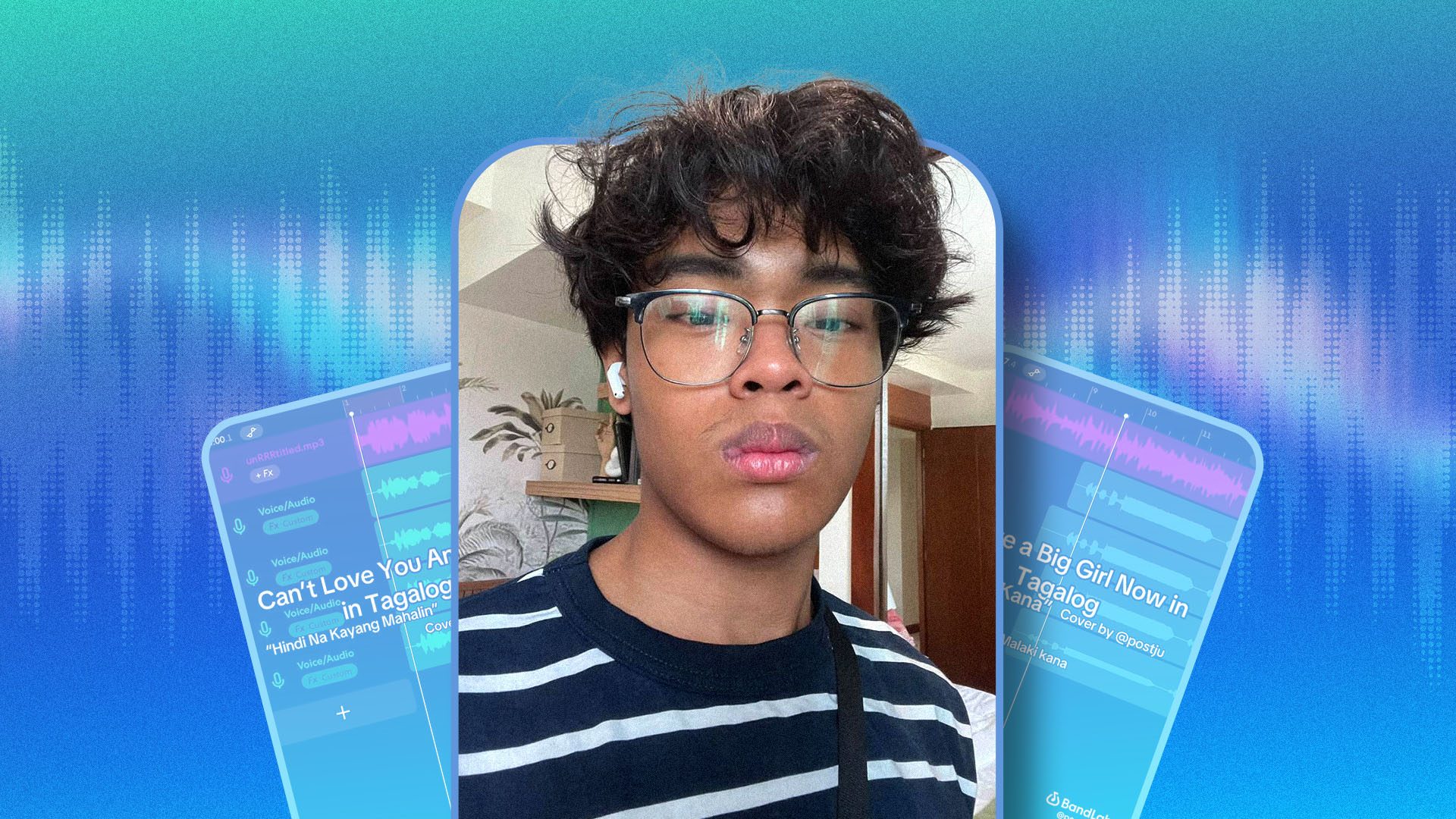
Malin, a 16-year-old TikTok creator, emphasizes that his music covers are created by him and not generated by AI, responding to viewer misconceptions about his work. He began posting covers in September 2025, initially focusing on K-pop before translating songs into Filipino, which he finds more intimate and romantic. Malin aims to keep the human element in his music, rejecting the use of AI in his creative process, and hopes to release original songs in the future while continuing to engage with his audience. This is AI-generated. Read the article for full context. Report any errors. The question kept appearing under Malin’s videos: Was the voice real, or had it been generated by artificial intelligence (AI)? After viewers began mistaking his covers for AI-generated music, the 16-year-old TikTok creator added a blunt line to his bio: “NO AI USE HERE.” Malin, who posts as @postju on TikTok, said the questions started after someone posted one of his covers with its lyrics. Viewers assumed the recording was made by AI, and his own comment section soon filled with people asking the same thing. The reaction was frustrating, he said. But it also pushed him to make clear that his covers were made by a person, not a machine. As of November 20, 2026, Malin’s TikTok account had about 32,300 followers. Three of his most-viewed Filipino covers — “Seis Syete,” “Made in Philippines” and “Malaki Ka Na” — had reached about 3.7 million, 2.4 million, and 1.3 million views, respectively. From K-pop covers to Filipino versions Music has always been a way for Malin to express what he feels. He found a community of fellow music fans online and discovered the joy of sharing songs with others. That community encouraged him to start singing and eventually put his own voice and language into the music he loved, he said. Malin began posting music covers on TikTok in September 2025, starting with K-pop songs. He enjoyed the challenge of singing in another language, which he described as a stepping stone to exploring his potential. He also listens to older Original Pilipino Music (OPM) acts such as Cinderella, although he said he does not have any prominent musical influences. His creativity and passion, he added, are what drive him. The decision to translate songs into Filipino came from his appreciation of the language. “When a song is translated into Filipino, it sounds more intimate and more romantic, like it’s closer to the heart,” he told Rappler. His shift came after he wrote “Made in Philippines,” a Filipino version of “Made in Japan” by American singer Buck Owens, as a birthday gift for a friend. At the time, his videos usually received about 100 likes in a day. The cover reached 2,000 likes within 24 hours, then continued to gain attention. That response made him realize that translating songs could become the focus of his content — work he enjoyed doing even before it drew a larger audience. Malin is among Filipino creators who turn familiar online material into music. DJ Cupcakes makes remixes from viral clips and Filipino internet culture, while music scorer Ralph Novero turns classic Filipino recipes into song covers. Writing around the feeling Malin’s choices are often shaped by the trends circulating in his online circles. When looking for songs to cover, he checks with friends and pays attention to the sounds they keep using. But he does not simply translate lyrics word for word. Instead, he builds his versions around a song’s central theme and the feeling he wants to convey. “I’d rather capture the feelings than copy the words,” he said. Most of his covers are serious, but some are satirical and meant to make viewers laugh because of their absurdity. His “Seis Syete” cover, he said, made people both angry and amused. He often posts a short version first, using a song’s catchiest or most popular section to see whether viewers want more. Malin said TikTok’s copyright system makes it difficult for some longer covers to remain online, so he waits for audience demand before attempting a full version. Viewers also influence how he posts. Their support encouraged him to upload daily, and he began posting earlier so people could see his videos sooner. He reads comments when he can, taking note of song suggestions and ways to improve his singing and translations. One comment stayed with him: a listener asked for a full version after the fan’s mother liked Malin’s cover so much that she preferred it to the original. The response changed how he viewed his work. He had thought his covers were low-quality and did not deserve the attention they received. Despite the growing audience, Malin does not treat his covers as a source of income. He said it would be nice to earn passive income someday, but he is not actively pursuing it. “I’m not doing this for money,” he said. Keeping the human voice Malin said making music without AI is a matter of honesty. “Every mistake I make and every note I sing comes from my own effort, my own feelings, and my own voice,” he said. “The human touch is what gives music its soul, and that is something I want to keep.” He writes lyrics in his Notes app and records using a PC, a Shure SM58 microphone, and a Maono PS22 Lite audio interface. He uses BandLab and FL Studio in his creative process. He would not want AI to do any part of his covers, especially the singing. Asked whether he would consider using AI as a creative aid, he said no, calling it “lazy” and saying it would make the music “soulless.” Malin’s experience comes as AI-generated song covers spread on TikTok, prompting artists to raise concerns about job security and the lack of regulation. Malin said the issue is also about how listeners recognize the work that goes into a song. He hopes to release an original song someday, building on what he has learned from translating and recording covers. Until then, he continues to make his covers “with all my love and soul” and wants people to remember that the voice they hear is his. – Rappler.com Dominique Astucia is a Rappler intern studying BA Journalism at the University of Santo Tomas.
How one teen turns internet trends into viral Filipino covers
Full Article
Original Source
Read the full article at Rappler →KhanList aggregates and links to publicly available news content. We do not host full articles from third-party sources. Always verify important information with original sources.