
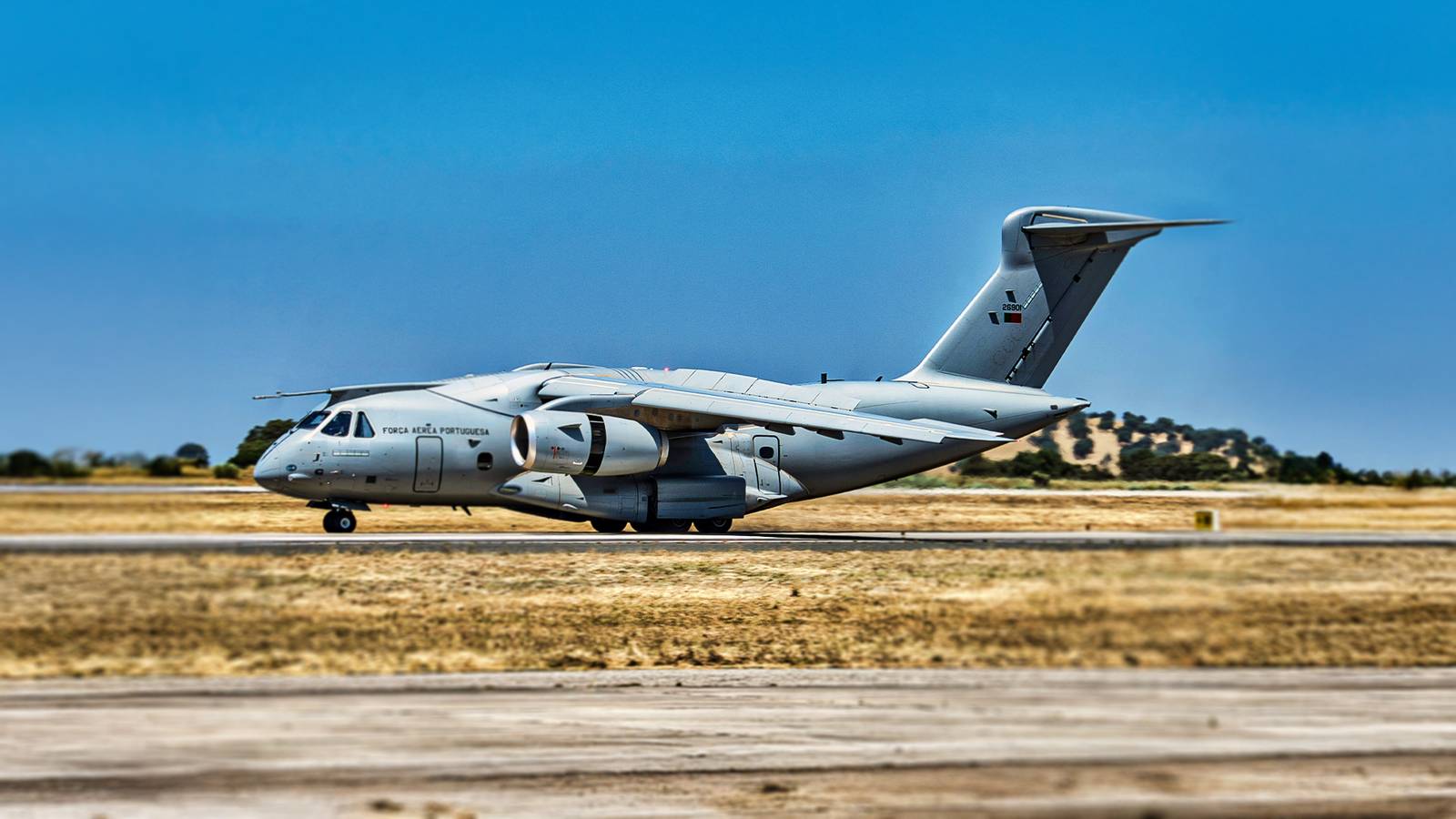
Published Aug 24, 2026, 3:00 AM EDT Journalist - Steven has a varied background in communications, and it was this passion for writing combined with his in-depth knowledge of the aviation industry that led him to Simple Flying. A keen linguist, he also has experience in translation and interpreting. Based in Palma, Spain The arrival of aircraft 26901 in Portugal in October 2023 marked a significant moment for Embraer and the KC-390 Millennium, because the aircraft was not simply another military transport joining a national fleet. It was the first KC-390 to enter service outside Brazil and the first example delivered to a European operator, giving the Portuguese Air Force a new-generation airlifter built around NATO interoperability from the outset. What followed made the aircraft's arrival look increasingly important in hindsight. Portugal had been the KC-390's first international customer, and within a few years the type had been selected by a growing group of European nations, including Hungary, the Netherlands, Austria, the Czech Republic, Sweden and Lithuania, while the Brazilian manufacturer says eleven countries had chosen the aircraft by the end of 2025. Portugal Took The First Step Credit: Shutterstock Portugal's decision to purchase the KC-390 dates to 2019, when the government signed a roughly €827 million agreement with Embraer for five aircraft, a flight simulator and associated support. The deal was designed to replace the Portuguese Air Force's aging Lockheed C-130 Hercules fleet while adding capabilities in areas such as tactical transport, aerial delivery, medical evacuation and aerial refueling. It also made Portugal the first international customer for the program, with Brazil remaining the launch customer. The choice was significant because Portugal was not simply buying an aircraft for domestic missions, but one intended to operate comfortably within NATO's broader infrastructure. The Portuguese KC-390s incorporated NATO-standard equipment, which was integrated following an extensive testing campaign in Portugal involving Embraer, OGMA and the Portuguese Air Force. That work meant the first aircraft could enter service with the interoperability expected of a modern European military transport rather than requiring a lengthy conversion after delivery. Aircraft 26901, carrying the Portuguese military registration 26901 and manufacturer serial number 39000011, was delivered in October 2023 and entered service at Beja Air Base, which is located on the grounds of Beja Airport (BYJ). Its arrival therefore represented more than the replacement of an aging airframe, because it demonstrated that the KC-390 could move from Brazil's launch fleet into an operational NATO environment and begin building a European record of service. The Simple Flying Flight Tracker has subsequently shown the aircraft operating beyond Portugal, including appearances in the Canary Islands. The Aircraft Quickly Became Operational Credit: Simple Flying One reason 26901 matters to the KC-390 story is that it did not spend its early career as a ceremonial aircraft used mainly for airshows and acceptance events. The aircraft was photographed in Gran Canaria only days after its October 2023 delivery, and its subsequent movements provide a visible record of a platform being integrated into the Portuguese Air Force's operational routine. That distinction matters for a new military transport, because potential customers need evidence that an aircraft can perform repeatedly outside controlled manufacturer testing. The Canary Islands were particularly relevant because 26901 participated in NATO-related activity around Ocean Sky 2023, giving the new transport an early opportunity to operate in a multinational environment. The KC-390 was designed from the beginning for operations that extend well beyond straightforward cargo hauling, including troop movement, aerial resupply, medical evacuation, firefighting, and air-to-air refueling, making exercises an important way to demonstrate its flexibility to prospective operators. Another notable operation involved Portugal's purchase of a Sikorsky UH-60 Black Hawk Helicopter from the US, with the KC-390 used to bring the aircraft home. That kind of operation offered a straightforward demonstration of the Millennium's value - a transporter that can move substantial military equipment across the Atlantic without requiring an entire specialist logistics chain. The aircraft's 26-ton payload capacity is central to that proposition, particularly for nations replacing older tactical airlifters. Hungary Had Already Chosen The Type Credit: Embraer The European expansion had actually begun before 26901 entered Portuguese service, because Hungary ordered two KC-390s in 2020, becoming the second international customer after Portugal. Hungary's decision showed that the aircraft's appeal was not dependent solely on seeing a Portuguese example in service, but Portugal's subsequent operational experience nevertheless provided an increasingly useful European reference point for the aircraft. The Hungarian Air Force received its first aircraft in 2024 and its second in 2025. The Hungarian requirement also highlighted another aspect of the KC-390's appeal, because the aircraft can be configured for specialized operations rather than being limited to a single transport role. Hungary's aircraft include an intensive care capability for humanitarian operations, illustrating how the same basic platform can support military logistics while also providing a means of responding to crises away from home. For European air forces with relatively small fleets, that versatility can be particularly attractive because each aircraft needs to cover multiple requirements. By the middle of the decade, the Portuguese and Hungarian aircraft were therefore providing a growing European presence for a type that had initially been associated primarily with Brazil. The KC-390's arrival in Portugal had helped establish a NATO-standard configuration in Europe, while Hungary's order demonstrated that another NATO member was prepared to commit to the platform. The next wave of decisions would take that European momentum considerably further. The Netherlands And Austria Changed The Scale Credit: Embraer The Netherlands became one of the most important additions to the KC-390 customer base when it selected the aircraft to replace its Lockheed Martin C-130 Hercules fleet. In 2024, the Netherlands and Austria turned their requirements into a joint procurement, signing a contract for nine aircraft, with five destined for the Royal Netherlands Air Force and four for the Austrian Air Force. The agreement was explicitly intended to generate common benefits in training, logistics, and future development. That arrangement was important because it moved the KC-390 beyond individual national purchases and toward a European fleet concept. Rather than simply operating similar aircraft independently, the Netherlands and Austria could build common approaches around training, support, and logistics, potentially reducing the burden associated with maintaining a relatively small military transport fleet. For Embraer, the deal also provided evidence that the aircraft could fit into cooperative European defense structures rather than only serving as a stand-alone national solution. The Czech Republic added another European customer after selecting the KC-390 in 2023 and formally ordering two aircraft in 2024. Its requirements included troop and vehicle transport, medical evacuation, firefighting, disaster response, humanitarian assistance and air-to-air refueling, closely matching the multi-operation philosophy that had shaped Portugal's original purchase. By then, the pattern was becoming difficult to ignore - European operators were increasingly looking at the KC-390 as a replacement for aging Hercules fleets while also seeking broader capabilities. Sweden Added Another NATO Customer Credit: Embraer Sweden's selection in 2024 provided another important endorsement, particularly because it brought a Northern European NATO member into the program. The country subsequently committed to four C-390 Millennium aircraft, joining the Netherlands and Austria in a broader European procurement framework. The Swedish decision was presented as an effort to obtain a next-generation NATO-interoperable transport aircraft capable of operating in demanding environments for decades to come. The Swedish purchase also demonstrated how the KC-390's European appeal was beginning to extend beyond straightforward replacement programs. The aircraft could provide commonality with other European fleets while offering the speed, payload and mission flexibility expected from a modern tactical transport. Sweden's contract included additional purchase options, while the broader arrangement with Austria and the Netherlands created a framework through which other European nations could potentially participate in future acquisitions. By the end of 2025, Embraer's own figures showed just how far the program had traveled from the arrival of 26901. Eleven countries had selected the KC-390 - Brazil, Portugal, Hungary, the Republic of Korea, the Netherlands, Austria, the Czech Republic, Sweden, Lithuania, Slovakia, and Uzbekistan. Not all of those customers are NATO members, but the European concentration is striking, particularly because several of the continent's selections involve countries seeking greater interoperability and modern military airlift capacity. Portugal's Fleet Continued To Grow Credit: Embraer Portugal itself did not stop with the original five-aircraft commitment. The Portuguese Air Force received its second KC-390 in June 2024 and its third in July 2025, with additional aircraft following as the fleet expanded. Embraer also recorded a further Portuguese purchase in 2025, making Portugal the first existing customer to place a repeat order for the type and adding options intended to support potential allied acquisitions. The growth of the Portuguese fleet provides a useful measure of how the original purchase has evolved. What began as a replacement for the C-130 Hercules became an increasingly central element of Portugal's military airlift capability, while the aircraft continued to appear on international movements. Aircraft 26901 itself remained active after its early operational career, with tracked appearances including Gran Canaria in October 2025, showing that the first European KC-390 was still contributing to the fleet rather than fading into the background as newer aircraft arrived. That makes 26901 an unusually useful marker for the KC-390's European story. Its entry into Portuguese service did not directly cause the subsequent NATO selections, since several decisions had their own national timelines and requirements, but it arrived at the beginning of a period in which the aircraft rapidly established itself as a serious military transport contender. From one Portuguese aircraft operating across the continent to a multinational customer base and cooperative procurement arrangements, the KC-390's European journey has become considerably larger than the first aircraft's arrival at Beja might have suggested.
How One Aircraft's Arrival In Europe Preceded A String Of NATO Orders
Full Article
Original Source
Read the full article at Simpleflying →KhanList aggregates and links to publicly available news content. We do not host full articles from third-party sources. Always verify important information with original sources.