
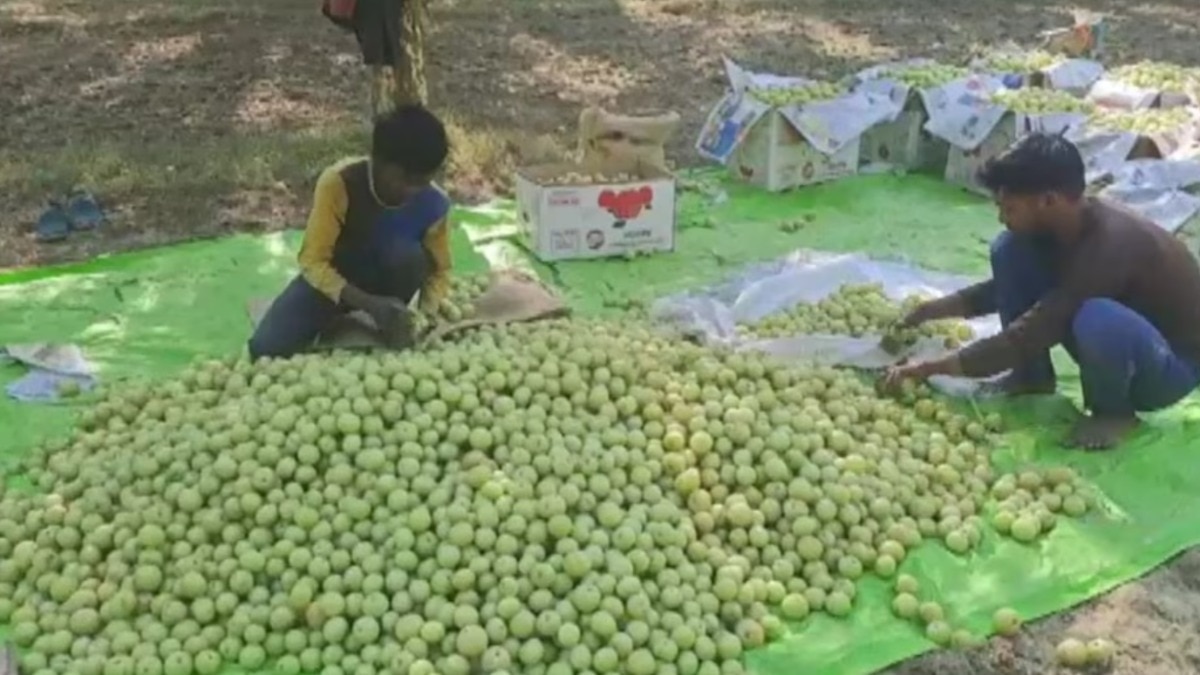
ODOP is pushing Pratapgarh's amla trade beyond raw fruit into processed products. The shift is expanding jobs, market access and local value addition, even as gaps remain.Once amla is turned into candy, juice, pickle or powder, it can be stored, packaged and sold through the year.Pratapgarh has long been known for its amla. But the fruit's journey is increasingly moving beyond the orchard, as processing units turn it into products that can be sold in markets across India.Candy, jam, juice, pickle, laddoo, powder and other products are now being made from the fruit under Uttar Pradesh's One District One Product (ODOP) initiative.The change is aimed at giving the district's traditional product a larger market while creating more opportunities for farmers, businesses and workers involved in processing.FROM AMLA FARMING TO PROCESSINGAmla has been cultivated in Pratapgarh for a long time, earning the district its association with the fruit. The ODOP programme has focused on taking the next step by promoting processing and marketing alongside cultivation. According to the report, more than 15 amla processing plants have been established in the district. These units make a range of products, including candy, Chyawanprash, powder and hair oil.The move allows amla to be sold in a form that has a longer shelf life and can be transported to markets far beyond the district. For local businesses, it also creates an opportunity to build brands and sell finished products rather than simply dealing in raw produce.WOMEN ARE FINDING WORK IN THE PROCESSING CHAINThe expansion of processing has also created employment opportunities for rural women.Women associated with self-help groups have received training in making amla products and are now working in processing and packaging units.For women who were previously largely engaged in household work, these jobs provide an additional source of income for their families.It also means that the economic activity generated by amla is spreading beyond the farms, into the processing units where the fruit is cleaned, processed and packaged.PRATAPGARH'S AMLA REACHES BIGGER MARKETSThe administration and horticulture department have sought to expand the market for Pratapgarh's amla by supporting processing, marketing and access to online platforms.According to the report, products from the district are now being sold through platforms such as Amazon and Flipkart, as well as government portals.The district's total turnover from amla-related business crossed Rs 50 crore last year, according to the report.The increase in processing capacity is another indication of the expansion.Ramesh Kumar, a businessman associated with the sector, said the capacity of his plant had increased from around 1,000 tonnes to 10,000 tonnes.Farmer Mahesh Yadav said demand for amla had increased since the implementation of the scheme and that crop prices had risen by around 20%.He also said direct supplies to markets in Katni, Jabalpur and Haryana had reduced the role of middlemen.These are individual accounts, but they show how the business around amla is expanding beyond Pratapgarh's traditional local market.WHY PROCESSING MATTERS TO FARMERSSelling raw produce leaves farmers dependent on the prices available at the time of harvest. Processing gives them another route to market.Once amla is turned into candy, juice, pickle or powder, it can be stored, packaged and sold through the year. It can also reach consumers in cities and through online platforms.For Pratapgarh, that means the value of the crop is no longer limited to what a farmer gets for selling fresh amla. Processing, packaging and marketing create additional economic activity around the fruit, while giving local businesses a chance to sell finished products in larger markets.This is the broader idea behind ODOP: build an industry around a product the district already produces, rather than stopping at cultivation.BUILDING AN ECOSYSTEM AROUND AMLAODOP support in Pratapgarh has focused on more than simply promoting the fruit.The scheme has provided support for processing units, training and financial assistance, while efforts have also been made to connect local businesses with larger markets.That becomes particularly important for traditional products, which may already have demand but lack the packaging, processing or distribution needed to reach consumers at scale.In Pratapgarh, the result is a growing ecosystem around amla. Farmers supply the fruit, processing units turn it into consumer products, workers are employed in those units, and businesses take the finished products to retail and online markets.The more of those activities that happen locally, the greater the potential for the district to earn from the crop.THE CHALLENGES REMAINThe expansion of processing does not mean all the problems faced by amla farmers have disappeared.Farmers continue to face issues around prices, rising input costs, middlemen and gaps in processing infrastructure. Government support can improve market access, but it does not automatically remove every problem in the supply chain.There are also questions around whether new infrastructure is being fully utilised. A separate report from Pratapgarh found that an amla processing plant built at a cost of around Rs 1.25 crore had not started operations because of a shortage of staff.That makes the next phase of the amla story important. Setting up processing units is one step; ensuring that they operate efficiently, have steady supplies and can compete in larger markets is another.FROM A CROP TO A BUSINESSPratapgarh already had the amla. What is changing is what happens to it after it leaves the orchard.The expansion of processing means the fruit can now be turned into a wider range of products, packaged for consumers and sold beyond the district. It has also created work for local businesses and women involved in processing and packaging.The success of that shift will ultimately depend on whether farmers receive better returns, processing units remain viable and Pratapgarh's amla products can sustain demand in larger markets.For now, ODOP has helped push the district's signature fruit towards a bigger business ecosystem — one that extends from cultivation to processing, packaging and sales.- EndsWith inputs from Sunil Kumar YadavPublished By: Koustav DasPublished On: Aug 31, 2026 13:26 IST
How ODOP is helping Pratapgarh turn its amla into a bigger business
Full Article
Original Source
Read the full article at Indiatoday →KhanList aggregates and links to publicly available news content. We do not host full articles from third-party sources. Always verify important information with original sources.