
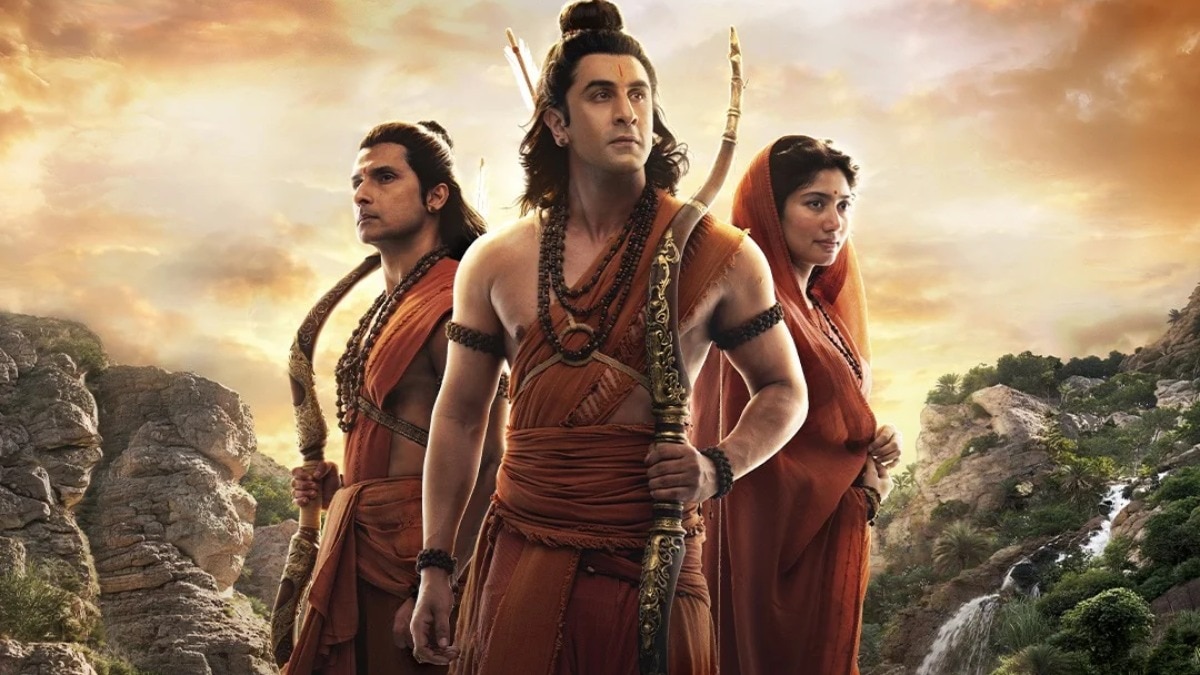
'Ramayana: Part 1' should be judged not only by how faithfully it repeats our old memories but also how many new meanings it adds for a new generationPutting ‘Ram Katha’ on screen is not merely an exercise in lending visual grandeur to an epic but also a responsibility while entering into dialogue with the memory, faith and cultural consciousness of Indians, what with the many interpretations that have evolved over centuries.That is why making a Ramayana film is as attractive as risky. Viewers do not come to theatres simply to watch; they bring along their own imageries of Ram, Sita, Lakshman and Ravan. They carry Tulsidas and Valmiki, folk tales and Ramlilas, and memories of Ramanand Sagar’s Ramayan on television. In the backdrop of these memories and expectations, director Nitesh Tiwari’s Ramayana: Part 1 makes an ambitious attempt to pitch a cinematic language of its own.The film is impressive, grand and wildly ambitious. Above all, it leaves room for debate. A contemporary retelling of a tale is meaningful only when it goes beyond restaging familiar episodes in new visuals and brings out the questions buried within. In this respect, the film appears to make some bold attempts.Ranbir Kapoor’s Ram is restrained, gentle and dignified. Accepting him as Ram is difficult at first, but by the time the Ram-Kaikeyi exchange occurs, the audience begins to see Ram in him. Still, the expectations are so enormous that every gesture, line and expression is bound to be measured against established images. Aware of the challenge, Ranbir seems, in places, to be visibly striving. As Lakshman, Ravi Dubey is energetic, fluid and playful. His character has a natural dynamism that strikes an interesting balance with Ram’s comparatively calm persona. Lakshman is not merely Ram’s younger brother or someone who carries out his orders. He has impulse, questions and, at times, dissent. Ravi’s performance gives that energy room.The most natural presence in the film is Sai Pallavi’s. Her Sita is meaningful, sharp and effective. There is an ease in her presence that invites us to see the character as a living person rather than an artificial ideal. Tiwari has not presented Sita merely as the embodiment of endurance and sacrifice. With her independent mind, capacity for judgment and self-respect, she has been the indispensable centre of Ram Katha.The hints of her agency and thoughtfulness in the film provoke real curiosity. The portrayal of a Sita running, wielding weapons, and asking the sage to recite a hymn to confirm his identity before she offers alms is an attempt to move beyond the familiar image. The full expanse of her personality and ideas, however, remains yet to be explored.But the performance most talked about is Yash’s as Ravan—formidable, towering and overpowering. His personality has the theatrical amplitude one expects of this character, and his presence carries both allure and dread.It is being said on social media that Ravan overpowers Ram in the film. Does he really? To answer this, one must first grasp a fundamental distinction. Yash may outshine Ranbir but Ravan does not overpower Ram. An actor’s performance being more impactful and the character he plays dominating the story’s central hero are two different things. Likewise, a character does not dominate another simply by being given more screen-time or a grander presentation. The effectiveness of a performance and the ideological centrality of a character should not be weighed on the same scale.Now consider Arun Govil’s performance. As king Dashrath, he is not on screen for long, yet his acting is seasoned, sensitive and poignant. The language of experience etched on his face suits the character perfectly. His casting also evokes an intriguing cultural memory: he once played Ram on television and left a lasting image in viewers’ minds. Now he returns as the father of a Ram from another generation. When Ram departs for exile and Govil collapses calling out his son’s name, the performance eclipses the grandeur of the screen. Equally powerful is Sheeba Chaddha as Manthara.In all of this, one person deserves special praise: Sharad Kelkar, who provides the Hindi dubbing for Ravan. His voice is the very life-breath of the character. It shows what a voice can do for the cinematic presence of a larger-than-life figure.Director Tiwari is imaginative, accomplished, experimental and a visionary of scale. He has attempted to recreate on the big screen a story about which Indian audiences already know a great deal. The challenge then lies in making people experience it anew. His effort, together with producer Namit Malhotra’s, to take an Indian story to the global stage largely succeeds.The writers, researchers and advisors, such as Shreyas Jain, Shridhar Raghavan and Bodhisattva, also play an important role here. The film’s ideological foundation reflects an effort to accept contemporaneity while keeping the soul of tradition intact. Presenting a story in today’s time requires admitting new questions and contexts into it, but this must not be done by displacing its essential sensibility.Some of the film’s dialogues provoke debate at precisely this level. As Ravan speaks of an egalitarian society, some viewers would be offended while others may applaud. But the question is not merely that Ravan spoke of equality. The real question is whether he actually managed to build such a society.Do a person’s ideological declarations match his conduct? Should personal ambition encompass social ambition or should social ambition leave adequate room for personal ambitions? Ravan’s character offers an opportunity to raise these questions. Listening to an antagonist’s ideas and agreeing with them is one thing; evaluating his entire personality and deeds is another. That the film makes space for such questions is one of its significant achievements.As for shortcomings, they exist too, as in every film. Criticism is necessary but criticism cannot mean predetermined rejection. It is also possible that some dialogues and scenes will grate while others satisfy; that some portrayals will challenge familiar assumptions while others fail to reach the expected depth.What one sees here, in essence, is an attempt to forge a cinematic vision out of the many traditions and interpretations of Ram Katha. We must recognise that time has moved far beyond the era of Sagar’s Ramayan. The language of cinema has changed, audience expectations too have, and so have the contexts in which we view and understand the story.Ramayana: Part 1 should be judged not only by how faithfully it repeats our old memories but also by how many new meanings it adds for a new generation. The film does not answer every question nor does it live up to expectations everywhere. Even so, there is much in it that one accepts with ease. Perhaps that is because the storyline converses with its time, raises new questions and adds new contexts, yet never strays from its core.Subscribe to India Today Magazine- Ends
How Nitesh Tiwari's 'Ramayana' raises new questions, adds contexts but sticks to epic's core
Full Article
Original Source
Read the full article at Indiatoday →KhanList aggregates and links to publicly available news content. We do not host full articles from third-party sources. Always verify important information with original sources.