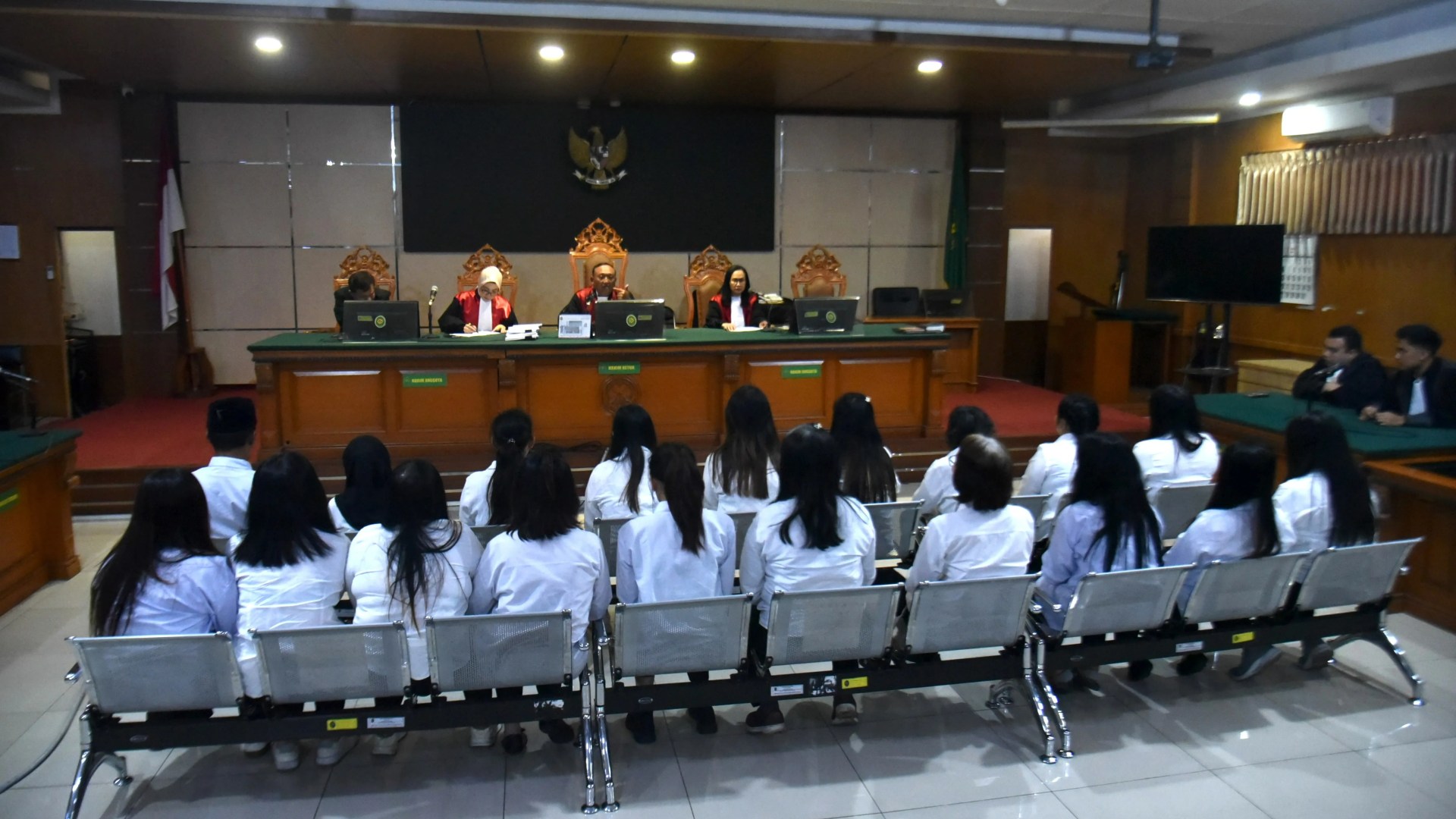
FRESH out of the womb at seven days old, a baby was trafficked and presented to a fake couple for £5,000 on Facebook messenger. A human trafficking racket in India mistakenly contacted an anti-trafficking charity – asking if they wanted to buy a baby. 19 people have been found guilty for baby trafficking in Indonesia Credit: EPA A picture of a baby sent by the criminal gang who messaged the charity Credit: Supplied Using this as an opportunity to act as decoy customers, the organisation, Against Child Trafficking (ACT) started to answer messages posed as a desperate couple unable to bear children. The child trafficking ring, having moved the conversation to another channel, sent over several pictures of naked newborns and asked the “couple” to choose from their catalogue. Sign up for The Sun newsletter Thank you! Director of ACT, Arun Dohle, told The Sun: “One day a guy wrote on our own Facebook page and offered us a baby. “We faked to be a couple who couldn’t have a baby. We pretended to be unsure to not give away our cover. “It was a really simple process. Then they sent us tons of pictures of babies. It was a horror. “They started to demand payment like a scammer and in the end we were not sure if they would provide the product.” After the charity teamed up with cops and planned a sting operation, the gang was paid Rs 20,000 (£155) via UPI as token money and promised Rs 5.8 lakh (£4,500) at a location where they would make the exchange. That’s when cops swooped in and arrested five men who had arrived for the deal. Most read in The Sun The criminal enterprise operated by a 70-year-old female preyed on vulnerable women Credit: AFP The syndicate purchased newborns before selling them to adoptive buyers for between 11 million and 16 million Indonesian rupiah Credit: EPA A senior official from Badlapur (West) police station said: “The gang had connived to sell the newborn for Rs 6 lakh. “We suspect this is part of a much larger scam involving the kidnapping and sale of infants to childless couples. “We are trying to identify the biological mother.” This twisted reality is the shocking face of child trafficking across the world. Babies are allegedly being put up for sale on social media through a shadowy adoption underworld dubbed the “black market”. Some tots are reserved while still in the womb and obtained through deceptive methods by criminal syndicates targeting emotionally vulnerable and financially struggling women. An Indonesian court has now dismantled one operation, convicting 19 people over the trafficking of 34 babies through a sophisticated network spanning Indonesia and Singapore. The criminal enterprise operated by a 70-year-old female preyed on vulnerable women across West Java between 2023 and 2025. Another picture the gang in India sent from their catalogue of babies Credit: Supplied West Java Police Senior Commissioner Ade Sapari said many of the parents caught up in the case were suffering financial hardship Credit: EPA West Java Police Senior Commissioner Ade Sapari said many of the parents caught up in the case were suffering financial hardship. He said: “It looks like the root cause is economic… our investigation shows the victims needed money, so they gave up their babies for others to take care of.” The syndicate purchased newborns before selling them to adoptive buyers for between 11 million and 16 million Indonesian rupiah (£500-£730). Mimi Vu, a child trafficking activist, said: “This is a trade and a business. The most targeted are young poor and less educated women who are single.” She recalled a corrupt method involving hospital staff who allegedly steal babies from mothers who have just given birth after presenting them with a hefty hospital bill. Mimi said after the vulnerable mums realise they can’t afford to take their babies home, they are forced to leave the newborn with the nurse. She added: “The doctors or nurses in the hospital are making a lot of money out of the business. “ Hospitals will often have a system set up where they operate with middlemen, the expert added. She said: “[Agencies] will strike up a backroom deal with nurses, hospitals, and orphanages to facilitate procurement of the baby. “Birth rates have dropped meaning international agencies must find ways to meet supply and demand needs. “This is a trade and a business. It’s all about supply and demand. “In China there was the one child policy for almost four years, so any family having two children were putting the daughter up for adoption. “So then you had a constant supply so you wouldn’t have to engage in these backroom deals.” Investigators in the Indonesian and Singaporean case believe at least 12 of the trafficked babies have already been taken to Singapore. Lie Siu Luan – who orchestrated the network – received the heaviest punishment, a seven-year prison sentence. The remaining 18 defendants, who worked as recruiters, caretakers and document forgers, were jailed for between three and six years. Arun Dohle, who has long been involved with child protection and adoption issues, said: “Often unmarried or poor mothers get targeted. “I’ve seen a case where a poor mother was targeted and someone asked her ‘give us one of your children and we will fix your roof for free.” Prosecutors said the Indonesian ring leader Luan coordinated an elaborate system in which brokers allegedly posed as biological mothers. Investigators in the Indonesian and Singaporean case believe at least 12 of the trafficked babies Credit: EPA With the trial now over, attention has turned to the heartbreaking fate awaiting the babies Credit: Getty The middlemen concealed the infants’ true identities while arranging illegal adoptions. The investigation gathered pace after West Java resident Dani Hidayat reported being approached by a member of the syndicate after joining a Facebook group for prospective adoptive parents. Instead of offering legitimate adoption advice, the suspect allegedly proposed buying his baby outright. That tip-off unravelled a sprawling trafficking network. Arun said: “There are Facebook groups that deal with adoption where these traffickers join and go into chats offering people a baby or a fast-track adoption. “This process is based on corruption, it’s not that difficult to corrupt people in that registry, they will have contact in the industry who can fake a birth certificate.” Police announced in July 2025 that they had arrested 13 people linked to the cross-border operation after discovering that dozens of infants – many around a year old – had already been sold. During the court hearings, prosecutors lifted the lid on the chilling operation – revealing a ruthless network that hunted down cash-strapped pregnant women. The gang also used “carers” to mind the newborns, and relied on corrupt insiders to forge paperwork before the babies were secretly handed over to buyers. Luan admitted sending at least 12 babies to Singapore for adoption in 2022, telling the court they had been sold for around $13,000 each. Delivering the verdict, Judge Gatot Ardian Agustriono ruled that Luan had been proven guilty of recruiting, harbouring, transferring and receiving people for the purpose of exploiting the babies through illegal adoption. Despite the scale of the operation, Luan insisted she had not realised the scheme was unlawful, claiming a Singapore-based associate had convinced her the overseas adoptions were legitimate. Although prosecutors had sought a tougher punishment, Luan accepted the seven-year sentence without appeal. Her lawyer, Seni Sanjaya, said: “Our client accepts the judges’ ruling.” With the trial now over, attention has turned to the heartbreaking fate awaiting the babies at the centre of the Singapore trafficking network. This is foremost in the minds of the adoptive parents in Singapore taking care of the babies. Arun Dohle said child trafficking is often hidden behind the widely accepted idea that international adoption is always an act of kindness. He said: “In general the idea of adoption is a very benevolent act, that is the narrative that has been taught for decades now. “But behind the curtain of this narrative is actually child trafficking like you see with the Indonesia and Singapore case.” Meanwhile, adoptive families in Singapore remain trapped in limbo. For months they have been on tenterhooks, waiting to learn whether they will be allowed to keep the children they have raised. Speaking to the BBC after the verdict, David, a Singaporean parent who asked to remain anonymous under a pseudonym, urged both governments to reach a decision as soon as possible. He said: “Since the case is concluded, how can we move on and what will happen to our son? It’s been almost a year of fear and anxiety from waiting. “I sincerely hope that both authorities can come to a decision based on the best interests of the children. “We respectfully ask that, in making this decision, consideration be given to the fact that both our son and our family are victims of the circumstances surrounding this case.” But Arun warned the children’s futures remain uncertain. “One would assume that the children get their identity back, but it is difficult for adoptees to even trace back their families,” he said. He argued that people who obtained children outside the legal adoption system should also face punishment. Arun said: “Some courts decide that even if the child was bought from the trafficking ring, it will be in the best interest of the child to stay with the buyers, which I find ridiculous. “The people who bought the children outside of the formal adoptive system should also be punished. They should not be rewarded.” He recalled a time when a mum had illegally bought a child and brought the baby to the organisation to “help them legalise it. “We said ‘we can’t help you’ you have to give the child back to the state. “The mum was on the run in India after they bought the baby for 6000 US dollars from a broker.” Mimi Vu explained that reuniting the children with their biological families would be an enormous challenge, requiring DNA testing and parents to come forward to identify missing children. She said: “In the meantime, the children will probably be put into state care, an orphanage or something.” A spokesperson for Meta told The Sun how the company has been working to fight child exploitation on Meta apps and remove millions of violating accounts. They added: “The exploitation of children is a horrific crime and we work aggressively to fight it on and off our platforms. “We respond to valid law enforcement requests, which aid in the arrest and prosecution of these criminals, and report accounts of suspected traffickers to NCMEC. “Predators will always try to adapt to evade detection, which is why our expert teams are constantly tracking evolving trends and sharing signals of violating behavior across the industry.” Comment now
How newborns are being sold on social media to desperate parents for £5,000 by chilling baby trafficking rings
Full Article
Original Source
Read the full article at Thesun →KhanList aggregates and links to publicly available news content. We do not host full articles from third-party sources. Always verify important information with original sources.